Kenya AA Coffee Guide: K72 Process and Regional Flavors
Introduction: An in-depth exploration of the core charm of Kenyan coffee, from the growing environment of volcanic highlands to the unique K72 washed processing method, with a detailed explanation of the screening standards for beans from AA+ to PB grade. This article systematically reviews the flavor characteristics of Kenya's seven core producing regions, interprets the differences between the two harvest periods, and provides professional roasting suggestions to help you fully grasp the terroir code of this top African coffee-producing country.
Geography and Growing Environment
Kenya is located on the East African Plateau, which the equator traverses, with an average altitude of 1,500 meters; Mount Kenya in the center rises to 5,199 meters. The volcanic soil area around the capital, Nairobi, at 1,600-2,100 meters, with large day-night temperature differences (annual average temperature 18-22°C) and volcanic ash rich in minerals, creates ideal conditions for slow growth of coffee beans and concentration of flavor compounds. The country experiences two rainy seasons each year, June-August (accounting for 40%) and October-December (accounting for 60%), forming a double-harvest characteristic.
Industry System and Trading Model
As the second-largest export commodity after tea, Kenya has established the world's most transparent coffee auction system. Since 1934, 85% of coffee beans have been graded and auctioned through the Nairobi exchange (held every Tuesday); after 2006, 32 licensed agents were added to connect directly with international buyers. The other 15% uses a "second window" direct trade, with prices negotiated by reference to the previous week's auction price. In the planting structure, 270 cooperatives integrate 700,000 smallholder farmers (accounting for 75% of production), and the remaining 25% comes from 4,000 hectares of large-scale estates.
Variety Gene Pool
Kenyan coffee varieties are dominated by the disease-resistant, high-quality SL series: SL28 (17-screen beans, with prominent citrus notes) and SL34 (fuller body) together account for 90%, both derived from Bourbon variants selected by the Scott Laboratories in the 1930s. French Mission (R11) retains the original Bourbon flavor, while Ruiru 11, bred in 1985, is a hybrid of Arabica and Robusta and is usually used in commercial blends.
K72 Processing Method Details
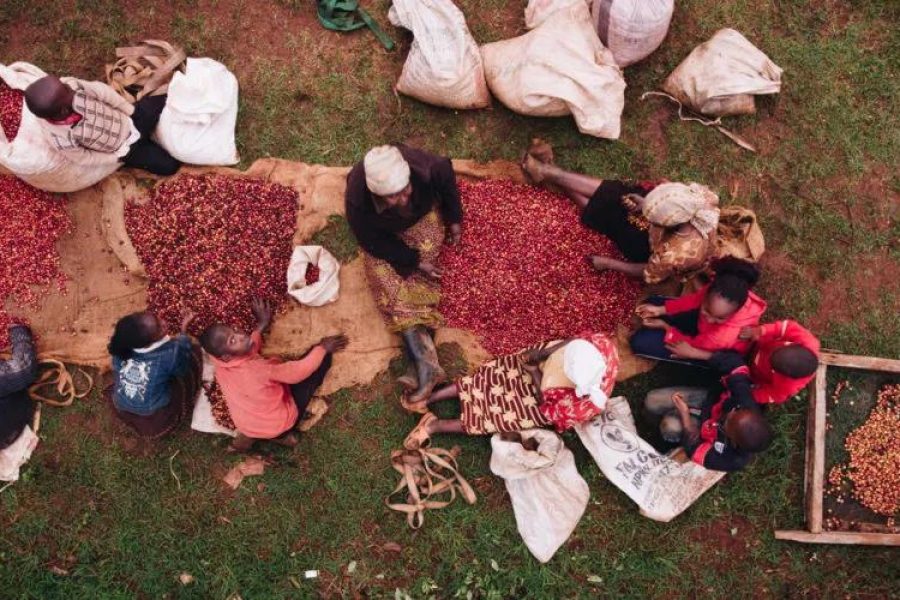
This signature process enhances flavor through three 24-hour cycles of fermentation (72 hours total): ① First screening: remove unripe beans by water flotation (those with insufficient density float); ② Initial fermentation: first 24-hour mucilage fermentation after pulping (removing 80-90% of mucilage); ③ Cyclic processing: second fermentation after rinsing with clean water, and finally sun-drying on raised beds for 5-10 days (moisture must be controlled at ≤12%). This process gives the coffee its signature bright acidity and black tea finish.
Grading System and Parameters
The grading standards take into account both physical indicators and cupping performance: AA grade (17-18 screen, about 15% of production) is the largest bean size, and AA+ specifically refers to AA beans with outstanding flavor; AB grade (15-16 screen) makes up the bulk of production; PB round beans are classified separately. Flavor ratings include TOP (top), PLUS (premium), and FAQ (minor defects allowed). Professional roasting advice: use a higher-than-usual medium-high starting temperature (195-205°C), and slow the rate of temperature rise before first crack to balance acidity development.
Flavor Map of the Seven Core Producing Regions
• Nyeri: 1,200-2,300 meters, volcanic red soil, main season October-December, mainly SL28/34, presenting blackcurrant acidity and red wine texture. • Kirinyaga: 1,300-1,900 meters on the northern slope of Mount Kenya, known for honey sweetness and jasmine aroma. • Muranga: 1,350-1,950 meters, balanced citrus and black tea finish. • Embu: 1,300 meters high-altitude area, prominent malic acidity. • Kiambu: 1,850-2,200 meters, obvious nutty notes. • Kisii: 1,450-1,800 meters, unique blueberry flavor. • Trans-Nzoia: 1,500-1,900 meters, an emerging producing region in recent years.
Processing Plant Case Studies
The Karogoto processing plant in the Nyeri area (1,800 meters) uses traditional washing: selected SL28/34 coffee cherries from 1,054 smallholder farmers, slowly dried over 2-3 weeks to 10-12% moisture content, ultimately presenting cherry tomato acidity and caramel sweetness. The Asali processing plant in Thika uses a 72-hour fermentation method to produce TOP AA-grade beans, with honey wet aroma and green tea finish forming a layered taste experience.