Pour-Over vs Espresso: Ratios, Cold Drip and Extraction Parameters
Introduction: From the gentle extraction of pour-over coffee to the high-pressure concentration of espresso, different brewing methods directly affect a coffee's flavor and mouthfeel. This article analyzes in depth the core differences between pour-over and espresso, including bean selection, equipment use, extraction parameters (such as a 1:15 coffee-to-water ratio), and the slow extraction process of cold drip coffee, and provides practical brewing guidance to help beginners quickly grasp the characteristics and key operating points of different coffee types.
In recent years, coffee has gradually become an important player in the domestic beverage market, even replacing traditional quick-consumption tea drinks such as milk tea among certain consumer groups. Among the many coffee types, pour-over and espresso are the two that attract the most attention; not only are their preparation methods very different, but their flavor expressions are also vastly different. Pour-over coffee excels at showcasing the pure flavor of the coffee itself, without relying on excessive technique for embellishment, and places more emphasis on controlling details during extraction.
Compared with the intense mouthfeel brought by the high-pressure extraction of espresso, pour-over coffee is gentler, and the entire process is visible—hot water slowly penetrates the coffee grounds, extracting the coffee's original taste drop by drop. This "slow work produces fine results" approach is not only suitable for savoring carefully when alone, but also makes it easier for people who do not often drink coffee to accept and fall in love with this beverage. Espresso, with its rich and full-bodied character, is better suited for quick preparation and pairing with milk, such as in a latte or cappuccino.

Next, we compare pour-over coffee and espresso in detail across several dimensions and discuss the characteristics of special extraction methods such as cold drip.
1. Differences in Coffee Bean Selection
Pour-over coffee usually uses single-origin coffee beans, mainly with light and medium roasts, and occasionally dark-roasted beans, to highlight the flavor layers of different origins. These beans are suited to expressing regional characteristics and delicate flavors such as fruit acidity and floral notes.
Espresso mostly uses blended beans (coffee blends), mixing beans from multiple origins in proportions, generally with darker roasts. Such beans blend better with milk or hot water and are commonly used to make lattes, cappuccinos, and Americanos. Making espresso requires a professional espresso grinder to ensure fine and uniform grounds, which is key to guaranteeing extraction quality.


2. Preparation Methods and Extraction Principles
Pour-over coffee is generally brewed under normal pressure (1 atmosphere), using a dripper and filter paper, with a common coffee-to-water ratio of 1:12 to 1:16. Some devices, such as the moka pot or AeroPress, can generate about 3 bar of pressure, but this is still far below that of an espresso machine.
Espresso relies on the 9 bar high pressure of an espresso machine for extraction; at this point the puck bears about 133 kilograms of pressure, forcing the coffee to release more oils and flavor substances and forming a rich, complex espresso. This high-pressure extraction is also the key to espresso's full body and suitability for adding milk.

3. Differences in Caffeine Content
With the same dose and grind size, caffeine is a water-soluble substance, and the longer the extraction time, the more is released. Pour-over coffee usually takes 1–3 minutes, while espresso takes only 20–30 seconds. Therefore, the caffeine content of pour-over coffee is generally higher than that of espresso. Similarly, long-extraction methods such as cold drip and cold brew also have relatively higher caffeine content.
It should be noted that pour-over coffee is generally not recommended to be mixed with milk, so as to avoid the milk flavor masking the coffee's own aroma and layers and affecting the tasting experience.

4. Espresso Preparation Parameters and Flavor
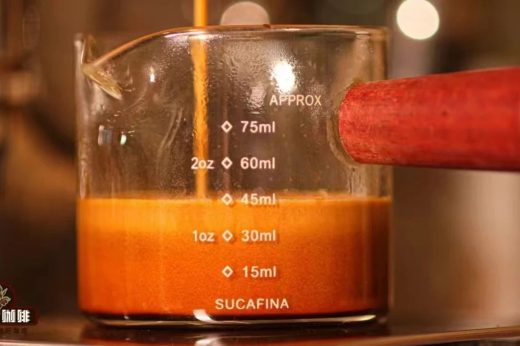
Taking a commercial-grade espresso machine as an example, a double basket is usually used, with a dose of about 18–20 grams, and the coffee-to-water ratio controlled at around 1:2, that is, extracting about 40 grams of coffee liquid. The recommended extraction time is between 20–35 seconds; too short easily leads to a thin flavor, while too long may produce burnt bitterness. Common commercial models can reach 9–11 bar of pressure, and home models are recommended to meet at least the 9 bar standard.
The flavor of espresso is closely related to the blended beans; a high-quality blend often brings abundant crema, vinous notes, berry acidity, and a chocolate finish, and is the foundation for making lattes, Americanos, and other coffees.



5. Detailed Pour-Over Coffee Operation Guide
The equipment needed for pour-over coffee includes: a gooseneck kettle, dripper, server, grinder, filter paper, digital scale, and thermometer. Taking the common V60 dripper as an example, it is recommended to use a medium-fine grind with 80% passing a No. 20 sieve, with the water temperature controlled at 91–93°C, suitable for releasing the flavor of medium-light roasted beans.
Beginners are recommended to use the three-stage pouring method: assuming a dose of 15 grams and a coffee-to-water ratio of 1:15 (total water 225 ml), the pouring is divided into three stages: the first stage of 30 ml for a 30-second bloom, the second stage pouring 95 ml, and the third stage topping up to 225 ml. The total extraction time is usually about 2 minutes, which helps balance concentration and flavor layers.



The charm of pour-over lies in its high degree of customizability; by adjusting parameters such as grind size, water temperature, flow rate, and pouring method, the unique flavors of different coffee beans can be fully drawn out, which is also the reason many coffee enthusiasts are devoted to it.
6. Cold Drip and Cold Brew: The Charm of Low-Temperature Slow Extraction
In addition to hot extraction, cold drip and cold brew are also coffee preparation methods that attract much attention. Cold drip coffee uses an ice-water mixture below 5°C, controlling the water flow rate through a valve so that ice water slowly penetrates the coffee grounds; the entire extraction process lasts as long as 6–8 hours, followed by 8–12 hours of refrigerated maturation to fully develop complex flavors.
Cold brew coffee, on the other hand, uses room-temperature or refrigerated cold water, steeping the coffee grounds for more than 12 hours before filtering, with no additional maturation needed, and the mouthfeel is usually fuller and smoother. In comparison, cold drip coffee has a more delicate flavor and richer layers, while cold brew is simpler to make and suitable for everyday attempts at home.