Guatemala Honey vs Natural Geisha: Pour-Over Parameters and Flavor Guide
Introduction: This article provides an in-depth analysis of two Geisha coffees from Guatemala's Finca El Regalo—honey processed and natural processed—covering growing background, processing characteristics and flavor profiles. It also offers a professional-grade pour-over recipe, including dripper selection, water temperature control, grind size recommendations and staged pouring techniques, to help coffee enthusiasts precisely present the unique aromas and mouthfeel layers of different processing methods.
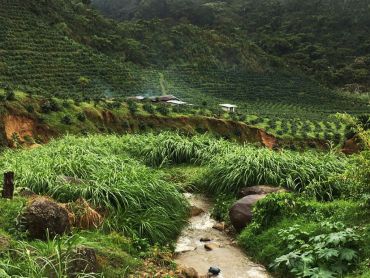
Finca El Regalo in Guatemala takes its name from its exceptional geographical location—no matter where you stand on the farm, looking up you see a magnificent panorama of rolling mountains and verdant pine forests, a landscape especially rare in the local Jalapa and Jutiapa producing regions. The soil in the coffee-growing area where the farm is located is relatively young, and the Geisha coffee trees used for the auction were first planted in 2015, having thus far undergone only about three years of growth. Since 2017, the farm has expanded its varietal cultivation, adding two coffee tree varieties, Maracaturra and Pache Maragogipe. A river called Pana flows through the farm, not only providing the necessary water for coffee processing but also nourishing the rich wildlife ecology of the surrounding area.
This planting area, totaling 12.5 hectares, currently centers on Geisha coffee, with plans to gradually introduce mass production of Maracaturra and Pache Maragogipe in the coming years. For local farmers, obtaining a quality auction qualification is not only recognition of their cultivation skills but also an important opportunity to drive industrial upgrading.
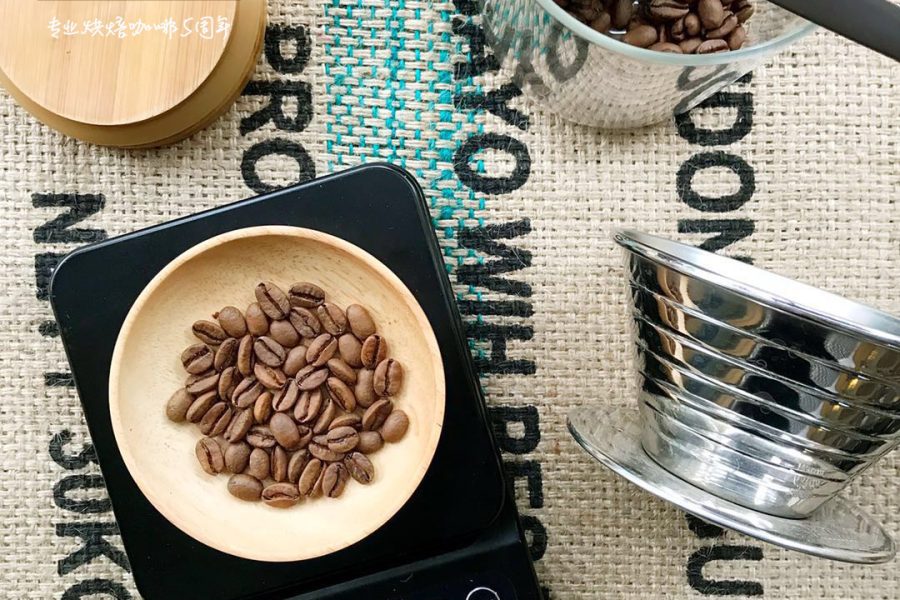
For flavor-sensitive coffee beans like Geisha, a three-stage pouring method is recommended for pour-over extraction. This method divides the total poured water into three stages, and is especially suitable for light to medium roast coffee beans. In practice, pairing with a Kalita cake cup (flat-bottom dripper) is recommended; by extending the bloom time or increasing the number of pauses, the body and complexity of the coffee can be effectively enhanced.
The core advantage of three-stage pouring is its ability to clearly separate the bright fruit aromatics of the front section, the sweet transition of the middle section and the lingering finish of the back section; compared with the single-pour "one-cut" technique, the flavor presentation is more three-dimensional. Note, however, that this method places high demands on the stability and flow control of the pouring stream, and beginners need to practice to master even pouring techniques.
When using a cake cup (flat-bottom dripper) for immersion extraction, the contact area between coffee grounds and water is larger, and compared with a V60 conical dripper, it can give the coffee liquid a fuller body and creamier texture. Specific parameters are recommended as follows: use 15 grams of coffee grounds, control water temperature in the 91-92°C range, reference grind size BG 5R standard (about 64% passing a No. 20 sieve, commonly used in China), and set the water-to-coffee ratio at 1:15 to 1:16.
Practical steps: first pour 27 grams of hot water for a 30-second bloom to activate the coffee; then, centered on the dripper, pour in a clockwise circular motion, pausing for 30 seconds when the first pour reaches 27 grams. For the first stage (about 125 grams), maintain a steady circular pour, slightly faster on the outer ring, finishing at about 1 minute 15 seconds and letting it rest until the liquid level drops by one third; for the second stage (about 230 grams), concentrate the pour in the center of the coffee bed, avoiding the stream directly hitting the edge of the filter paper and causing channeling, with the final extraction time controlled to finish before 2 minutes 05 seconds; the tail end may be discarded as appropriate to avoid the astringency caused by over-extraction.
Summary of the staged pouring plan: the three-stage water amounts are recommended as 30 grams (bloom) - 125 grams (first stage) - 230 grams (second stage); by precisely controlling the parameters of each stage, you can fully express the caramel sweetness and citrus notes of the honey-processed Geisha, or the rich tropical fruit flavors and wine-like finish of the natural-processed Geisha.