The Geisha Legend: From Ethiopia to Panama's Hacienda La Esmeralda
Introduction: Why has Geisha coffee become a benchmark in the specialty coffee world? This article traces the legendary journey of Geisha from the primitive forests of Ethiopia to Panama's Hacienda La Esmeralda, revealing how it upended global coffee tasting standards in the 21st century. We will outline the key milestones, analyze auction price trends, and focus on how Hacienda La Esmeralda, through precise cultivation and auction strategy, earned this high-altitude native Arabica variety the reputation of 'the champagne of the coffee world.'
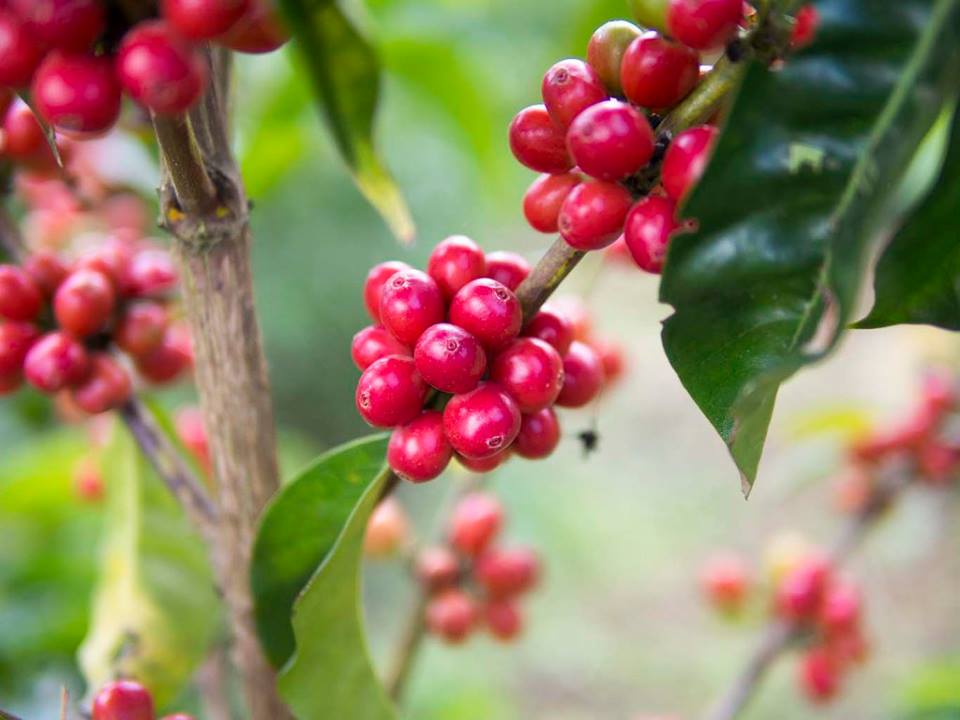 Geisha coffee, a native variety within the Arabica species, is demanding about its growing environment—its optimal growing altitude must reach 1,600 meters or above, and its yield per unit is only 50%-60% that of ordinary commercial beans—which creates its scarcity and unique flavor. This variety has a signature flavor layering of jasmine, citrus and tea notes, making it a star variety among pour-over coffee enthusiasts and barista competitions.
Tracing the origins: In 1931, a British colonial-era botanical expedition discovered the variety near Geisha village in the Jimma region of southern Ethiopia; it was initially mistaken for an ordinary highland variety. Researchers brought its seeds to a Kenyan nursery for cultivation, and over the following decade it spread to Uganda (1936) and Tanzania (around the same period). It was not until 1953 that Costa Rica's CATIE agricultural research institute systematically conserved and studied these genetic resources.
The turning point came in the 1960s—Don Pachi Serracín, founder of Panama's Don Pachi estate, introduced Geisha seedlings from Costa Rica, but it did not gain market attention until the early 2000s. The key turning point was 2004: Hacienda La Esmeralda entered the BOP (Best of Panama) auction for the first time, and its Geisha, grown at 1,650-1,800 meters, astonished the judges with its outstanding floral aroma and sweetness, winning the championship that year and opening a legendary chapter.
Subsequent auction records reveal the market's fervor for Geisha: at the 2007 SCAA international cupping competition, Hacienda La Esmeralda's Geisha set a new record with a transaction price of $130 per pound; in 2013 it reached a peak price of $350 per lot in the natural group. To balance competition fairness, the BOP organizers established a separate Geisha category starting in 2012 and refined the division rules in subsequent years—including traditional process/natural and washed subdivisions (2014) and the introduction of a Pacamara comparison group (2015).
Hacienda La Esmeralda's technical innovations were equally crucial: the estate gradually refined its expression of Geisha flavor through shade growing, hour-precise control of washed fermentation (typically 18-36 hours), and altitude-gradient experiments (such as the microclimate differences in the Barú volcano area). Notably, batches from its highest-altitude plots (such as the Cañas Verdes area) often present brighter acidity and a longer finish.
Historical auction data reflects the value trajectory of Geisha: the first auction lot in 2005 fetched only $20.1, jumped to $50.25 in 2006, and in 2007 directly broke into three digits at $130. Even in non-BOP private auctions (such as 2008-2009), Hacienda La Esmeralda maintained prices above $100. This sustained premium stems both from its unreplicable terroir and from the owners' strict control of scarce production—annual output has consistently remained at an extremely low level of 2,500-3,000 bags (60 kg each).