Gesha Coffee: Name Origins, Panama Flavor and Pour-Over Guide
Introduction: Gesha coffee is known worldwide for its distinctive citrus and floral notes and high auction prices, yet many people remain confused about the debate between its Chinese names 'Geisha' and 'Gesha', its origin story, and how to brew it. This article provides an in-depth analysis of the legendary journey of the Gesha variety from Ethiopia to Panama, clarifies the naming misunderstanding, reveals the causes of its flavor, and offers professional pour-over parameters and flavor descriptions to help you fully understand this benchmark of specialty coffee.
In 2004, a coffee from Panama won first place at the Best of Panama (BOP) competition with the highest score in the specialty coffee world at the time. In the years since, it has continued to break coffee auction records and has become the "secret weapon" behind many baristas' competition victories. This is the now highly sought-after Gesha coffee, which has won over coffee lovers worldwide with its fresh and elegant floral and fruity profile.

As Gesha has grown more famous, many beginners discover that it has two Chinese names—'Geisha' and 'Gesha'. Both names actually refer to the same variety: Gesha. Originally, when Japan encountered this variety, because the English name "Gesha" sounded similar to the Japanese word for 'geisha' (later derived as 'geisha'), this translation was adopted; Taiwan, influenced by Japan, also used 'Geisha' as the Chinese name. In mainland China, however, an industry veteran named it 'Gesha', which both avoided potential controversy associated with Japanese geisha culture and gave this delicately flavored coffee a more poetic name.

Why abandon 'Geisha' in favor of 'Gesha'? According to relevant records, some early merchants used the image of Japanese geisha for packaging and promotion—an approach that was neither appropriate nor related to the Gesha variety itself. More importantly, the renaming helps consumers correctly understand its origins and avoids orientalist elements that could cause misunderstanding in future marketing, allowing this coffee variety, known for its unique flavor, to be appreciated more purely.

The story of Gesha begins in southwestern Ethiopia in the 1930s. When British colonial explorers collected coffee samples there, they recorded that these coffee trees grew on Gesha Mountain, but they did not formally name them, labeling them only by the mountain name of their origin. These samples were later introduced to research stations in Kenya and Tanzania, where researchers found that they had strong resistance to coffee leaf rust—an advantage that led to their selection for introduction to Panama for variety improvement research.
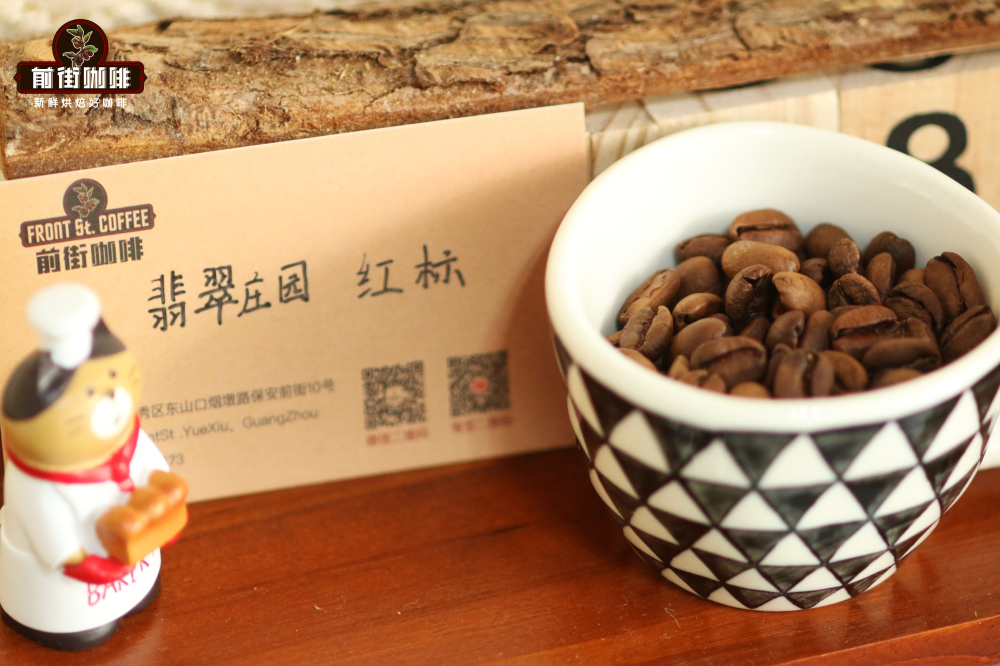
The turning point came in 2003. Hacienda La Esmeralda in Panama (then managed by the Peterson family) discovered during cupping after a routine harvest that a batch of coffee beans had a distinctive flavor—pronounced citrus notes and floral aromas stood out. The fruit from these particular coffee trees was processed separately and won first place at the 2004 BOP competition with an extremely high score. The auction price at the time was $21 per pound (already a high price at 2004 price levels). Subsequent genetic tracing confirmed that these champion beans were genetically identical to the original plants on Gesha Mountain in Ethiopia, so the variety was officially named Gesha.

As Gesha's fame spread, many regions in Panama began cultivating it. In addition to Hacienda La Esmeralda, farms such as Elida, Aurora, Deborah, and Nugu are also known for producing high-quality Gesha. For beginners who want to try Gesha's flavor, ordinary-grade Gesha beans from Panama's Boquete region (for example, Gesha coffee beans from the Boquete region, where Hacienda La Esmeralda is also located) are a good first choice, offering both value and flavor worth experiencing.

Gesha's growing environment significantly affects its flavor—high-altitude cultivation brings a marked day-night temperature difference, extending the coffee bean's growth period and the time for flavor compounds to accumulate. This also makes Gesha beans harder in texture, and after grinding they tend to sink to the bottom and clog the dripper's outlet hole. It is recommended to use a grind size with 78% passing through a Chinese standard No. 20 sieve (about the size of fine granulated sugar), paired with a three-pour pour-over to optimize extraction.
Specific parameters for reference: 15 grams of coffee grounds, a small Hario V60 dripper, a 1:16 coffee-to-water ratio (240 ml total water), water temperature 91°C, target concentration 1.15%–1.25%. Brewing steps: pour 30 grams of water and let it bloom for 30 seconds; for the second pour, circle-pour to 125 grams, and after the water level drops by half, continue pouring to 225 grams; keep the total extraction time between 2 minutes 10 seconds and 2 minutes 20 seconds. Flavor profile: bright citrus acidity, fresh white floral notes, a delicate green tea feel, and soft honey sweetness, with distinct layers and a long finish.