Yunnan Geisha Coffee: From Origins to Flavor Differences
Introduction: Geisha coffee is famed worldwide for its distinctive floral and fruity aromas and layered complexity, but how does Geisha grown in Yunnan differ from its Panamanian origin? This article examines the planting origins and variety characteristics of Yunnan Geisha, compares the flavor differences between the two regions, and shares practical processing methods for enhancing flavor, giving you a comprehensive understanding of this closely watched specialty coffee.
The Geisha coffee that has swept the world is prized for its rich, elegant floral aromas, citrus notes, and the full acidity of composite fruits such as peach, paired with a creamy, silky mouthfeel and a finish carrying the sweet fragrance of oolong tea. Its overall flavor is so refined that it seems unlike traditional coffee—more like savoring a fragrant fruit tea. A coffee's flavor expression is inseparable from variety, climate, altitude, soil, and management practices; it is a natural manifestation of terroir, and the core of subsequent processing and roasting lies in maximizing the preservation of these true flavors. Geisha's outstanding performance is precisely the result of these factors combining perfectly.

Rare things are precious, and Geisha coffee's yield is extremely limited. Take Panama: its annual coffee production is about 10,000 tons, of which the well-known Hacienda La Esmeralda produces only 150 bags of green beans (about 9,000 kilograms). If Geisha accounts for only 3% of that, annual output is only about 270 kilograms. Combined with widespread media promotion of Geisha's flavor, market demand keeps rising, and prices naturally remain high.
Compared with other Arabica varieties, Geisha not only has low yields but is also more fragile as a plant, with demanding growing requirements—it needs high altitude, fertile soil, and protection from cloud cover or shade; it cannot be exposed to direct sunlight. Geisha coffee leaves have a thin surface system and low photosynthetic efficiency, and fragile roots lead to slow water and nutrient absorption, with a long fruit maturation period. A single plant's yield is only half that of the Caturra variety, and these factors together drive up its preciousness.

Geisha coffee's fame stems largely from Panama's Hacienda La Esmeralda. According to Daniel, the third-generation head of the estate, the discovery of the Geisha variety went through years of comparative testing and was finally confirmed in 2003. Two weeks before that year's Best of Panama (BOP) competition, he found in an internal cupping that the variety displayed unique flavors of jasmine, citrus, peach, blueberry, bergamot, and sugarcane. Despite differing from mainstream preferences at the time, he insisted on entering it in the competition, where it won first place.
In 2005, Hacienda La Esmeralda submitted Geisha to the Specialty Coffee Association of America (SCAA), where it defeated many star varieties and swept the 2006 and 2007 world championships, drawing global attention. Thereafter, many producing regions—including Yunnan, China—began introducing this popular variety.
Yunnan Geisha has a relatively short planting history, dating back to around 2012 at the earliest. According to public information, the first Yunnan Geisha came from green-tip Geisha of Panama's Elida Estate; initially only about 10 plants were grown, and the research process was extremely cautious.

Coffee usually takes 3–4 years from cultivation to fruiting. Around 2016, Yunnan Geisha bore fruit for the first time and entered its second round of propagation, and only then did the outside world gradually take notice of this variety. Green-tip Geisha belongs to the higher grade of Geisha green beans; Geisha varieties in Central and South America may trace back to the T2722 variety catalogued by CATIE in Costa Rica.
It is worth noting that cross-pollination may occur on different estates, and Geisha seeds do not necessarily all come from CATIE; some may have been obtained through transactions between estates. The owner of Hacienda La Esmeralda once pointed out that the Gesha variety in early botanical descriptions had bronze new leaves, mediocre cupping performance, and strong fungal resistance, whereas Panama Geisha has light green leaf buds, outstanding cupping flavor, and resistance to leaf rust (but not to the coffee leaf spot Ojo de Gallo). Whether Panama Geisha belongs to T2722 remains undetermined.
Later, other Yunnan estates also claimed to grow Geisha, with seeds said to come from Panama's Hacienda La Esmeralda.


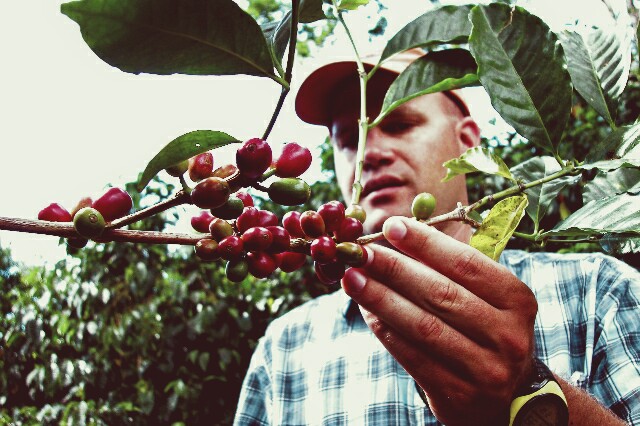
Available information indicates that Yunnan Geisha may originate from Panama, but its flavor differs noticeably from the origin. Panama Geisha's exceptional performance benefits from a high-altitude, complex climate environment—Geisha continuously optimizes its genes to adapt to its surroundings, and it needs shade trees for protection from direct strong light.
In Yunnan, by contrast, most coffee is grown in direct sunlight, though light intensity is lower than in Central and South America. The altitude and climate conditions (warm, with small day-night temperature differences) allow Geisha to grow more "freely" and ripen relatively easily. Constrained by the relatively lower altitude and terroir, Yunnan Geisha's flavor is not as refined and rich as Panama's; it commonly shows plum acidity, sweet-sour berry notes, and nutty and brown sugar tones.
To enhance the body of Yunnan Geisha, many farms use anaerobic fermentation combined with sun drying. The sterile fermentation environment gives the coffee more fermented flavors and enhances body, while sun drying further boosts sweetness.



When actually cupping Yunnan Geisha, one often perceives plum-like acidity, the fresh sweetness of red berries, a slight black tea character, and a finish dominated by nuts. The overall profile is balanced and on the moderate side, with floral notes less pronounced than in Panama Geisha.