What Is Pointed Bourbon Coffee? How It Differs from Regular Bourbon and a Full Pour-Over Flavor Guide
Introduction: Pointed Bourbon is a rare variety in the coffee world, possessing naturally low-caffeine characteristics and sweet flavors, and was once on the brink of extinction. This article provides an in-depth analysis of the genetic relationship between Pointed Bourbon and the regular Bourbon variety, its cultivation history and flavor differences, and offers professional pour-over recommendations to help coffee enthusiasts understand the brewing parameters and flavor performance of this unique variety.
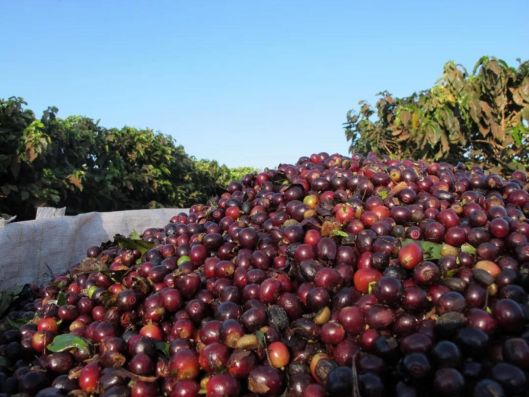
Bourbon and Typica are the two oldest extant Arabica coffee varieties, both originating in Yemen and later spreading worldwide via Indian Ocean islands. Bourbon arose as a natural mutation of Typica; its leaves are broader than Typica's, its canopy is compact, and its yield per unit area is higher, though overall it remains a low-yielding coffee tree species. Ripe fruit is bright vivid red, slightly different from the dark red commonly seen in Typica.
In appearance, Bourbon coffee beans are plump and uniform with a glossy sheen, and trees are usually pruned to keep height under 1.5 meters for ease of harvesting. Its flavor profile is known for bright red-wine acidity and a full-bodied finish, and it is a base variety in many specialty coffee regions.
The global spread of Bourbon began in the 19th century. Around 1860, because Typica introduced to Brazil had poor disease resistance and low yields, Bourbon was brought to South America via the Campinas region of Rio Grande do Sul and quickly spread to Central America. Although modern Latin America mainly cultivates hybrids such as Caturra and Catuai, traditional Bourbon still survives in places including El Salvador, Guatemala, Costa Rica and Peru.
Regarding the variety's naming, Bourbon takes its name from Réunion Island before 1789 (then called Bourbon Island). In 1715 the French brought round beans of Yemen Mocha to the island, where after several generations of propagation a unique strain formed. In 1727 the variety reached Brazil with colonial activity, and in 1732 it landed on Saint Helena. Besides the classic red-fruited Bourbon, variants such as Yellow Bourbon and Orange Bourbon also exist; Yellow Bourbon, though lower-yielding, has richer flavor layers.
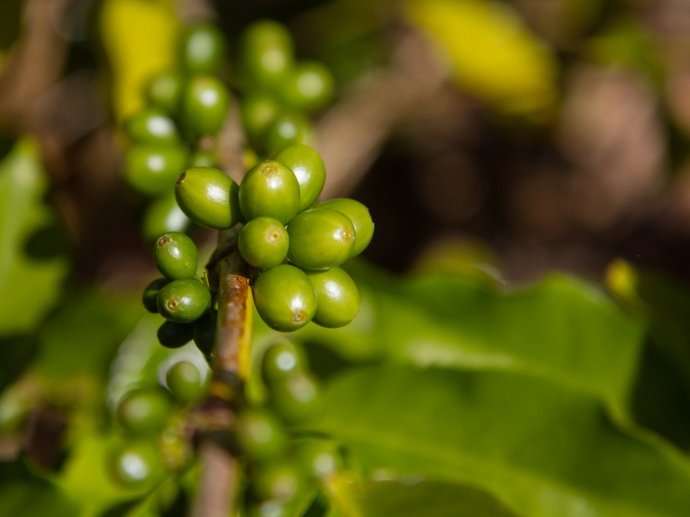
Pointed Bourbon (Laurina) is a special member of the Bourbon family, with an even more legendary history. This naturally low-caffeine coffee tree gradually disappeared due to low yields and was not rediscovered on Réunion Island until the early 21st century. In 2001, Japanese coffee expert Yoshiaki Kawashima, following leads from a Salvadoran farmer, found more than 30 wild plants in the Réunion wilderness; after cooperative cultivation by the French agricultural research center and Japanese companies, commercial production was first achieved in 2006, with the first processed batch yielding only 240 kg of usable beans.
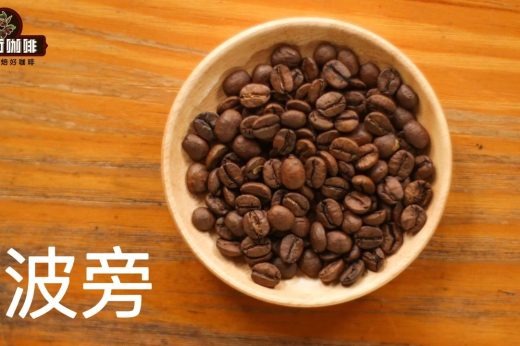
Morphologically, the most striking feature of Pointed Bourbon is its elongated, conical bean shape with sharp ends, in stark contrast to the oval outline of regular Bourbon (compare 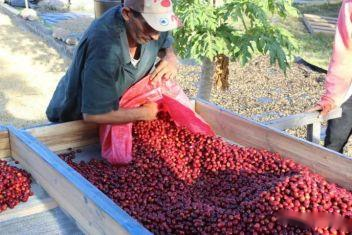 ). More crucially, its caffeine content is only 1/3 that of regular Arabica beans (about 0.6%), while sweetness is markedly higher, making it especially suitable for consumers seeking low-stimulation flavors.
In cultivation, Pointed Bourbon requires specific growing conditions: a high-mountain environment at 1,900–2,100 meters can slow its growth cycle and accumulate more sugar. The variety has weak resistance to pests and diseases and requires meticulous management. For brewing, a water temperature of 92–94°C, a 1:15 coffee-to-water ratio, and a medium-fine grind (75% passing a Chinese standard No. 20 sieve) are recommended; during pour-over, pay attention to staged pouring to keep the dripper temperature stable, which can fully reveal its caramel sweetness and jasmine aroma.
For coffee enthusiasts, Pointed Bourbon retains the signature balanced mouthfeel of the Bourbon family while its low-caffeine nature makes it a preferred choice for healthy drinking. Whether making pour-over or French press, freshly roasted beans (7–21 days after roasting) are recommended to fully release its unique nutty finish.