French Press vs. Pour-Over: Coffee Grind Size Comparison and Practical Tips
Introduction: Many coffee lovers are often confused about choosing a grind size when switching between pour-over and French press. This article explains in detail the ideal grind coarseness for French press and pour-over coffee, teaches you how to master grind size using simple reference objects, and explores the differences between the two in extraction method, time, and flavor, helping you adjust precisely and brew more ideal coffee.
In coffee brewing, grind size is one of the key factors affecting flavor. Many friends who are just starting out with coffee ask: how coarse exactly should French press coffee grounds be ground? How does it differ from the grind size for pour-over coffee? In fact, there is indeed a clear difference in grind coarseness between the two, mainly stemming from their different extraction methods.
To intuitively understand the grind coarseness of coffee grounds, you might use small everyday objects as references. For example, a French press is suited to a grind size between fine granulated sugar and light brown sugar. This is a good starting point that balances extraction efficiency and clarity of taste.
If after brewing you find the coffee tastes too heavy, you can try grinding coarser, close to light brown sugar or even coarser, which reduces the production of fines and lowers the risk of over-extraction. Conversely, if the coffee tastes weak, you can grind slightly finer, close to the coarseness of fine granulated sugar; extending the steeping time can also help raise the extraction yield.
It is worth noting that uneven coffee grounds often lead to uneven extraction, especially since low-quality grinders tend to produce a large amount of fines. If these fines are not filtered out, they give the coffee noticeable off-flavors and bitterness. Therefore, using a high-quality grinder, or pairing it with a sieve to remove fines, is an important step in improving coffee flavor.
The French press is a typical immersion-style extraction tool, where coffee grounds stay in contact with hot water for a long time, usually around 4 minutes of steeping. For this reason, we usually recommend a coarser grind size to control the extraction rate and avoid the bitterness caused by over-extraction. Coarse coffee particles have a smaller surface area and allow water to flow freely, which helps stabilize extraction.
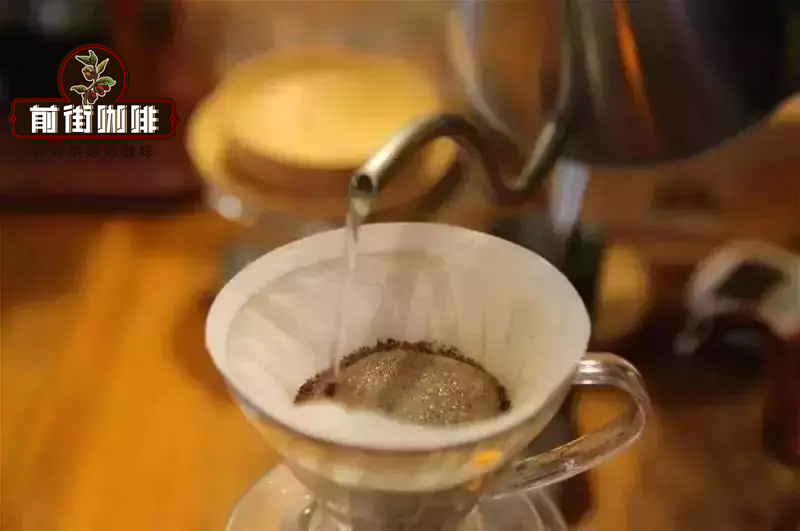
By contrast, pour-over coffee generally uses a finer grind size, with the aim of controlling extraction time through a faster water flow, usually completing in 2 to 3 minutes. Because pour-over relies on the speed of water passing through the coffee bed, if the grind is too fine, it easily causes channeling or over-extraction, affecting flavor balance.
However, the advantage of the French press is that it gives the user greater flexibility. Even if you choose a finer grind size, as long as you adjust the steeping time accordingly, for example shortening it to under 3 minutes, you can also avoid the problem of over-extraction. But this is harder to achieve with pour-over, because the relationship between fines and water flow speed limits the room for adjustment.
In summary, a French press is better suited to a coarse to medium-coarse coffee grind, while pour-over requires a finer grind size to match the fast water flow. You can start with the coarseness of fine granulated sugar and light brown sugar, and fine-tune based on actual flavor feedback. At the same time, minimize the production of fines as much as possible—no matter which brewing method you use, this can make your coffee cleaner and fuller-bodied.