The Four Main Coffee Processing Methods: Natural, Washed, Honey and Semi-Washed
Introduction: From fruity aromas to clean acidity, coffee processing directly shapes the final flavor. This article takes an in-depth look at the technical differences among the four mainstream methods—natural, washed, honey and semi-washed—reveals how key parameters such as drying time and mucilage retention shape a coffee's sweetness, acidity and body, and provides brewing parameter references for each method to help you precisely choose the flavor you love.
In the specialty coffee wave, processing has become the second gene determining coffee flavor. Beyond origin altitude and variety characteristics, the drying method a farmer uses gives beans distinctly different flavor profiles. The world currently relies mainly on four processing systems—natural, washed, honey and semi-washed—each of which, by regulating fermentation degree, drying duration and mucilage retention, ultimately presents a diverse range of expression from intense fruit aromas to clear acidity.

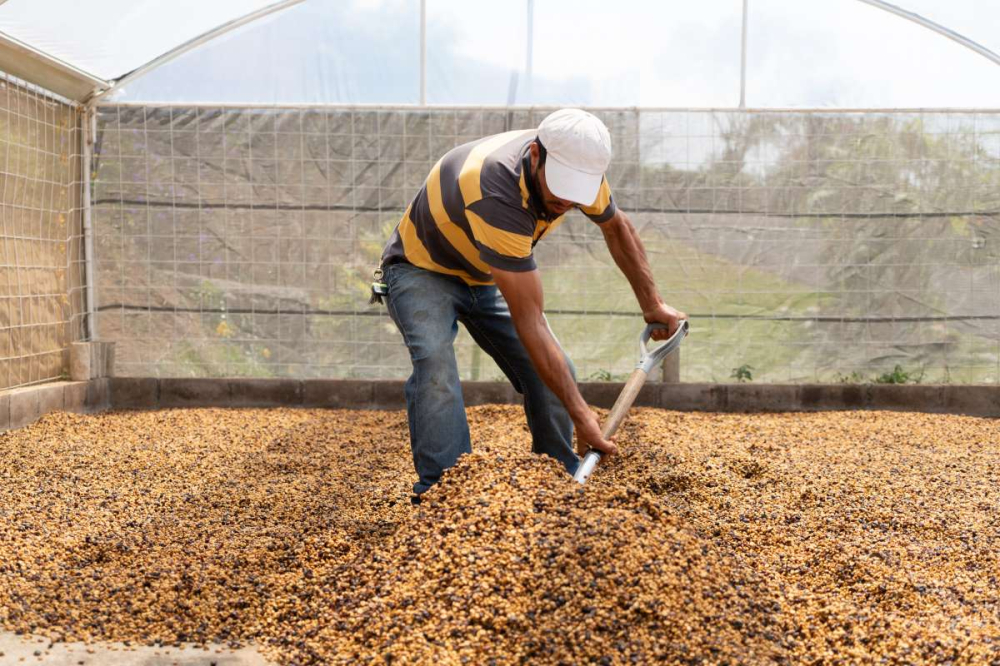
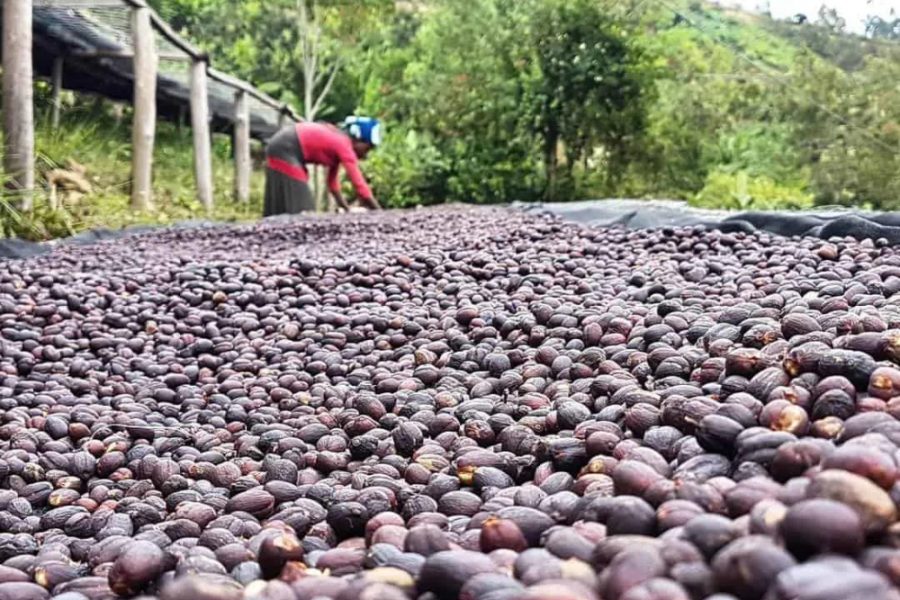
As the oldest processing method, the natural process (Natural/Dry Process) keeps the coffee fruit's complete structure throughout, naturally dehydrating in sunlight to a moisture content of 10.5%–12%. Dry regions such as Ethiopia and Brazil commonly use this method, and the drying cycle usually takes 2–4 weeks. Note in particular: when ambient humidity exceeds 65%, temperature-controlled dryers must be used as a backup, but mechanical drying causes about 30% loss of fruity compounds. High-quality natural beans require strict monitoring of pile temperature not exceeding 45°C, with three turnings per day to prevent localized mold. Successful cases show that coffee slowly sun-dried over 21 days develops a complex aroma of blueberry, tropical fruit and honey, with notably fuller body than washed beans.

Modern coffee processing can be divided into three major categories: dry process (natural), wet process (washed), and semi-dry process (honey and semi-washed). The dry process relies on converting natural sunlight, while the wet system removes the mucilage layer through fermentation tanks, and the semi-dry process cleverly balances the advantages of both. Next we will break down the core technical points of each method.
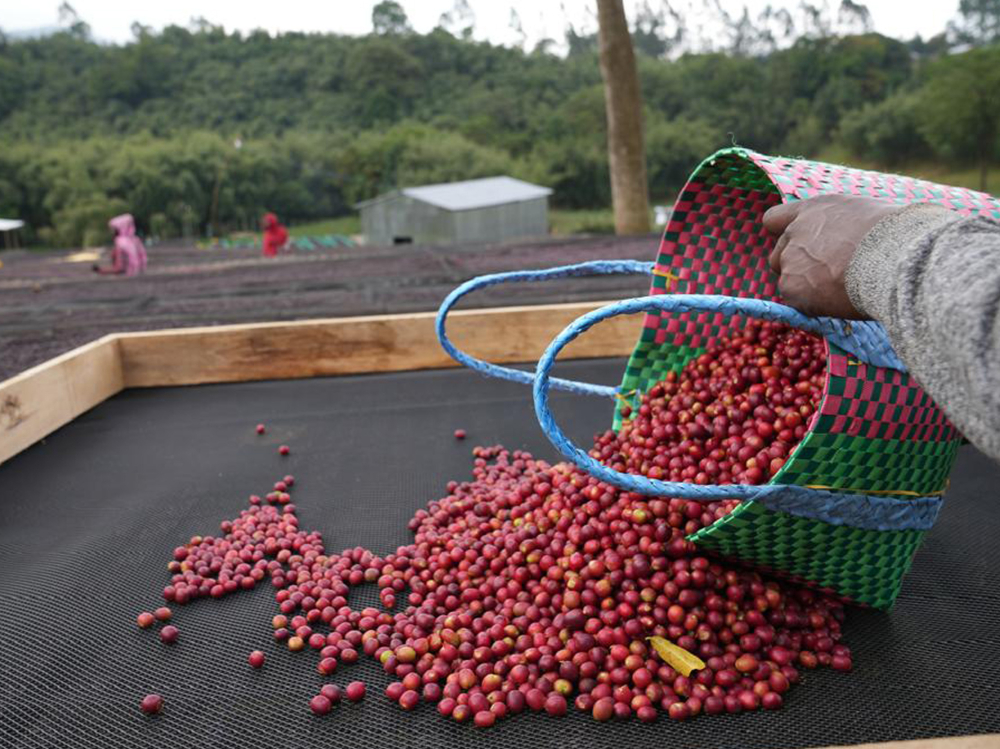
Traditional natural drying techniques show significant regional adaptability differences. In Brazil's Cerrado region, farmers often spread whole coffee cherries on raised mesh beds, keeping spacing above 5 cm to ensure air circulation. Professional tip: if white mycelium appears on the fruit surface, immediately use a bamboo rake to spread out the damp area and extend the drying cycle. Comparative experiments show that coffee sun-dried entirely outdoors has an 18% higher sucrose conversion rate than mechanically dried product, which is the key to forming a distinctive caramel finish. A typical example is the natural Ethiopia Yirgacheffe lot, which often carries layers of dried mango and jasmine.

The washed process (Wet Process) was born during the 18th-century colonial period in Java, and its innovation lies in removing mucilage adhesion through fermentation tanks. The standard procedure includes four stages: depulping → fermentation (12–72 hours) → rinsing with clean water → drying. Kenya's distinctive double fermentation process strengthens citrus acidity by extending yeast action time. Be alert that over-fermentation leads to excess butyric acid—when pH drops below 4.2, a distinct off-putting rotten odor develops. The optimization approach is to use staged water addition, controlling initial water temperature at 28±2°C and monitoring sugar content changes every 8 hours. Modern environmentally friendly processing uses closed-loop water recycling systems, which can reduce wastewater discharge by 90%.

The chemical essence of the wet process is mucilage decomposition. When coffee fruit is immersed in water, pectinase on the parchment surface gradually hydrolyzes polysaccharides at 25–30°C. Professional farmers judge the fermentation endpoint by the "squeeze test": when the mucilage layer no longer feels sticky when rubbed, immediately start the rinsing procedure. Light roasting such beans highlights bright citric acid and black tea notes; grind adjustment to medium-fine is recommended (75% passing a Chinese standard No. 20 sieve), with water temperature controlled in the 90–92°C range.

The semi-dry processing system includes two branches, pulped natural and honey, the former developed by a Brazilian agricultural engineer in the 1980s by modifying the depulper's construction. Modern high-pressure washing equipment can keep mucilage residue below 5%, greatly reducing fermentation risk. Typical parameter settings: bean moisture 65%±3% after depulping, spread on African drying beds at 3 cm thickness for 18 days. Coffee produced this way in Colombia's Huila region often shows gentle notes of roasted almond and dark chocolate, and is suitable for milk drinks at a 1:15 coffee-to-liquid ratio.

The innovation of the honey process lies in precisely regulating the mucilage retention ratio. Research by Costa Rica's agricultural science institute found that when parchment mucilage retention reaches 40–60%, Maillard reactions during drying generate more furan aromatic compounds. In practice, an adjustable demucilager is set to a pressure value (usually 8–12 psi), and the mucilage-coated beans are placed under shade nets to dehydrate slowly. Panama's Hacienda La Esmeralda Geisha honey lot, after 14 days of shade drying, develops a striking flavor of lychee and vanilla ice cream; for brewing, a V60 dripper with 93°C water is recommended, with staged pours of 30g → 90g → 150g.

The honey process has spawned a grading system of black honey, red honey, yellow honey, whose essence is differentiated control of the drying environment. Black honey beans require drying under full shade for over 25 days, with the highest degree of mucilage oxidation and a flavor close to traditional natural but cleaner; red honey beans are dried at 50% shade for 18 days, balancing sweetness and acidity; yellow honey beans dehydrate quickly under full sun for 12 days, highlighting fresh citrus notes. Professional roasters suggest: dark honey beans suit darker roasts to stimulate caramelization, while light honey beans preserve floral and fruity aromas and are best with a medium-light roast curve.

The choice of processing method directly affects a coffee's economic benefits and quality stability. Data shows the washed method uses about 15–20 L of water per kg of green beans, but unit yield loss is only 2–3%; the natural method saves water but carries a 15% risk of defective beans. For home users, the processing method can be roughly judged by observing bean surface color—natural beans are dark blue-green with silver skin remnants, washed beans are bright green with a clean surface, and honey beans have an amber sheen. For storage note: green beans of all processing methods should be sealed and kept at 11–13% humidity and 18–22°C, with the best flavor period 14–21 days after roasting.

From field to cup, every detail of coffee processing writes the flavor code. Whether you are a washed-method purist seeking ultimate cleanliness or a natural-process lover drawn to complex layers, understanding these processing differences will help you more accurately match your personal taste preferences. Next time you buy coffee beans, first check the processing method information on the packaging, then adjust parameters according to your brewing equipment's characteristics, so that every cup shows the terroir charm it deserves.