Hawaiian Coffee Grades and Regional Flavors: A Bean Selection Guide
Introduction: Want to understand why Hawaiian coffee beans have become such an important player in the specialty coffee market? This article takes a deep look at Hawaiian coffee's grading standards, the characteristics of its core growing regions, and the differences in flavor. From KONA to PUNA, it walks you through the flavor profiles of different grades and regions, explains the key factors that affect quality, and helps you choose Hawaiian coffee beans that suit your taste with more expertise.
The Hawaiian coffee bean grading system uses bean appearance, defect rate, and size as its core criteria, and is divided into five main grades: Extra Fancy, Fancy, Number 1, Selected, and Prime. Type 1 refers to the common flat bean, while Type 2 is the rarer round bean (peaberry). This grading system is strict and ensures the quality and consistency of the coffee beans. In the KONA region especially, any package labeled "100% KONA" must pass dual certification by the Hawaii Coffee Association and the United States Department of Agriculture to guarantee the authenticity of its origin.
Besides the well-known KONA coffee, the BIG ISLAND of Hawaii has several other notable growing regions, including PUNA, KAU, HAMAKUA, and KAU; these regions all lie in volcanic zones and enjoy fertile volcanic soil and suitable climate conditions. The KONA region has more than 200 years of cultivation history and an annual output of about 32,000 metric tons, making it Hawaii's most representative and most expensive coffee region. PUNA is located in the east of the Big Island, at an elevation between 300 and 760 meters, with a warm, humid climate and abundant rainfall; its coffee beans are known for outstanding sweetness and a distinctive aroma, making it one of Hawaii's representative high-quality coffees.
Hawaiian coffee overall tends toward a sweet, balanced flavor with pronounced aromatic layers. This style aligns closely with Japanese consumers' preference for dark-roasted coffee and siphon brewing; even under dark roasting it retains sweetness without bitterness and a long finish, and is therefore deeply loved in the Japanese market. Under the global specialty coffee trend, Hawaiian coffee beans can also show diverse fruit flavors at different roast levels, such as cherry, strawberry, and other red berry notes, often accompanied by chocolate and syrupy sweetness, making them highly regarded in the international market as well.
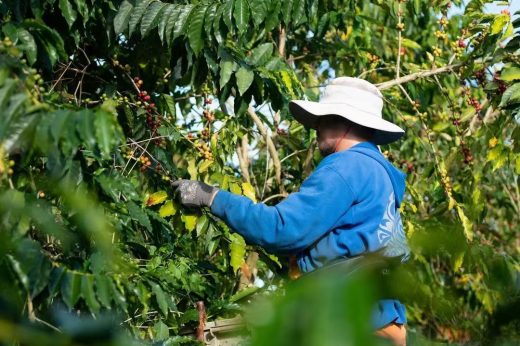
The unique flavor of Hawaiian coffee is inseparable from its growing environment. The Big Island's volcanic soil is rich in minerals, and the maritime climate moderates conditions: during the day, sunlight softens as it passes through moisture in the air, and midday mountain mist effectively reduces direct light intensity, protecting the coffee trees from overexposure, while nighttime temperatures are mild, favoring slow ripening of the coffee fruit and the accumulation of rich flavor compounds. Together, these natural conditions create the outstanding quality of Hawaiian coffee beans, and KONA coffee in particular is praised as "a treasure nurtured by the tears of the volcano goddess."
KONA coffee's grading is even more detailed, divided by bean shape into Type I (flat bean) and Type II (round bean/Peaberry). Type I is further subdivided into Kona Extra Fancy, Kona Fancy, Kona Number 1, Kona Select, and Kona Prime, while Type II includes Peaberry Number 1 and Peaberry Prime. Beans that do not meet the minimum standards are classified as Number 3 and may not bear the name Kona Coffee. Notably, only coffee beans grown in the Kona district of the BIG ISLAND, on the slopes of Hualalai and Mauna Loa, are eligible to be called KONA coffee.
In recent years KONA coffee has faced the threat of the coffee berry borer (Hypothenemus hampei). To address this problem, since 2010 the Hawaii Department of Agriculture has required that all green beans undergo methyl bromide fumigation or a six-step treatment process before export, to ensure the safety and quality stability of the beans. While this measure safeguards coffee hygiene, it also affects yields and costs to some extent, which may cause KONA coffee prices to continue fluctuating in the future, while also bringing more development opportunities to other regions such as Kauai and Maui.
Besides KONA, coffees from other regions also have their own distinctive characteristics. For example, the KAU region is dominated by fresh fruit aromas, often with cherry, strawberry, and passion fruit flavors, complemented by cinnamon and cedar spice notes and a chocolate-like sweet finish; HAMAKUA is known for Swiss chocolate and hazelnut aromas with distinct almond notes; PUNA coffee is aromatic like red wine, with black chocolate notes and a smooth, full body. Each region, because of differences in microclimate and soil conditions, produces coffee beans with unique flavors, offering coffee lovers a diverse range of choices.
Overall, Hawaiian coffee attracts attention not only because of KONA's fame; its strict quality control, exceptional natural environment, and the distinct flavor characteristics of each growing region all give it a unique place in the global coffee market. Whether brewed by pour-over, siphon, or other methods, exploring the diversity of coffee beans from Hawaii's various regions will add more layers and enjoyment to your coffee experience.