Hawaii Kona Coffee Explained: Flavor, History and Pour-Over Guide
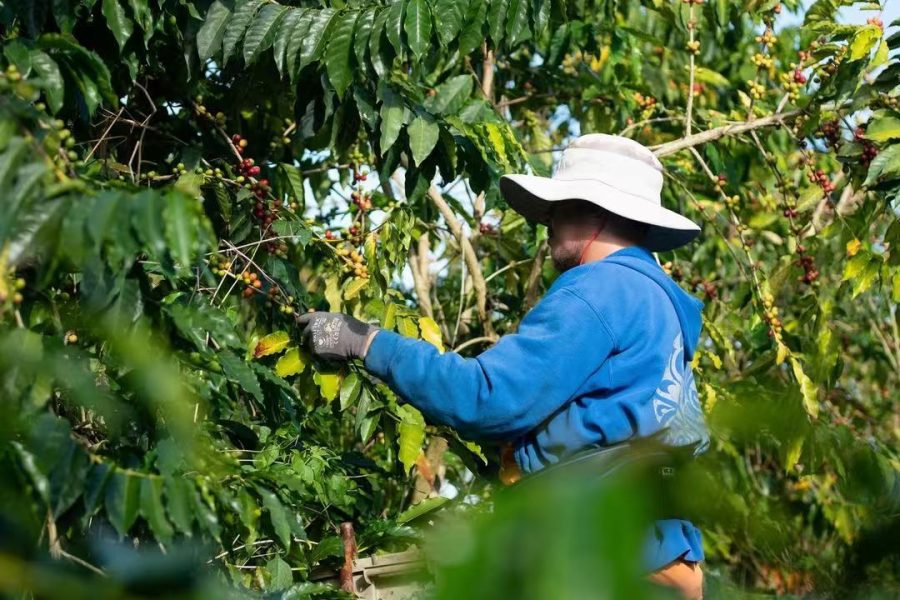
Introduction: Although Hawaii Kona coffee grows in low-altitude volcanic terrain, it is renowned worldwide for its distinctive flavor. This article takes an in-depth look at Kona coffee's growing regions, variety characteristics, processing methods and grading standards, and provides professional pour-over recipes. From a comparison of five major regions from Maui to the Big Island, to the flavor secrets of the Typica variety, to brewing parameters for the V60, siphon and other equipment, this will help you fully understand this 'treasure of the Pacific'.
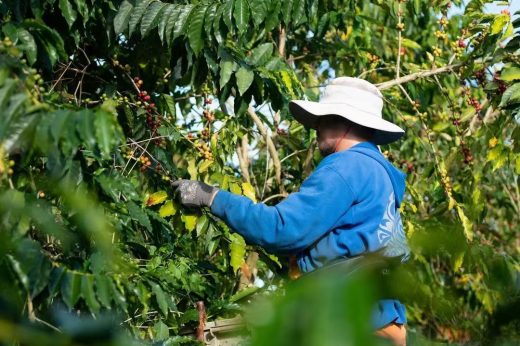
 Hawaii Kona coffee overturns the conventional wisdom that 'good beans come from high altitudes'—although it is generally grown below 2,000 meters, its unique volcanic soil and maritime climate produce specialty coffee with balanced acidity and sweetness and prominent fruit notes. Production is concentrated on the slopes of the Hualalai and Mauna Loa volcanoes in the southwest of Hawaii's Big Island; a narrow strip at 800-1,100 meters (only 20 miles long and 2 miles wide) is the core growing belt, where significant day-night temperature swings, combined with 80 inches of annual rainfall and fertile basalt soil, give the beans a plump body and complex aromatics.
 Kona coffee plants take root in the crevices of volcanic rock and rely on gentle sea breezes to regulate humidity, in an almost harsh growing environment. Coffee can be grown from sea level up to 6,000 feet, but truly high-quality 'extra fancy' coffee must grow in the high mountain zones at 4,000-6,000 feet—such areas receive about 80 inches of annual rainfall, have distinct wet and dry seasons, and daytime temperatures that hold steady at 15-20°C; the long growing cycle allows flavor compounds to accumulate fully. It is worth noting that although Kona beans are grown at lower altitudes than Jamaican Blue Mountain, thanks to the purity of the volcanic soil and the regulating effect of the maritime climate, their cup cleanliness and sweetness are often regarded by the industry as 'each having its own merits'.
 Kona coffee's cultivation history dates back to 1817, when the first Spanish advisor, Don Francisco de Paula Marin, first introduced coffee seedlings, though initial attempts were unsuccessful. It was not until 1825, when Oahu governor Chie Boki brought coffee seeds back from Brazil and successfully trialed them in Manoa Valley, that Hawaii's coffee industry began. Today the state's five major islands (Kauai, Oahu, Maui, Molokai and the Big Island) have about 950 family farms totaling 7,900 acres of cultivation, with the Kona region on the Big Island the most famous—home to over 630 small farms (most under 2 hectares), run by different families across generations and preserving traditional cultivation and meticulous processing methods.
 Hawaii's regions show marked differences in terroir: Maui's Ka'anapali estate was a sugarcane field from 1860 to 1988, and after conversion planted varieties such as Catuai and Caturra at 100-550 meters, with harvest from September to January; the Waipapu region (WAIPAPU, MAUI) belongs to the neighboring-island Molokai company, sits at 500-750 meters, and mainly produces Typica and Catuai; Kauai's (KAU) Big Island Coffee processing plant began in 1996 (converted from an old sugar mill), achieved local processing after 2010, lies at 100-600 meters, harvests from August to January, and mainly grows Typica and Catuai; Hamakua (HAMAKUA) has grown coffee since 1852, was revived in the 1990s after the impact of the sugar industry, sits at 100-600 meters, and its harvest also runs from August to January.
 What truly made Kona coffee world-famous is the core region in the southwest of the Big Island—Kona (KONA). This narrow strip, 20 miles long and 2 miles wide, strictly limits the name 'Kona' to coffee grown on the slopes of Hualalai and Mauna Loa volcanoes and processed according to certification standards. The region sits at 800-1,100 meters, ideal for Arabica: volcanic ash soil rich in minerals, year-round cloud cover that reduces light intensity, and day-night temperature swings that promote sugar conversion. According to statistics, the region has over 630 family farms, each averaging only a few hectares—this small-scale, meticulous cultivation model is the cornerstone of Kona coffee's consistent quality.
 Every November, the Big Island holds a grand 'Kona Coffee Cultural Festival', a nearly 10-day event featuring more than 40 coffee-themed competitions and experiences (such as cupping contests, cultivation lectures and farm tours); it celebrates the harvest and also promotes Kona coffee's 180-plus years of heritage to the world.
 Kona coffee's main variety is Typica—an ancient variety originating in Ethiopia whose new leaves are bronze (commonly called 'red top'), with a conical tree shape, wider branch spacing (side branches at a 50-80 degree angle to the trunk), and bright red fruit when ripe. Typica's flavor profile is distinctive: a clean, pure cup, prominent sweetness, and soft citrus and floral notes, but low yield (about one-third that of modern high-yield varieties) and susceptibility to leaf rust. It is worth noting that Typica is not only Kona's main variety; its derived varieties (such as Bourbon) are also widely grown in other Hawaii regions (such as Maui's Catuai and Caturra).
 In processing, Hawaii Kona generally uses the washed method: first the outer skin and pulp are removed, the mucilage layer is broken down by fermentation (usually 12-36 hours), the remaining residue is then thoroughly washed off, and finally the parchment beans are sun-dried naturally to a moisture content of 11%-12%. Kona's pure mountain spring water provides ideal conditions for washing; this method preserves the coffee's fresh acidity and floral-fruity aromas to the greatest extent while ensuring the bean surface is smooth and free of defects.
 In grading, Kona coffee is mainly classified by bean size and shape: the highest grade is Extra Fancy (largest beans, fewest defects), followed by Fancy, Select and Prime; there are also two types, Type1 (standard round beans) and Type2 (small round beans, Peaberry)—peaberries, being denser and more concentrated in flavor, are often graded separately as Number 1 Peaberry (top peaberry) and Peaberry Prime. Professional buyers usually prefer Extra Fancy or Fancy grade Type1 round beans to ensure flavor consistency.
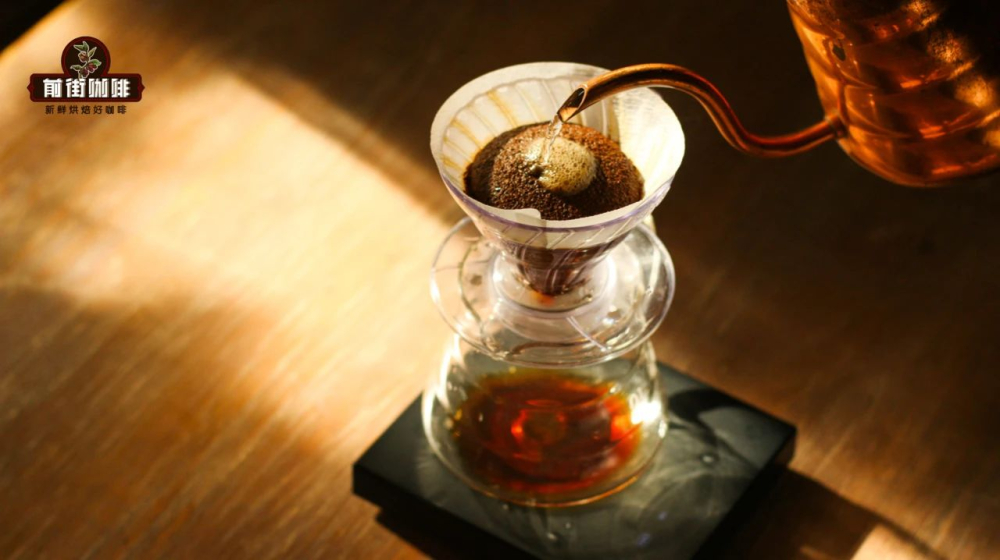
 For home brewers, the following parameters are recommended: with a V60 dripper, use 15 grams of coffee at a 1:15 coffee-to-water ratio, a grind close to fine sugar (75% passing a Chinese standard No. 20 sieve), and a water temperature of 88°C; begin with a 28-gram bloom for 30 seconds, then pour in stages up to a total of 227 grams, keeping total extraction time around 1 minute 50 seconds—this recipe highlights Kona coffee's nutty-creamy base and berry fermentation aroma; if you prefer a French press, use 17 grams of coffee with 223 grams of water (1:13) at 88°C, a coarse grind similar to fine sugar (75% passing), stir and steep for 1 minute before pressing—this strengthens the rich notes of brown sugar and dark chocolate. For parameter adjustments with different equipment, refer to professional cupping data (as shown in the diagrams), and fine-tune grind and water temperature to your taste.