Yunnan Baoshan Natural-Process Coffee Beans: Flavor, Processing and Growing Guide
Introduction: A deep dive into natural-process coffee beans from the Baoshan region of Yunnan, from the distinctive natural drying process to the vivid layers of flavor, with a full analysis of the growing background, flavor characteristics and processing techniques of this specialty coffee. Learn how Baoshan overcomes geographical and climatic challenges to produce high-quality beans with a sense of place, offering coffee lovers and industry professionals a practical reference for choosing and tasting beans.
When people mention Yunnan coffee, many first think of Pu'er, but Baoshan, as one of Yunnan's important coffee regions, is gradually making a name for itself in specialty coffee with its natural-process beans, thanks to its unique tropical plateau climate and meticulous processing. Baoshan is located at the southern end of the Hengduan Mountains. Although most of the area sits at around 1,100 meters, slightly below the traditional golden altitude band for quality coffee, its distinct wet and dry seasons and abundant sunshine provide exceptional natural conditions for the natural processing method.
Yunnan coffee cultivation has long faced environmental challenges. For example, although it lies in a "hot zone," it is far from the equator, so overall evaporation is high; combined with frequent droughts and frosts in recent years, this puts the coffee growth cycle and quality consistency to the test. At the same time, many growing areas are below 1,100 meters, which limits the development of flavor complexity. In addition, cultivation techniques and farmers' limited understanding and tasting experience of coffee flavor have also been factors constraining quality improvement in Yunnan coffee in the past. Many farmers have long focused on growing coffee but rarely have the opportunity to taste the coffee they grow, which to some extent has affected their pursuit of quality and their grasp of flavor.
In the late 20th century, affected by a special historical period, coffee research and variety improvement in Yunnan stalled for a time. It was not until after reform and opening up that agricultural research institutions represented by the Baoshan Lujiang Farm and the Xincheng Youth Farm succeeded, through sustained efforts, in cultivating a Typica variant, which won excellent results in international coffee competitions and drew industry attention. However, because consumers had limited knowledge of coffee, these quality varieties did not receive the attention they deserved in the market. To address practical growing problems such as pests, diseases and drought and to raise yields per unit area, in the early 1990s the Baoshan Tropical Crops Research Institute introduced the Catimor variety developed by the Portuguese Coffee Rust Research Center—a disease-resistant, high-yield variety crossed from Timor (robusta) and Caturra (arabica). Catimor not only effectively resisted coffee leaf rust but also had stronger adaptability, with yields per mu nearly double those of traditional varieties, greatly motivating farmers to grow coffee; it remains the main variety grown in Baoshan and indeed across Yunnan to this day.
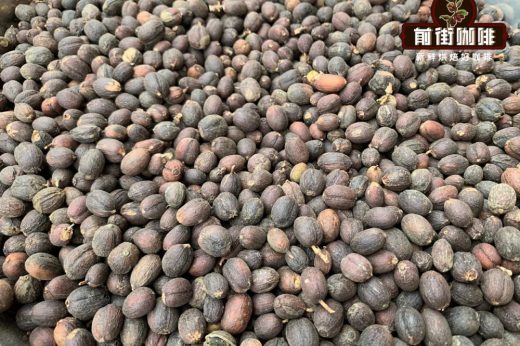
Although Catimor has clear advantages in disease resistance and yield, its flavor was once considered rather ordinary—medium body, not particularly bright acidity, and often fairly basic nutty and chocolate notes. To highlight the region's character and enhance flavor distinctiveness, some estates and processing stations in Baoshan began trying the natural processing method, making full use of the local intense sunlight and dry climate. By extending the time the fruit dries on the plant, the sugars and aromatic compounds in the coffee fruit penetrate the seed (the coffee bean) more fully, giving the coffee richer sweetness, fuller fruit aromas and a deeper, rounder mouthfeel.
The flavor of Baoshan natural-process coffee typically shows: obvious caramel sweetness on entry balanced by the sweet-tartness of ripe berries, accompanied by tropical fruit aromas (such as mango and pineapple); the mid-palate reveals a honey-like smooth texture, and the finish carries a faint winey or cocoa aftertaste. Compared with the clean, crisp character of traditional washed processing, natural-process Baoshan coffee is more layered and complex, especially suited to coffee lovers who enjoy intense sweetness and fruity notes. For brewing suggestions: with pour-over, use a medium-fine grind (similar to fine granulated sugar) and keep the water temperature at 90-93°C to highlight its sweetness and fruit aromas; with a French press, its full, round mouthfeel comes through even better.
Although the Baoshan region does not have an absolute advantage in overall altitude, its unique dry-hot river valley climate, abundant sunshine and gradually maturing cultivation and processing techniques are opening a new path for improving the quality of Yunnan coffee. For coffee lovers who want to explore the diversity and regional character of Yunnan coffee, Baoshan natural-process beans are undoubtedly a quality choice worth trying: you can experience the unique terroir of Yunnan coffee and also feel the unremitting efforts of farmers and processors to improve flavor quality.