Hawaii Kona and Ka'u Coffee: Pour-Over Flavor and Growing Stories
Introduction: Hawaii's Kona and Ka'u coffee beans have become a focus for specialty coffee lovers worldwide thanks to their unique terroir and meticulous cultivation. This article takes a deep look at the growing history, geographical conditions and flavor characteristics of these two regions, explains how they perform in pour-over brewing at different roast levels, and offers practical brewing reference parameters to help you better appreciate these two classic Hawaiian coffees.
Coffee plants were first introduced to Hawaii in 1817 by Don Francisco de Paula Marin, Hawaii's first Spanish advisor, but early cultivation was unsuccessful. It was not until 1825, when Oahu governor Chie Boki brought coffee seedlings back from Brazil and successfully planted them in Manoa Valley, that a new chapter in Hawaiian coffee cultivation began. Coffee growing subsequently spread to Kauai, Oahu, Maui, Molokai and the Big Island. Today there are about 950 mostly family-run coffee farms across the islands, covering a total planted area of 7,900 acres.
Among Hawaii's many coffee regions, Kona and KAU are the two most representative, each with its own unique terroir and flavor profile.
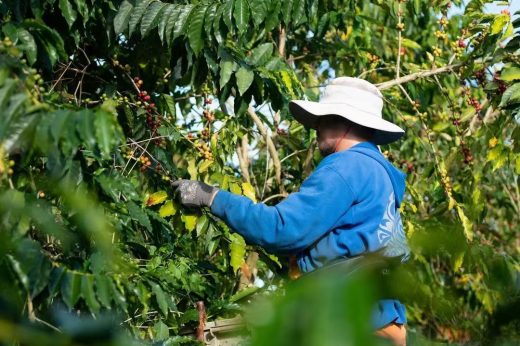
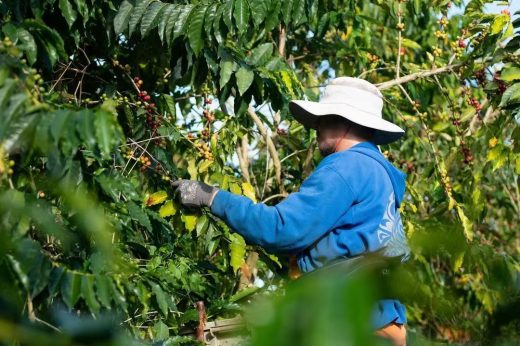
The story of Kona coffee began in 1828, when missionary Samuel Ruggles first experimented with growing coffee in the Kona area of the Big Island. Today Kona coffee accounts for about half of Hawaii's total coffee output, with growing areas mainly in North and South Kona. The trees are mostly planted on the western side of Mauna Loa and the slopes of Hualalai at low to mid elevations of about 2,000–3,000 feet. The region's volcanic black soil is moderately acidic, rich in minerals and holds water well, providing an ideal growing foundation. Kona's climate is also distinctive: plentiful morning sunshine, with clouds and mist rolling in after noon. This ensures the trees can photosynthesize fully while preventing the strong afternoon sun from scorching tender flowers and fruit. This "semi-shade" environment is especially favorable for pollination of the coffee flowers and development of the cherries.
American writer Mark Twain praised it in his 1866 "Letters from Hawaii": "Kona coffee has a richer flavor than any other, be it grown where it may and call it by what name you please." The industry generally regards Kona coffee as on par with Jamaican Blue Mountain; its cup is elegant and full-bodied, with a moderate layer of fruity acidity. Depending on the roast level, Kona coffee can show either a clear, bright tea-like quality or a full, juicy fruit character.
Light-roasted (City level) Kona coffee gives off a delicate plum-like acidity when ground and, once brewed, presents a steady aroma reminiscent of roasted Tieguanyin tea. The entry is clean and refreshing with no obvious flaws; the initial citrus acidity quickly turns into the sweetness of tropical fruits such as banana and pineapple, while the finish lingers with a gentle brown-sugar sweetness, the aroma echoing between the mouth and the nose.
Medium-roasted Kona coffee shows a more balanced character, with honey-like sweetness complemented by a warm, full mouthfeel. It gives off a distinct melon-like fruit aroma when brewing, bringing a pleasant sweet experience; a smooth malt sweetness emerges in the aftertaste, rising slowly after swallowing so that the sweetness lingers in the mouth. The overall drinking experience is round and layered.
Another region worth noting is KAU, which has gradually gained favor among coffee lovers in the continental United States in recent years. Ka'u coffee is grown on the eastern slopes of Mauna Loa, also at elevations of 2,000–3,000 feet, with award-winning estates mostly concentrated in Pahala at the northernmost end of the KA'U district on the Big Island. The terrain here is complex and varied; the coffee farms are mainly on sun-facing slopes, receiving ample morning sun and shrouded in cloud and mist in the afternoon. Combined with the mineral-rich black soil nurtured by Mauna Loa, the world's largest volcano—soil that is not only moderately acidic but whose porous structure helps retain moderate moisture—this creates a nearly perfect growing environment for coffee trees.
Ka'u was initially dominated by sugarcane cultivation, with small coffee trials beginning in 1894, but it was not until sugar prices fell sharply in 1996 that the area fully turned to coffee. Through years of careful cultivation and technical improvement by farmers, Ka'u coffee rose rapidly on the strength of its excellent soil conditions and meticulous growing management. It actively entered regional and national cupping competitions and in 2011 won first place for the Hawaii region in the cupping competition held by the SCAA (Specialty Coffee Association of America), earning recognition as one of the world's top coffees. Experts describe its cup as rich and full-bodied, with a unique aroma like strolling through a garden and a silky-smooth entry. It has thus become a "rising star" in the global specialty coffee market, favored by several well-known brands.
By comparison, Kona and Jamaican Blue Mountain are both known for moderate, gentle acidity and delicate fruit sweetness, but Kona coffee's stricter and more consistent quality control avoids the occasional quality fluctuations seen with Blue Mountain, maintaining a consistently high standard.
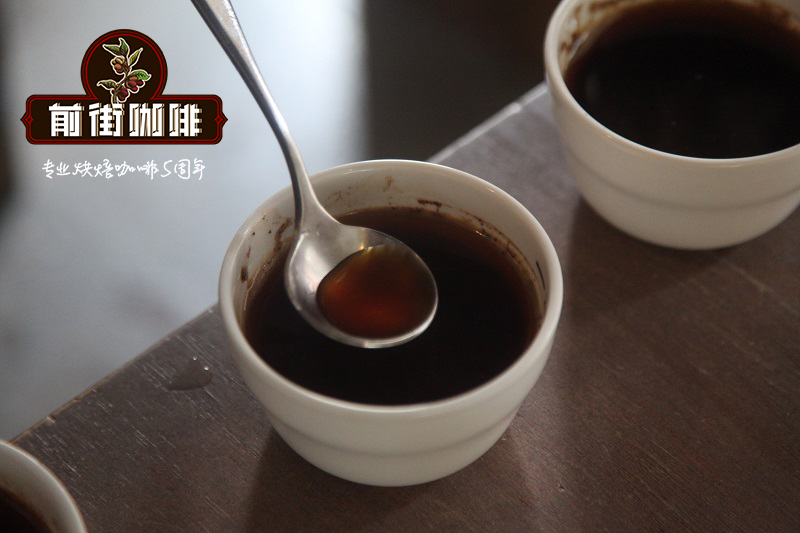
When tasting by pour-over, light-roasted Kona coffee's citrus acidity and fruit sweetness transition clearly, suiting those who prefer a fresh, bright flavor; medium roast is better for those who enjoy balanced sweetness and a full-bodied mouthfeel. Mastering suitable brewing parameters (such as 90°C water temperature, a 1:15 coffee-to-water ratio and about 2 minutes of extraction) will better highlight its distinctive flavor layers.