Yirgacheffe Coffee Beans: Washed vs Natural Flavors and Origin Guide

Introduction: An in-depth look at Yirgacheffe, one of the world's most renowned specialty coffee regions, covering the processing differences between washed and natural methods, grading standards, and distinctive flavor characteristics. From high-altitude growing conditions to professional cupping data, this guide explains why these beans are a favorite starting point for pour-over enthusiasts, and includes a detailed flavor profile of the region's representative micro-region, Kochere, to help you choose the beans you want.
Yirgacheffe coffee beans hold a unique place in the global specialty coffee market thanks to their signature fresh flavors. Depending on the green bean processing method, they fall mainly into two categories: specialty-grade beans processed by the washed method, and fruit-forward beans fermented through the natural process. These two methods not only determine the final flavor direction but also create distinctly different drinking experiences.
In the washed category, the internationally used grading follows standards set by the Specialty Coffee Association of America (SCAA), divided into Grade 1 (G1) and Grade 2 (G2). Washed Yirgacheffe at the G1 grade is known for its extremely high clarity. Strictly selected coffee cherries undergo de-pulping, fermentation to remove mucilage, washing, and drying, producing a seamless blend of vivid citrus acidity and layered white floral aromas. This flavor combination often features bright acidity reminiscent of lemon and orange, alongside floral notes of jasmine and lily, with a clean, well-defined cup that makes it an ideal choice for many pour-over beginners.
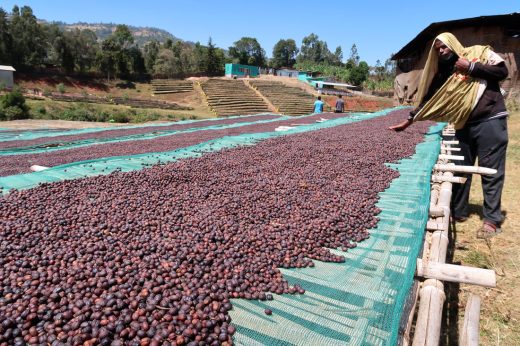
Naturally processed Yirgacheffe, by contrast, presents a completely different flavor map, with a grading system divided into Grade 1 (G1), Grade 3 (G3), Grade 4 (G4), and Grade 5 (G5). Notably, the highest grade, G1 natural beans, retain more fruit sugar during fermentation, and after slow drying in the sun, the beans carry explosive tropical fruit aromas. When you open a freshly roasted bag of G1 natural Yirgacheffe, the intense fruit aromas of blueberry, mango, and even passion fruit that rush out often astonish first-timers—coffee can indeed offer such rich fruit expression. This processing method gives the coffee a fuller body and lower acidity, with a sweet, juice-like finish.
Ethiopia, one of coffee's birthplace regions, has a coffee-growing history of more than three thousand years. Traditionally, local coffee was mostly processed by rough natural drying, and due to a lack of refined control, this led to a high proportion of defective beans and inconsistent quality. However, with the introduction of modern washed processing techniques from Central and South America—including precise fermentation control, standardized washing procedures, and scientific drying methods—Ethiopia successfully transformed, and washed beans from the Yirgacheffe region in particular are now known worldwide for their clean, white appearance, prominent floral character, and distinctive citrus flavors.
Although most coffee produced in Ethiopia is exported to developed countries in Europe and North America, unlike other major coffee-producing countries, about 50% of the country's coffee production is consumed domestically, creating a unique coffee culture. It is worth noting that the coffee trade contributes more than 60% of Ethiopia's foreign exchange earnings, a figure that fully reflects the coffee industry's important role in supporting the national economy. And with its signature combination of floral and fruit flavors, the Yirgacheffe region has become one of the most recognizable origin brands in the global specialty coffee market.
About 25 kilometers southeast of the Yirgacheffe region lies a small growing area with exceptional microclimate conditions—Kochere. Coffee here is grown at elevations between 1,800 and 2,000 meters, with the annual harvest season running from October to February, and traditional varieties such as Typica are mainly cultivated. Kochere coffee is known for its intense lemon aroma and balanced fruity sweetness and acidity, with a smooth, layered cup, and is regarded as a benchmark example of typical Yirgacheffe flavors.
According to professional cupping data, G1 washed coffee beans from the Kochere region have the following characteristics: moisture content stable at 11.6%, processed through a standard washed procedure; in the cup they show a sweet, full base, accompanied by complex fruit notes of blueberry and red wine, as well as bright, clean lemon acidity, with excellent overall balance and a professional score of 86.5. For roasting, a medium roast (City+ to Full City) perfectly highlights their sweet-acid balance, preserving the bright citrus character while developing a moderate caramelized sweetness.
These washed Yirgacheffe beans from Kochere are not only a specialty bean praised by professional baristas but also a top choice for many coffee lovers just getting started. Their light, fragrant character is not overly aggressive, the acidity is bright but not sharp, the aroma is layered and the cup is smooth, and they perform well with common brewing methods such as pour-over, siphon, and French press. For beginners just getting into specialty coffee, these beans not only help build correct flavor understanding but also let you experience the unique appeal of the Yirgacheffe region as the "capital of coffee aroma."