Decaf Coffee Bean Buying Guide: Three Decaffeination Processes and Their Flavor Impact
Introduction: Decaf coffee keeps caffeine below 0.3% through special processes to meet the needs of specific groups. This article explains the differences between FDA and EU decaffeination standards and compares the principles, advantages and disadvantages, and flavor retention of three mainstream processes—supercritical CO₂, solvent extraction, and the Swiss Water Process—to help consumers choose decaf coffee beans suited to their health needs and taste preferences.
Decaf coffee refers to a beverage containing no more than 5 mg of caffeine per cup (about 236 ml), strictly meeting the U.S. FDA standard of over 97% decaffeination or the higher EU standard of 99.9%. Through special processing, this type of coffee reduces the caffeine content of raw green beans to below 0.3%, preserving drinking habits while greatly lowering health risks.
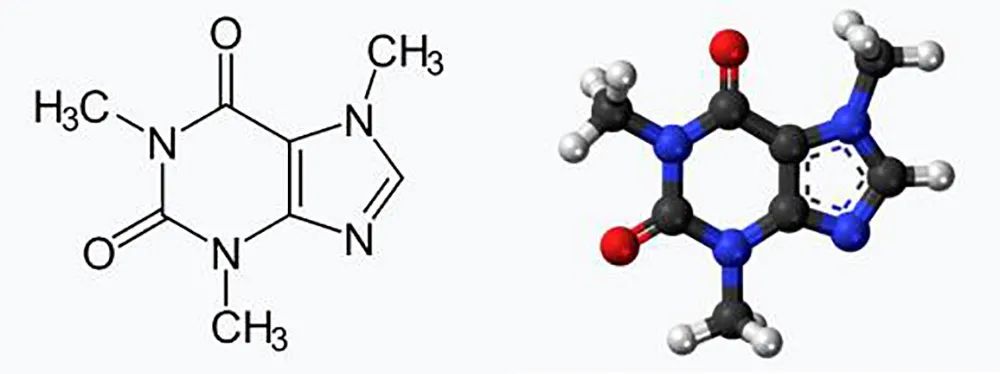
The Pros and Cons of Caffeine and Special Needs: As a natural alkaloid of 1,3,7-trimethylxanthine, caffeine can refresh the mind, but pregnant women, patients with cardiovascular and cerebrovascular conditions, and people sensitive to caffeine need to strictly control their daily intake. Excessive intake may cause palpitations or stomach discomfort, and decaf coffee is an ideal substitute for these groups.
Naturally low-caffeine coffee is extremely rare; currently only a very few varieties such as Laurina (pointed bourbon) in Ethiopia's Kaffa forest have been found, and they have not yet been commercially planted on a large scale. Modern decaffeination technology mainly achieves decaffeination through three industrial methods, each with significantly different effects on flavor and cost.
Supercritical CO₂ Processing (decaffeination rate 96%–98%) can be called the top choice for the technically minded: using carbon dioxide that at high pressure has a density close to that of liquid, it targets loose caffeine molecules like a precise predator. After pre-treated green beans are expanded with warm water, a high-pressure environment of 60–80°C allows carbon dioxide to penetrate the cell walls and selectively bind caffeine without affecting flavor compounds such as sugars. The gas after processing can be discharged directly, and the purified caffeine can also be recovered and reused. Although this method is more costly, it preserves more than 90% of the original flavor, making it suitable for consumers who pursue quality.
Solvent Extraction includes two methods, direct and indirect: the direct method opens the pores with steam and then injects trichloroethylene or benzene solution to quickly dissolve the caffeine; the indirect method first extracts all soluble substances with hot water, then separates the caffeine from the flavor components. Although trichloroethylene has a decaffeination efficiency of about 96% and low cost, the risk of benzene-series solvent residues and flavor loss have led to its gradual elimination. During operation, attention must be paid to controlling the solvent boiling point (for example, trichloroethylene volatilizes at about 61°C), but modern food safety standards have strictly limited the scope of use of such processes.
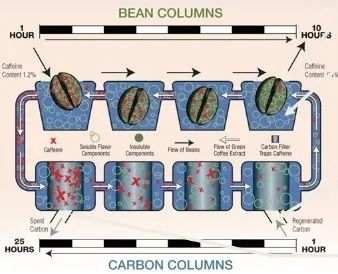
The Swiss Water Process (decaffeination rate 99.9%) is currently the most widely used technology in commercial applications: the first batch of green beans releases flavor substances and caffeine in hot water, then the caffeine is removed through activated carbon filtration, and the resulting "flavor water" is used to treat a new batch of green beans. This process is like a saltwater concentration equilibrium experiment; only caffeine molecules will continuously dissolve into the processing liquid, while flavor carriers such as sugars and acids are retained. However, about 15%–20% of the first batch of green beans must be sacrificed to make the flavor water, and activated carbon may adsorb some aromatic substances, resulting in a slight reduction in the body of the final product.
All three processes treat green beans, because the changed compound structure after roasting would increase the difficulty of decaffeination. It is worth noting that green coffee beans themselves contain more than 1,000 flavor substances, and any decaffeination process will have a subtle impact—supercritical CO₂ preserves floral and fruity aromas better, while the Swiss Water Process may weaken body. Professional roasters recommend choosing medium-roast decaf beans, which can highlight the remaining flavor characteristics while avoiding deep roasting that masks process defects.
When buying, it is advisable to observe the type of decaffeination process marked on the packaging, giving priority to products clearly labeled "EU standard 99.9%" or "FDA certified." Light to medium roast decaf coffee usually retains more citrus notes, while for dark roast products, check whether excessive processing has produced a burnt bitter taste. During storage, keep them separate from regular coffee beans to prevent cross-influence of flavors.