Yunnan Coffee Varieties: Typica vs Catimor Flavor Differences and Growing Regions

Introduction: An in-depth look at Yunnan's core coffee regions, comparing the planting status and flavor characteristics of classic Typica and the mainstream Catimor variety. From the few remaining old-tree estates to high-yield improved varieties, this explains the core differences between the two beans in aroma and mouthfeel, and provides practical information such as growing region distribution and cultivation points to help you choose the specialty coffee beans that suit you.
In the course of Yunnan coffee's development, the planted area of old-variety coffee trees has undergone a cliff-edge contraction—from an initial 50,000 mu of quality Arabica to only about 500 mu around 2012, and today the old varieties that truly remain in their original state cover even less than 500 mu. Many enthusiasts worry that these "living coffee fossils" carrying the character of the terroir will disappear entirely, but field visits found that a small number of estates still preserve precious trees through meticulous care.
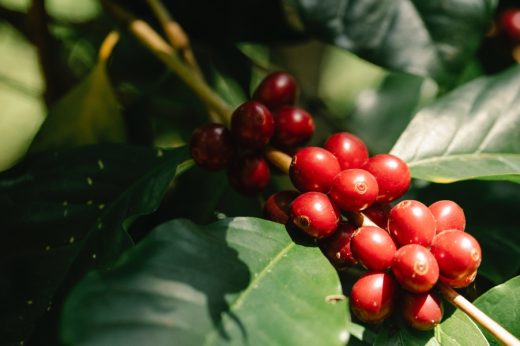
On a deep visit to the growing regions last year, in a village group's last remaining two mu of old-variety coffee garden, we found Typica plants in good growing condition. Though these trees, over 20 years old, were not systematically managed, thanks to the natural elevation and microclimate they still bore ripe red cherries of bright color. After negotiation we purchased 10 kg of parchment coffee and hulled it on site to obtain 18.5 kg of green beans, but these were mixed with large numbers of broken and defective beans; after manual sorting only 9 kg of beans meeting specialty standards remained—a process that directly illustrates the low efficiency of growing old varieties.
The Catimor currently planted widely in Yunnan's main growing regions is in fact an improved variety, a cross between the Robusta species Timor and Arabica. Its greatest advantage lies in growing economics: strong resistance to leaf rust, yields of up to 350 kg per mu (about 2.3 times that of Typica), and lower requirements for fertilizer and water management. But such high-yield varieties often carry a pronounced herbal greenness, and some lots also give off an earthy note, making it hard to present complex layers of flavor.
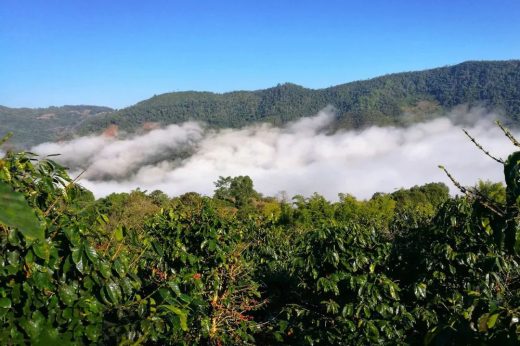
For those pursuing a specialty coffee experience, Typica remains an irreplaceable choice. This ancient variety originating in Yemen, after being acclimatized to Yunnan's highland environment, can display a distinctive citrus tonality, a black tea finish and a soft nutty aroma. But note: old-variety coffee trees have strict requirements for growing elevation (1,400–1,800 m recommended), shade ratio (30%–50% canopy cover) and harvest ripeness (hand-picking of fully red cherries is required), and these factors together determine the final cupping quality.
Field observation found that traditional growing regions such as Baoshan and Pu'er still have scattered old Typica trees over 20 years old, but most have declined in productivity for lack of systematic care. By contrast, Catimor, with its stable output performance, has become the absolute mainstream of the commercial bean market—its growing areas cover more than 60% of Yunnan's coffee gardens, and it is especially suited to making espresso blends or instant coffee bases.
For coffee enthusiasts, the key to telling the two varieties apart lies in the flavor profile: Typica, once brewed, usually presents bright citric acidity, caramel sweetness and a black tea aftertaste, with recommended extraction parameters of 92–94°C water temperature and a 1:15 coffee-to-water ratio; Catimor leans more toward a low-acidity chocolate base with a slight woody aroma, suited to a slightly lower 88–90°C water temperature to highlight body. At present some specialty estates, through shade growing and precise water and fertilizer management, have already drawn out berry-like flavor potential from the Catimor variety, but overall it still struggles to surpass the elegance and balance of Typica.
It is worth noting that Yunnan's growing regions are working to slow variety degeneration through an "old tree protection plan" and the building of a gene bank, and some coffee research institutions have successfully bred Typica-derived varieties with strong disease resistance and better flavor. These efforts preserve more possibilities for the localized development of specialty coffee in the future.