Inside Jamaica Blue Mountain's Clifton Estate: How Specialty Coffee Is Born at 1,372 Meters
Introduction: Jamaica Blue Mountain coffee is hailed as one of the world's top coffees, but do you know the real details of its origin and the secrets of its flavor? This article takes an in-depth look at Sherwood Forest Estate, the highest-altitude estate in Jamaica, analyzing the full process—from harvest to washing and sun-drying—of Blue Mountain coffee hand-grown at 1,372 meters. It explains why more than 80 percent of Blue Mountain beans are exported to Japan, and reveals how professional roasting and pour-over parameters bring out this black coffee's distinctive richness and low acidity.
Jamaica Blue Mountain coffee—the name has become almost synonymous with specialty coffee—is not a generic term for "black coffee," but specifically refers to an extremely high-quality coffee grown within a particular elevation range in Jamaica's Blue Mountain range (800–1,200 meters, with premium growing areas often above 1,000 meters). True Blue Mountain coffee is known for its delicate acidity, balanced body and rich aromatic complexity, and is regarded by many coffee lovers as the "king of coffee."
Among these, Sherwood Forest Estate stands out among Blue Mountain coffees. It is located in the village of Hagley Gap in the St. Thomas growing region, on one of the highest plots in the entire Blue Mountain area, with growing areas reaching 1,372 meters in elevation. The estate accounts for only 2 percent of total Blue Mountain coffee production, yet thanks to its meticulous processing that combines tradition and modern methods, it is certified by the Jamaica Coffee Industry Board (CIBOJ) as a high-standard Blue Mountain-grade product. It is worth noting that the estate began operating as early as 1797 and has a coffee-growing history of more than two hundred years.
Sherwood Estate was taken over by the Deichman family in the 1950s, when the current owner's father bought this land high in the mountains and replanted coffee plants. Today the estate is still owned and run by a local family, and all employees come from surrounding villages, with a balanced ratio of men and women—preserving the traditional community employment model while ensuring a stable workforce and locally managed growing and processing.
The estate's elevation advantage brings uniquely favorable microclimate conditions, especially the mist that often shrouds the mountains in the afternoon, effectively shielding the coffee cherries from direct exposure to the strong midday sun and helping the fruit ripen slowly, thereby accumulating sugars and flavor compounds more effectively. The harvest season here usually comes later than in other Blue Mountain areas, concentrated between March and June each year, during which only fully red, ripe cherries are picked, ensuring that every coffee cherry entering the processing chain is at its optimal stage of ripeness.
The harvested red coffee cherries go straight into the washed processing stage: first the skin and pulp are removed, followed by 24 hours of full fermentation. Sherwood insists on natural fermentation to remove the mucilage, avoiding harsh methods such as mechanical scrubbing, in order to preserve as much as possible the sweetness and complexity contributed by the mucilage layer. After fermentation, the beans are dried 100 percent by full sun, entirely shielded from light and without any artificial heat source, with the goal of precisely controlling the green bean moisture content at around 11.5 percent. This drying method significantly enhances the coffee's viscosity and overall aromatic complexity.
The dried parchment coffee is not sent to market immediately; instead it is placed in underground storage with constant temperature and humidity control and left to rest for at least eight weeks. The storage environment is maintained year-round at 19.4 degrees Celsius and 52 percent relative humidity, during which the beans further stabilize their flavor in preparation for subsequent hulling and export. It is worth noting that Sherwood insists on not stockpiling green beans and does not use coffee of unknown origin; all products can be traced to specific plots and processing batches.
The processed green beans are submitted to the Jamaica Coffee Industry Board for rigorous testing, including color grading, cupping evaluation, defect screening and moisture content measurement. Only after passing are they permitted to be exported under the exclusive "SFCC" (Sherwood Forest Coffee Co.) barrel trademark. Currently, Sherwood Blue Mountain coffee is supplied only to selected partners in the United States, Europe, Japan and Taiwan, with extremely limited market circulation; some is retained for personal use or released in very small batches to the public.
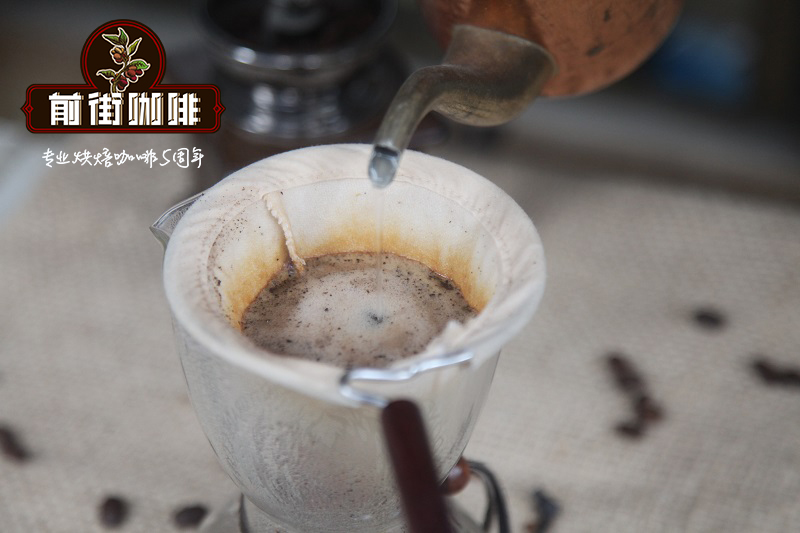
As for whether Jamaica Blue Mountain coffee is a black coffee—the answer is yes. It is a pure black coffee with no milk or sugar, but its flavor far surpasses the one-dimensional bitterness of ordinary black coffee, presenting instead a chocolate-like sweet foundation, pronounced caramel sweetness and a soft, delicate low acidity. It is very well suited to pour-over brewing at a water temperature of 86 to 88 degrees Celsius, and paired with equipment such as the KONO dripper that enhances body, it further highlights its rich layers and balanced character.