Yunnan Arabica Harvest Times and Flavor Guide: Growing Regions and Taste

Introduction: Yunnan is China's main coffee-producing region, and its arabica coffee is noted for its distinctive flavor. This article explains the best harvest season for Yunnan coffee beans, the distribution of core growing regions, analyzes the taste characteristics of arabica in depth, and discusses the scarcity value of special varieties such as peaberry. Drawing on field-growing experience and industry data, it helps coffee lovers understand the full chain of knowledge behind Yunnan coffee, from cultivation to flavor formation.
According to a relevant person in charge at the Yunnan Coffee Industry Association, although some harvest seasons in recent years have seen production fluctuations and market price adjustments, the long-term development potential of Yunnan's coffee industry remains significant. According to industry plans, the two core production areas of Pu'er and Lincang will continue to maintain a planting scale of one million mu, and it is expected that around 2020 the province's total coffee planting area will stabilize at about 2.8 million mu. As most production areas enter their high-yield cycle, annual coffee output is expected to reach 180,000 to 200,000 tons, which will further consolidate Yunnan's important position in the global coffee raw material supply chain.
China's coffee consumer market is in a period of rapid growth, but annual per capita consumption is still low—the national average is about 4 cups, and even in the active consumer regions of Beijing, Shanghai, Guangzhou and Shenzhen, annual per capita consumption is only about 20 cups, a clear gap compared with Taiwan (40 cups) and Japan and South Korea (about 200 and 240 cups respectively), and far below the roughly 400-cup consumption level of Europe and the United States. This huge market gap means that even if Yunnan's coffee planting area expands to the planned scale, it will still be in a state of supply falling short of demand in the face of continuously expanding domestic demand.
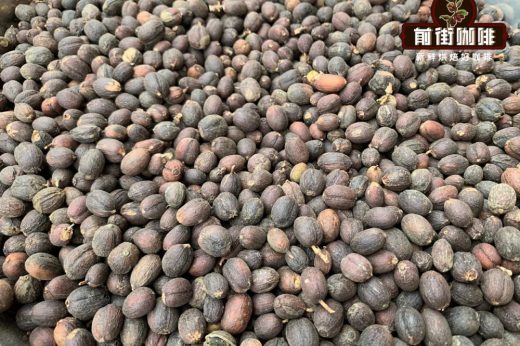
The ripening process of the coffee fruit has distinctive characteristics: when the skin turns from green to red, it enters the best picking period, and because its shape and color resemble cherries, the industry often calls it "coffee cherry." After peeling off the bright red outer skin, the interior contains a pectin layer, the seed coat, and a sweet sticky layer surrounding the coffee bean. Usually each fruit contains two flat coffee beans facing each other, but a small number of fruits develop only one round seed; this special bean, called "peaberry" (also known as round bean or caracol), has an extremely low proportion (requiring manual screening bean by bean) and a higher flavor concentration, and is often regarded as a scarce category in specialty coffee.
The arabica coffee beans mainly grown in Yunnan have a natural ripening period concentrated from June to August each year, which differs from the robusta variety (ripening period September-October). It should be noted that, affected by climate and altitude, the actual harvest time in different production areas shows gradual differences—high-altitude areas usually enter the ripening period 1-2 weeks later than low-altitude production areas. Although some tropical regions (such as Colombia and Kenya) can achieve two flowering and fruiting cycles a year because the dry and wet seasons are not pronounced, strictly speaking most production areas have only one concentrated harvest period each year.
From a global perspective, the coffee harvest season shows significant regional characteristics: production areas north of the equator (such as Ethiopia and Central America) mostly complete their main harvest in September-November; regions south of the equator (such as Brazil and Zimbabwe) have their main harvest concentrated in April-May, with some production areas continuing until August; and countries along the equator (such as Uganda and Colombia), relying on the advantage of complex altitude gradients, can achieve uninterrupted small-lot harvesting throughout the year in some high-altitude plantations, which is also an important reason why these regions can continuously supply fresh coffee beans.
The flavor characteristics of Yunnan arabica coffee are closely related to its growing environment: high-altitude cultivation gives the coffee bright acidity and rich floral and fruity notes, while products from low-altitude areas usually present fuller body and a chocolate finish. Professional cupping shows that high-quality Yunnan arabica coffee often has citrus-like acidity, black tea-like aroma and honey sweetness, and this balance makes it suitable both for brewing black coffee and for adapting to a variety of brewing methods. For consumers, understanding the relationship between origin altitude, processing method (such as washed/sun-dried) and roast level can help them better experience the unique flavor layers of Yunnan coffee.