Coffee Roasting Explained: Flavor Differences from Light to Dark Roast and a Bean Selection Guide
Introduction: Roasting is the soul step that determines coffee flavor, and different roast levels give coffee beans distinctly different aromas and mouthfeel. By detailing the color changes, chemical reactions, and flavor characteristics of the three major roasting stages—light, medium, and dark—along with practical brewing advice, this article helps you find the ideal roast level that matches your personal taste. It also specifically explains the third wave coffee movement's influence on roasting philosophy and includes purchasing references from a professional perspective.
Coffee roasting is the core process that turns green beans into brewable coffee, a process roasters regard as an artistic endeavor that reveals the beans' potential. Through precise control of temperature and time, green beans undergo a series of complex chemical changes—including thermal degradation, the Maillard reaction, and caramelization—ultimately forming rich sweetness, acidity, and body. These reaction principles are similar to the Maillard reaction when baking bread, but the generation of coffee's unique aromatic compounds is more complex.
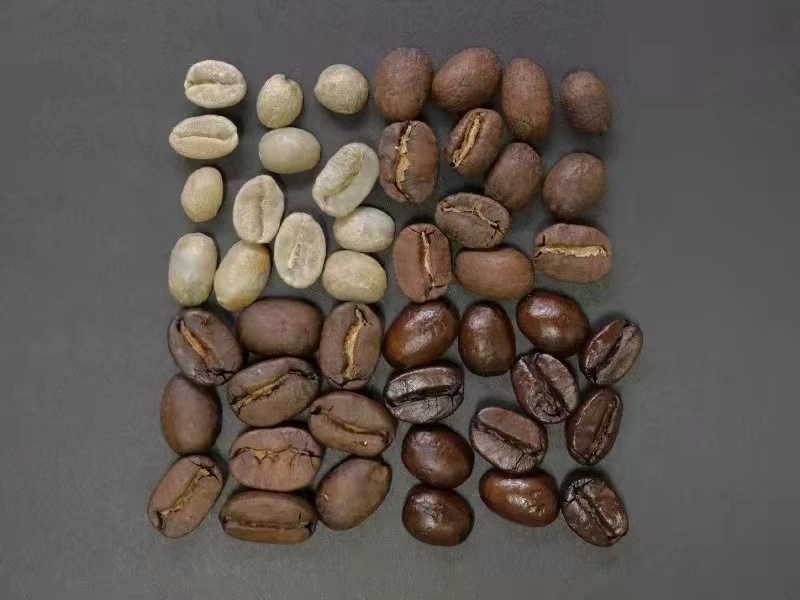
The intuitive way to distinguish roast levels is to observe the change in bean color. The current mainstream classification is light roast, medium roast, and dark roast. Although historical terms such as 'city roast' and 'French roast' are still in circulation, the internationally accepted method is measurement by Agtron value. When purchasing, ordinary consumers are advised to focus on the roast level stated on the packaging rather than commercial names. For example, light roast beans are usually light brown, medium roast beans are chestnut colored, and dark roast beans are dark brown to black with a noticeable oily sheen.
Light roast is common in the specialty coffee field and is especially suited to highlighting single-origin characteristics. These beans have a shorter roasting time, no oil on the bean surface, and a color close to cinnamon (hence the old name cinnamon roast). Their flavor profile shows bright fruit acidity, floral notes, and a higher level of sweetness complexity, but lower body.Brewing advice: suitable for filter methods such as pour-over or siphon; pairing with African beans such as Yirgacheffe can enhance citrus notes. Adding milk easily masks the delicate flavors, but batches with prominent malic acidity can still be tried as fruit-style lattes.
Medium roast reaches the golden point of acid-bitter balance; the bean surface is not yet oily but begins to show the first hint of oil.Flavor profile: combines a mild chocolate-like bitterness with nutty richness, making it the classic choice for espresso. When sugar is added, it produces a dark chocolate flavor, and when paired with milk, it presents the silky smoothness characteristic of milk coffee. This stage includes the so-called 'city roast' (slightly darker than medium roast), particularly suited to milk-based coffees such as cappuccino. Note that during extraction, water temperature should be controlled at 90-93°C to avoid over-extraction and the resulting astringency.
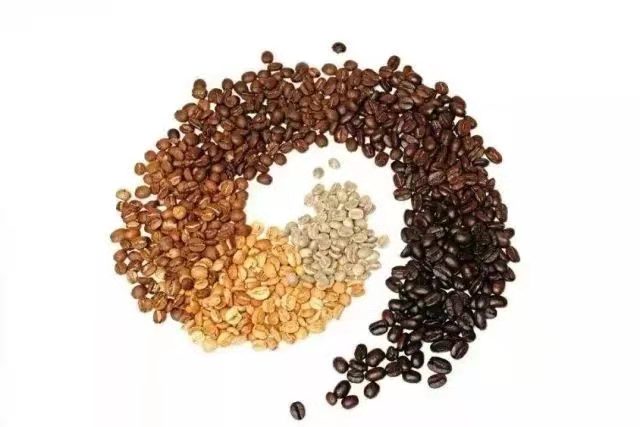
Medium dark roast, also called Viennese roast, begins to show scattered oil spots on the bean surface. Its signature feature is dark brown spots, with the bitter-sweet balance shifting toward intensity, and it is often described as a 'light French roast.' This stage can highlight the caramel sweetness produced by caramelization and is suitable for consumers who like a full-bodied mouthfeel but do not accept strong bitterness. Suggested brewing parameters: adjust the grind 5-10% finer and extend the bloom time to 35 seconds to fully bring out the sweetness.
Dark roast beans have a jet-black, glossy appearance, with French roast and Italian roast as typical representatives. French roast shows a dark chocolate color with a resin-like bitterness, while Italian roast is nearly completely black and densely oily; both types are commonly used as an espresso base.Flavor characteristics: dominated by intense roasted aroma, a carbonized sensation, and lower acidity, and able to effectively mask defects in flawed beans. However, modern specialty coffee trends show that high-quality dark roast beans can likewise retain underlying floral and fruity notes—the key lies in the roaster's precise control of the heat at the 'end of first crack.'
The choice of roast level essentially reflects personal taste preferences and consumption scenarios. Like the debate over steak doneness, there is no absolute better or worse. The dark roasting prevalent during the second wave of coffee was mainly to accommodate the standardized output of chain systems, while the third wave has rediscovered the regional flavor characteristics of light roast beans. Today's consumers can try the jasmine aroma of Ethiopian Yirgacheffe (light roast) and also enjoy the woody, smoky sensation of Sumatran Mandheling (dark roast); the key is to find the combination best suited to your palate through small-batch sample testing.