Yunnan Coffee Varieties: Catimor vs Robusta Flavor Differences and Growing Guide

Introduction: An in-depth look at the characteristics of Yunnan's main coffee varieties, comparing the core differences between Catimor and Robusta, and examining the current state of traditional varieties such as Typica. From flavor characteristics to processing methods, this article comprehensively explains the key factors affecting Yunnan coffee quality and offers practical advice on selecting beans.
As China's largest coffee-producing region, Yunnan's coffee-growing history dates back to 1904. The Typica variety introduced by French missionaries still survives in places such as Lujiangba, and its bright acidity and high purity laid the genetic foundation for Yunnan specialty coffee. Today the growing areas are mainly distributed in Baoshan, Lincang and other areas above 1,200 meters in elevation, but the varietal structure has changed significantly.
The Catimor variety (such as CIFC7963 and the P series), which currently accounts for the highest share of planting in Yunnan, is actually a hybrid of Timor and Caturra; its one-quarter Robusta lineage gives it strong disease resistance but limits flavor complexity. After trial planting in Hainan, Baoshan and other places, this variety was promoted and now accounts for more than 99% of the province's planted area. Its typical flavor shows nutty notes with a cocoa finish, but it is often criticized for an earthy defect.
In sharp contrast to Catimor is the Robusta species—a variety originating in Africa with pronounced bitterness and caffeine content as high as 2.7%, usually used for instant coffee production. Its growing elevation is generally below 800 meters, forming a stratification with Yunnan's main 1,200–1,500-meter growing belt. Professional roasters suggest: if you seek a full-bodied taste, you can choose medium-dark roasted Robusta, but specialty coffee lovers should give priority to Arabica varieties.

 Among the legacy varieties, Typica, an ancient Ethiopian variety introduced in the 19th century, still maintains excellent floral and fruity aroma expression. In the microclimate zone at 1,200–1,300 meters in Baoshan, after washed processing it can present a balance of plum acidity and black tea finish. The Bourbon variety, although representing a lower share (about two-thirds that of Typica), can develop fuller sweetness when grown at high elevations.
Varieties introduced in recent years, such as Geisha and Caturra, face adaptation challenges: Data from the 2016 Yunnan Green Bean Competition showed that Geisha transplanted from elsewhere generally scored lower in flavor than local varieties due to insufficient elevation (mostly below 1,100 meters) and soil pH deviation. Professional growers point out that such varieties require at least five years of terroir acclimatization and a growing environment with a day-night temperature difference greater than 10°C.
The three core factors affecting Yunnan coffee flavor:
1. Elevation factor: In growing areas above 1,400 meters (such as some plots in Lujiangba), the day-night temperature difference can reach 12°C, helping to accumulate aromatic substances
2. Processing method: The natural method can enhance sweetness (caramel/berry notes), while the washed method highlights cleanliness (suitable for expressing citrus-like acidity)
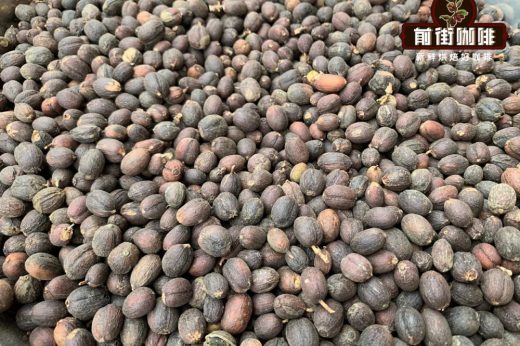
3. Harvesting standard: Picking fully red cherries can increase sweetness by 30%, but some Yunnan growing areas still have the problem of immature beans being mixed in
 Practical tasting suggestions:
- Beginners can start with Baoshan 1,450-meter natural Catimor (flavor keywords: caramel/red berries)
- For a more advanced choice, select Lujiangba 1,200-meter washed Typica (pay attention to whether fermentation was sufficient)
- Observe the defect rate: high-quality lots should be <3% (the industry average is about 5–8%)
Key cultivation techniques:
• Shade tree arrangement: It is recommended to keep 8–10 albizia trees per mu to regulate the microclimate
• Fertilization cycle: Increase potassium fertilizer during the flowering period (recommended N-P-K ratio 1:1.5:2)
• Harvest window: Mechanical harvesting may begin only when red cherry ripeness reaches 85% or more
 For home brewers, recommended parameters:
- Pour-over recipe: 15 g coffee/88°C water/1:15 coffee-to-water ratio, medium grind (75% passing a Chinese standard No. 20 sieve)
- French press: Use a coarse grind and extend the steeping time to 4 minutes
Special note: Yunnan beans are best rested for 3–5 days; flavor is more stable after CO2 is fully released