Is a Moka Pot Suitable for Geisha? Red Label Geisha Bean Traits and Pour-Over Parameters
Introduction: Geisha coffee has become a flagship of specialty coffee thanks to its distinctive floral and fruity aromas and sky-high auction prices, but can a moka pot reproduce its flavor? And why is Red Label Geisha so sought after? This article explains Hacienda La Esmeralda's grading system, compares Red Label Geisha from different origins, and provides a professional pour-over recipe to help you extract Geisha's layers precisely.
Red Label Geisha: The Flagship of Panama's Hacienda La Esmeralda
The Esmeralda Geisha commonly found on the market is divided into three grades—Red Label, Green Label, and Blue Label—standards set by the Peterson family based on growing altitude and cupping results. Among these, Red Label Geisha uses only coffee cherries from highlands at 1,600–1,800 meters, requires a cupping score above 91, and comes mainly from three core farms: Jaramillo, Cañas Verdes, and El Velo.
 Although these high-altitude Geisha trees pose harvesting challenges, they produce more intense floral and fruity notes.
Auction Lots and Flavor Characteristics
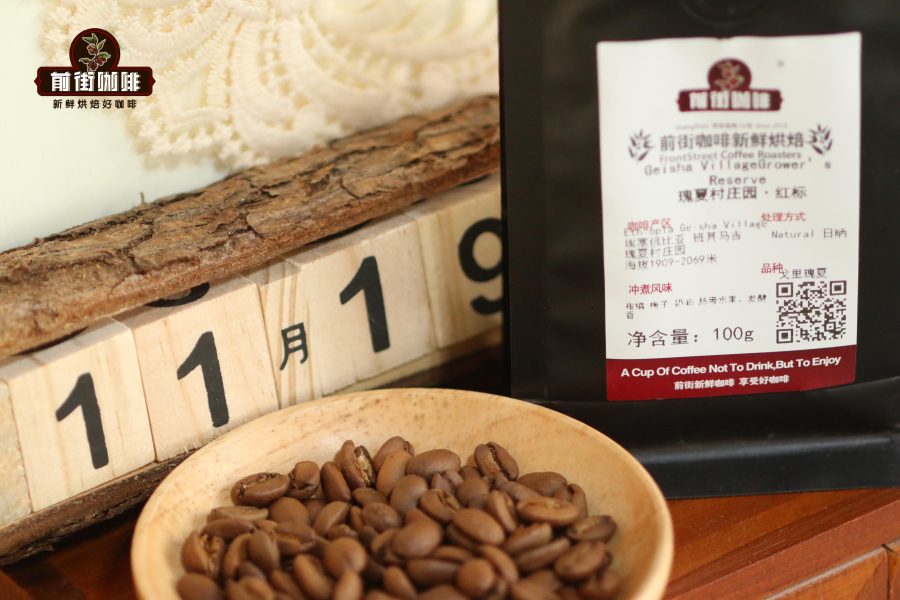
Auction lots within the Red Label are numbered individually and correspond to specific plots, such as the well-known Mario plot at Jaramillo farm. The naturally processed Red Label Geisha from this plot often shows complex aromas of honey, citrus, rose, and black tea, with excellent sweet-acid balance. Note that Gesha Village in Ethiopia, Africa, also offers a red-packaged "Growers Reserve" Red Label bean; although it belongs to a high-end series, its flavor profile is different, and its Gold Label "Rarities" accounts for only 10% of the estate's annual output.
Origin and Rise of the Geisha Variety
The Geisha variety was first discovered in 1931 in the Kaffa forest of Ethiopia and was named after the nearby Geisha mountain. In the 1990s, the Peterson family found on Panama's Jaramillo farm that the variety was highly resistant to leaf rust; after gradually transplanting it to higher altitudes, its potential burst forth in a 2003 cupping—showing unprecedented pure citrus notes and bergamot finish. In 2004 it broke records on its first competition entry at $21 per pound, and by 2019 its auction price had soared to $1,029 per pound.
Meticulous Management of the Three Core Plots
Hacienda La Esmeralda divides its Geisha growing areas into three major plots: Cañas Verdes, Jaramillo, and El Velo, among which Jaramillo (average altitude 1,650 meters) is especially famous as the birthplace. This plot contains five micro-plots including Mario and Noria; the Mario plot has become a benchmark thanks to multiple BOP competition awards. The high-altitude environment gives the beans bright acidity and abundant aromatic compounds, but precise roasting is needed to unlock their potential.
Moka Pot Suitability Analysis
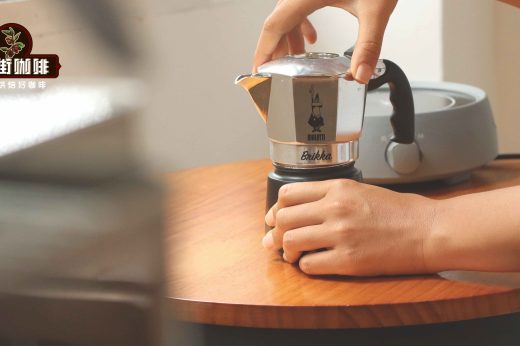
The moka pot's high-pressure extraction (typically 9–12 bar) tends to mask Geisha's delicate flavors, so a pour-over recipe with 92°C water and a V60 dripper is recommended. If you insist on using a moka pot, choose a fine grind (similar to espresso), shorten the extraction time to within 25 seconds, and pair it with a medium-light roast to reduce the risk of scorched bitterness from the metal equipment.
Professional Pour-Over Parameter Guide
For Esmeralda Red Label natural Geisha, recommended parameters:
• Dripper: V60 (spiral ribs extend water-coffee contact time)
• Water temperature: 92°C (draws out floral and fruity aromas without destroying acidity)
• Grind: fine granulated sugar (80% passing a No. 20 sieve)
• Coffee-to-water ratio: 1:16 (15 grams of coffee to 240 milliliters of water)
• Pulsed pouring: first pour 30 grams and bloom for 30 seconds → second pour 125 grams → final pour to 240 grams, total time about 2 minutes.
Flavor Layers and Brewing Points
A properly extracted Red Label Geisha should show a dynamic progression of jasmine florals → citrus acidity → tropical fruit sweetness → black tea finish. Keep the water flow steady to avoid channeling, and make sure the coffee bed is even and flat. If sharp acidity or astringency appears, coarsen the grind slightly or lower the water temperature to 90°C; if the flavor is flat, check whether the bloom was sufficient or extend the total extraction time to 2 minutes 10 seconds.