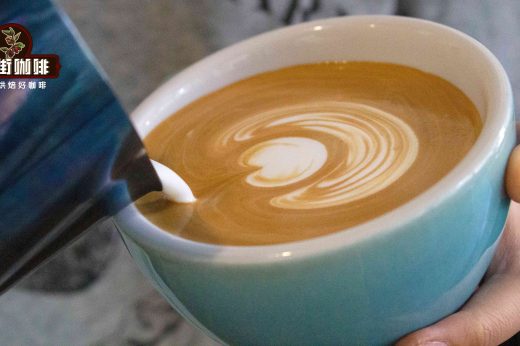
Latte, Flat White and Cappuccino Latte Art Techniques and Ideal Serving Temperature Guide

Introduction: Mastering the milk foam temperature and latte art techniques for hot milk coffee not only improves the taste of the drink but also extends how long the latte art pattern holds. This article explains in detail the scientific basis for the 55-65°C milk temperature range, discusses the effect of temperatures above 70°C on foam stability, and provides different temperature control plans for cappuccino and latte to help baristas and enthusiasts optimize quality.
As the weather turns colder, hot milk coffee becomes the first choice for many people. Perfectly combining steamed sweet milk with espresso brings both a warm drinking experience and delicate milk foam art. But many practitioners find that simply raising the milk temperature does not guarantee the best taste; the key lies in precisely controlling every stage of milk foam formation.

Professional baristas usually control the milk foam temperature of hot milk coffee within the 55-65°C range. This range ensures the milk and air are fully mixed to form fine foam without overheating and damaging the flavor. Pay special attention during steaming: the milk needs to form a stable vortex, and this step directly affects the final foam density.

In the golden temperature band of 50-70°C, the protein structure of milk remains relatively stable; the resulting foam has enough support to maintain latte art shapes and can form harmonious layers of taste with espresso. Outside this range, the physical properties of the foam change significantly.
When the milk temperature exceeds 70°C, common problems follow. The most obvious is clear separation between the coffee liquid and the foam—the temperature difference between the hot coffee at the bottom and the foam on top prevents them from blending evenly. A subtler change is that although the overall drink seems very hot, what you actually feel is only a scalding sensation, while the distinctive dense texture of the foam is hard to perceive.

High temperatures also affect the overall experience of smell and taste. Although the aroma molecules in the milk are more active at this point and it smells richly milky, once you taste it the milky flavor becomes thin instead, often accompanied by an unpleasant gamey note. Technically, this is because excessively high temperatures cause irreversible denaturation of the proteins in the milk, destroying the stable structure of the foam.

For novice baristas, a dual control method of thermometer + hand feel is recommended. At the initial stage you can observe: when the milk is heated to around 40°C it begins to feel noticeably warm, and as steam continues to be injected, when the palm can feel obvious heat (usually corresponding to above 55°C), stop heating immediately. Experienced operators can precisely control it through the insertion depth and angle of the steam wand.
Ambient temperature is also an important variable. In cold autumn and winter environments, it is recommended to preheat the cups in advance—ceramic material provides better heat retention. The professional approach is to stabilize the milk foam temperature at around 65°C (continuous heating for about 3-5 seconds); this parameter maintains the flavor layers while ensuring a comfortable drinking temperature.

Different types of milk coffee require differentiated temperature strategies. Take cappuccino as an example: its signature 1.5-2cm thick foam layer requires more careful temperature control. It is recommended to keep the milk temperature below 60°C, which preserves the dense foam texture and avoids scalding when taking a big sip. When making it, pay attention to the degree of foaming; an ideal cappuccino should have a clear three-part structure: espresso layer, transition layer and foam layer.

Mastering these technical details not only improves output quality but also creates a better drinking experience for customers. From temperature control to latte art retention, every stage affects the final flavor presentation. Through systematic practice and parameter optimization, even beginners can gradually master professional-level milk coffee techniques.