Ethiopia Guji Region Guide: Shakiso & Hambela Coffee Flavors
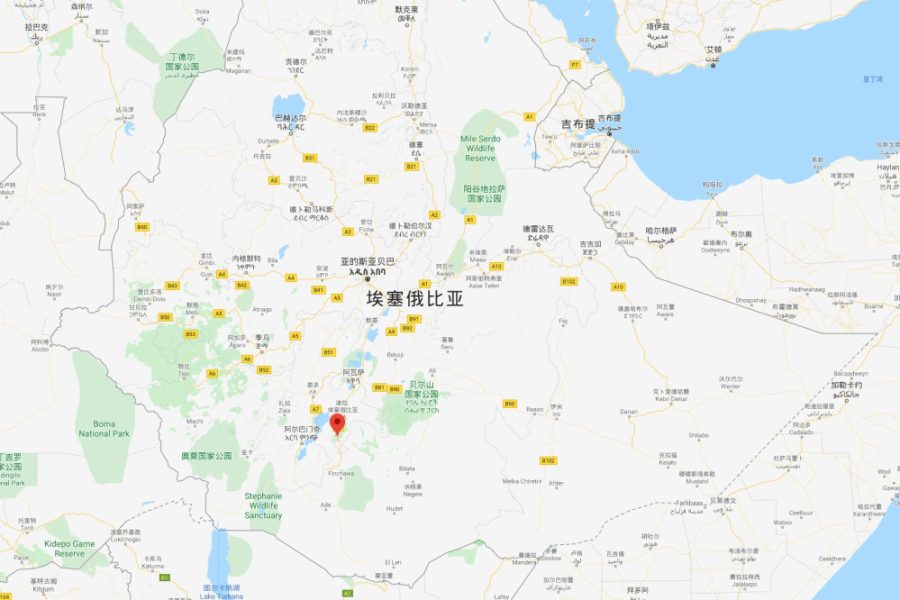
Introduction: In recent years, the Guji region of Ethiopia has emerged in the international specialty coffee market, known for its distinctive floral and fruity aromas and high-altitude cultivation. This article provides an in-depth analysis of Guji and its well-known sub-regions Shakiso, Hambella, and Uraga—their geographical environments, growing altitudes, harvest seasons, and flavor characteristics—to help you understand how these regions cultivate coffee beans with rich flavor layers and high distinctiveness, and offers practical pour-over parameter references.
In 2010, Ethiopia's unique coffee trading system, the ECX, separated the Guji region from the traditional Sidamo region, making it a specialty coffee region with an independent identity and traceability. Administratively, Guji belongs to Oromia State, located in southern Ethiopia, with complex terrain woven from towering mountains, vast highlands, deep valleys, and plains. Its geology is mostly volcanic soil, with a soil layer reaching nearly two meters deep, predominantly dark brown and brown in color. Most of the region consists of undeveloped virgin forest or woodland with a healthy ecological environment; coffee trees rely on natural plant debris as organic nutrients, and with an average altitude exceeding 1,800 meters and pronounced day-night temperature differences, the ripening of coffee cherries is effectively slowed, allowing for a richer accumulation of aromatic substances and the formation of distinctive regional flavors. Guji is further subdivided into several small regions renowned within the industry.

Hambella is one of the most representative sub-regions of Guji and the birthplace of the globally popular "Huakui" coffee beans. It is separated from the Kochere region of Yirgacheffe by only a single mountain—a ridge 3,200 meters high and about 30 kilometers wide—with diverse terrain. Hambella's growing altitude reaches 2,100 to 2,300 meters, and the harvest season usually falls between November and January of the following year. Thanks to the high altitude and excellent ecological conditions, coffees here often display clear floral aromas and sweet tropical fruit notes, with rich layers and high balance. Hambella is not only the cradle of uniquely flavored coffee but also an important window into exploring the terroir charm of Guji.

Shakiso is a sub-region of Guji with a deep historical heritage. It was once an important gold-mining area in Ethiopia, with the northeastern part of the region particularly rich in gold resources. In the 1990s, Haile Gebre, then governor of Oromia State, foresaw the potential of the coffee industry; after leaving public office he moved to Guji and settled in Shakiso, working hand in hand with local farmers to develop coffee cultivation. At first, specialty coffee buyers focused mainly on the neighboring Yirgacheffe region, but as they continued to seek out quality coffee sources, their attention gradually extended to the relatively remote yet highly promising Guji, bringing Shakiso into the international spotlight. The altitude here ranges between 1,800 and 2,200 meters, and the book The Craft of Specialty Coffee once summarized its flavor as having a "sweet lemon-honey note," with extremely high distinctiveness.

Uraga is located at the northernmost tip of the Guji region, adjacent to Yirgacheffe, with an altitude reaching 2,300 meters, making it one of the higher-altitude growing areas in Guji. The soil is fertile, mainly black soil, with abundant nutrients. Although Uraga's reputation started relatively late, in the 2019 TOH (Taste of Harvest) competition the washed coffee beans from this area performed excellently, gradually attracting industry attention. Coffees from Uraga often have a soft, tea-like texture while also possessing rich floral and fruity aromas and bright acidity, with a fresh and well-layered flavor.

According to the Guji flavor map drawn by the Dutch green coffee trading company Trabocca, citrus aromas are the most prominent in coffees from this region, followed by common notes of stone fruit, berries, florals, and chocolate. The overall flavor falls between Yirgacheffe and Sidamo, retaining bright acidity and a juicy mouthfeel while also possessing moderate body and a smooth texture, making it an ideal choice for exploring Ethiopia's diverse flavors.

Before 2008, the Guji region belonged to the "Sidama A" category within the ECX system. However, as numerous specialty coffees from Guji won awards at international competitions one after another, its uniqueness and quality gained widespread recognition, ultimately prompting the region to be separated from Sidamo and become, after Yirgacheffe, the second important Ethiopian coffee region to gain an independent identity and traceability system. Guji not only has complex terrain covering high mountains, valleys, and plains, but is also geologically rich in nutrient-dense black soil (Vertisol), with a soil layer nearly two meters deep; combined with an average altitude exceeding 1,800 meters and significant day-night temperature differences, these exceptional natural conditions together shape the outstanding quality of Guji coffee.

Hambella, as one of the most famous sub-regions of Guji, is not only the birthplace of the "Huakui" coffee beans but also a focus of attention for many specialty coffee enthusiasts. To its west lies Yirgacheffe Kochere, with the two separated by highlands at 3,200 meters; the terrain is complex with obvious altitude differences, and it borders the sub-regions of Shakiso, Uraga, and Kersa to the southeast, south, and north respectively, making it one of the highest-altitude sub-regions in Guji. At present, Hambella has nearly 20 processing plants of various sizes. Among them, the "Buku Abel" processing plant under the DW company won the championship at the 2017 Ethiopia National Taste of Harvest Competition with a natural-process lot; this coffee drew attention for its intense strawberry and cream aromas and was subsequently named "Huakui" by a Chinese importer. It is worth noting that DW later added several processing plants in Dimtu, the core area of Hambella, including "Buku Abel," "Buku Saysay," "Haro Soresa," and "Tirtiro Goye," with an annual output of about 1,100 tons. Strictly speaking, however, only the natural-process beans produced by the "Buku Abel" processing plant can be called authentic "Huakui coffee beans."

During the coffee harvest season (December to January of the following year), the Buku processing plant insists on selecting only fully ripe red coffee cherries, screening cherries with a sugar content above 30 for processing. These coffee cherries are placed on African raised beds for extended sun-drying. During processing, workers adjust their strategy according to temperature and weather: shade measures are taken when the midday sun is intense to prevent excessive fermentation from high temperatures; at night, if it rains, plastic sheeting is used for covering to prevent rain from affecting the beans. The coffee cherries must be turned continuously every day, and the stacking thickness is strictly controlled to ensure even drying and prevent sunburn on the surface or abnormal fermentation. After about 18 days of meticulous management, the moisture content of the green coffee beans drops to around 13%, at which point they can be bagged for storage.

If you wish to recreate at home the distinctive flavor of high-altitude natural-process beans such as "Huakui," you can refer to the following practical brewing parameters: use medium-light roasted beans with a V60 dripper, control the water temperature at 92°C, and set the grind so that 80% passes through a No. 20 standard sieve—that is, a medium-fine grind. A coffee-to-water ratio of 1:15 is recommended, pouring 225 milliliters of water for every 15 grams of coffee grounds. When pouring, it is recommended to first use a small amount of hot water (about twice the amount of coffee grounds, roughly 30 grams) for a 30-second bloom to awaken the coffee grounds. Then pour in a thin stream in circular motions from the inside out, in the first stage up to 125 grams, and when the water level drops to the midpoint of the dripper, continue pouring up to 225 grams; the entire extraction process takes about 2 minutes. These parameters help highlight the floral and fruity aromas and the balanced sweet-and-sour taste.

The brewed coffee typically gives off a honey-like sweet aroma; on the palate you can experience the rich flavors of tropical fruits such as passion fruit and mango, complemented by the fresh acidity of berries and citrus, with an overall creamy, silky mouthfeel and a finish that carries the sweet mellowness and persistence of black tea.

In summary, the Guji region, with its diverse microclimates, unique soil structure, and strict processing procedures, cultivates a series of specialty coffees with vivid flavors and rich layers. From the floral and fruity notes of Hambella to the lemon-honey sweetness of Shakiso and the tea-like acidity of Uraga, each sub-region demonstrates the infinite possibilities of Ethiopian coffee. Whether you are a coffee enthusiast or a professional, an in-depth understanding of the characteristics of these regions will help you better taste and appreciate every cup of specialty coffee from Guji.