Peru Cajamarca Geisha Review: How High-Altitude Regions Produce Sweet, Fruity Beans
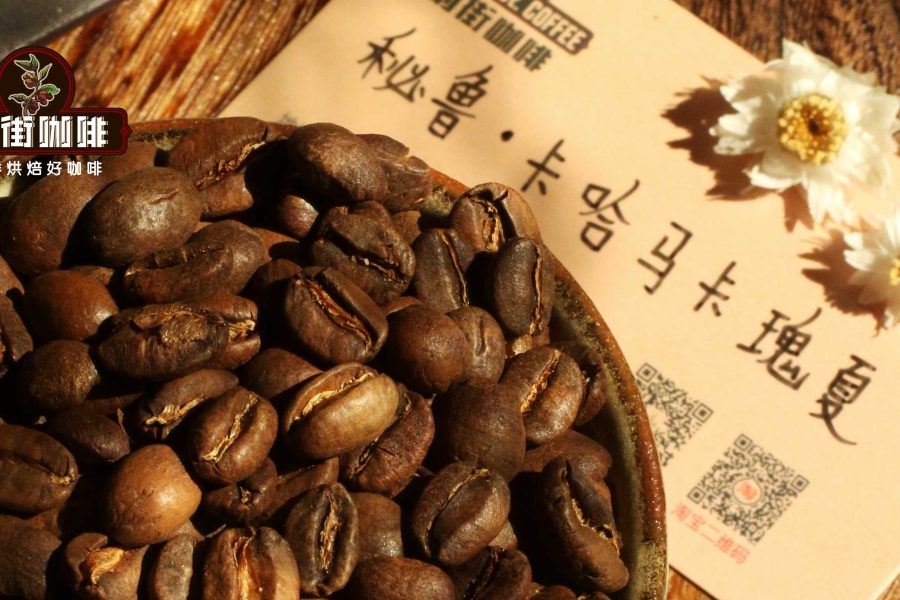
Introduction: Although Peruvian coffee is less well known than Ethiopian or Colombian coffee, its high-altitude cultivation gives it a unique cleanliness and balance. This article takes an in-depth look at the characteristics of Peru's three major producing regions, focusing on washed Geisha from the Cajamarca region—from cultivation history to processing methods to cupping details—for a comprehensive understanding of this promising region.
In the specialty coffee world, Peruvian coffee is often seen as a low-key powerhouse. This South American country's coffee cultivation is concentrated in the high-altitude zones of the Andes at 1,200–2,000 meters; fertile volcanic soil and pronounced day-night temperature swings create Peruvian coffee's characteristic mild, balanced flavor.
Peru's geographical location has unique advantages: it borders the Pacific Ocean to the west and shares borders with five countries including Brazil and Chile, with terrain that includes plateaus, mountains and other landforms. The Andes run north to south through the country, providing an ideal environment for coffee growing.
The country's coffee regions fall into three major blocks: the north accounts for 43% of national planted area (1,250–1,950 meters), the center 34% (1,200–2,000 meters), and the south 23% (900–2,050 meters). This distribution allows Peru to produce coffee beans with rich layers of flavor.
The development of Peru's coffee industry is quite storied. It was introduced by the Spanish at the end of the 18th century, initially only as an ornamental plant. After 1850, European immigrants brought advanced cultivation techniques and established plantations in places such as Cajamarca, laying the foundation of the modern industry.
The 20th century saw multiple changes: the large-estate model dominated in 1890, but the 1929 economic crisis exposed its fragility. After the 1968 land reform, production shifted to smallholders; although this improved fairness, it brought difficulties in extending technical knowledge. It was not until the rise of the cooperative model in the 1980s, together with international certification systems, that specialty coffee development was advanced.
Data from 2024 show that Peru's coffee exports reached 220,000 tons, and its organic coffee output ranks first in the world. Its products are mainly sold to European and American markets, earning recognition for stable quality.
Peruvian coffee is mainly Arabica, graded by a unique altitude classification—the higher the altitude, the harder the bean and the richer the flavor. Washed processing is the mainstream method; through strict sorting and light fermentation, it ensures the coffee has high cleanliness and bright acidity.
The Cajamarca region is the jewel of northern Peru, near the Ecuadorian border, at 1,800–1,950 meters. Here the volcanic soil is fertile, the microclimates are diverse, and the day-night temperature difference is pronounced; it was an important growing area as early as the colonial period.
The region's smallholders are experienced, and in addition to traditional Typica, varieties such as Geisha have performed outstandingly in recent years. Locally, medium-light roasts are used to highlight floral and fruity aromas, and SHB-grade washed processing ensures quality consistency.
An actual tasting of a Cajamarca washed Geisha (1,800–1,950 meters): the dry aroma showed white florals and citrus notes, with distinct honey-peach sweetness at the hot stage; on the palate, lively acidity of grape and prune came first, a black-tea-like body emerged in the middle, and the finish carried caramel sweetness. As the temperature dropped, the fruit acidity became brighter, and the overall cleanliness was impressive.
The processing details are worth noting: the washed method requires steps such as floating to remove defective cherries, pulping, mucilage fermentation, and drying. Peru's abundant water resources combined with precise fermentation control create its signature pure mouthfeel.
For coffee lovers, Peruvian beans suit consumers who prefer balanced flavors. Suggested pour-over parameters: medium grind (70% passing a Chinese standard No. 20 sieve), water temperature 90–92°C, and staged extraction to better reveal its layers.