Why Is Your Pour-Over Too Sour? Best Water Temp and Sweetness Extraction for Light Roasts
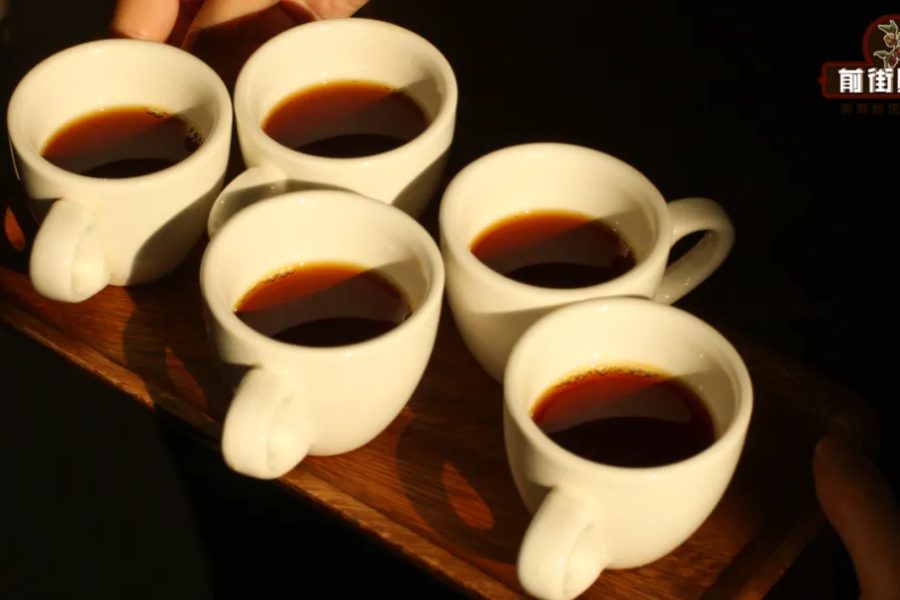
Introduction: Many coffee enthusiasts who brew light-roast beans at home often run into sharp acidity and a lack of sweetness. This article takes a close look at the three main causes of sour, astringent coffee and offers actionable brewing solutions, from grind adjustment and extraction time control to precise water temperature management. Through scientific parameter combinations and practical tips, it helps you easily brew a pour-over that is balanced between acidity and sweetness with rich layers, optimized specifically for the characteristics of light-roast beans.
"Acidity" has become a signature flavor of modern specialty coffee. With the rise of the light-roast trend, coffee's flavor spectrum has shifted from a single bitter note toward rich fruity acidity, attracting many beginners who previously resisted coffee's bitterness. But many consumers report that when they brew the same beans at home, the acidity often comes across as abrupt and piercing—like biting directly into a green lemon—in stark contrast to the balanced sweet-and-sour profile found in cafés.

There are two main factors behind this difference. First, some beans are themselves high in acidity but low in sweetness; these beans need more refined extraction parameters to reveal their flavor layers. Second, and more common, is under-extraction—the flavor compounds in the coffee are not fully dissolved, so the acidity lacks the balance of sweetness and bitterness. It is like pure lemon juice with no sugar: a one-dimensional acidity feels harsh and hard to drink.
To improve this, the key is mastering three core parameters: grind size, extraction time and water temperature. These three variables directly affect how efficiently flavor compounds dissolve, and systematic adjustment can achieve an ideal balance of acidity, sweetness and bitterness. In practice, a gradual adjustment method is recommended, changing only one variable at a time and observing the result.

Grind adjustment is the most direct intervention. Finer grinding increases the contact area between coffee grounds and water, speeding up the release of flavor compounds. For dense light-roast beans, an initial setting of fine granulated sugar particle size is recommended (about 75%–80% passing through a No. 20 sieve). If you worry about clogging the dripper, start with a slightly coarser setting and work gradually finer. Watch the state of the coffee bed: as long as no muddy over-extraction appears at the bottom of the dripper, negative flavors usually will not develop.
Extending extraction time is an effective way to draw out sweetness. Increasing the contact time between water and coffee promotes the dissolution of sweet compounds along with a moderate bitterness. A total extraction time of 2:00 to 2:30 is recommended, a range that balances thorough extraction with flavor clarity. Ways to achieve this include: switching to a slower-flowing ribless dripper (such as the Kalita Wave), using a multi-pour technique (such as a three-pour method), or splitting a single pour into several smaller flows. Beginners can start with the standard two-pour method and gradually move on to the more refined three-pour technique.

Water temperature has a decisive influence on flavor dissolution. The ideal water temperature range for light-roast coffee is 90°C–94°C, with 92°C as a proven general baseline. Note in particular: the hot water from the water dispensers common in offices (usually 85°C–88°C) is too cool for light-roast beans and easily leads to under-extraction. If you use a gas water heater, the actual water temperature may be 3–5°C lower than the displayed value; adjust by preheating or letting the water sit to cool. Dark-roast beans can be brewed at a slightly lower temperature of 88°C–90°C, but if light-roast beans are brewed with insufficient water temperature, even a longer extraction time will struggle to bring out the full flavor.

Below is a proven practical recipe (using 15 g of coffee as an example): use a V60 dripper, a coffee-to-water ratio of 1:15, and a grind setting of 10 on an Ek43 grinder (about 75% passing through a No. 20 sieve). First pour 30 ml of hot water for a 30-second bloom to activate the coffee. Then, with a medium flow of 4–5 ml per second, pour 120 ml of hot water in circles from the center outward (completing in about 30 seconds), taking care to control the flow so the coffee bed is not completely submerged. Finally, pour 75 ml of hot water at the same flow rate to finish the extraction. The whole process takes about 2 minutes 17 seconds, yielding a balanced combination of clear citrus notes, red berry acidity and honey sweetness.
Troubleshooting common issues: if the coffee tastes piercingly sour, first check whether the grind is too coarse or the water temperature too low; if noticeable bitterness appears, coarsen the grind or shorten the time. Because of their higher density, light-roast beans can withstand longer extraction times and finer grind settings than dark-roast beans. A special reminder: when using a fine grind, be sure the dripper drains smoothly; if necessary, increase the interval between pours or use a conical dripper to reduce water pooling.