Brazilian coffee brewing guide: regions, varieties and pour-over parameters
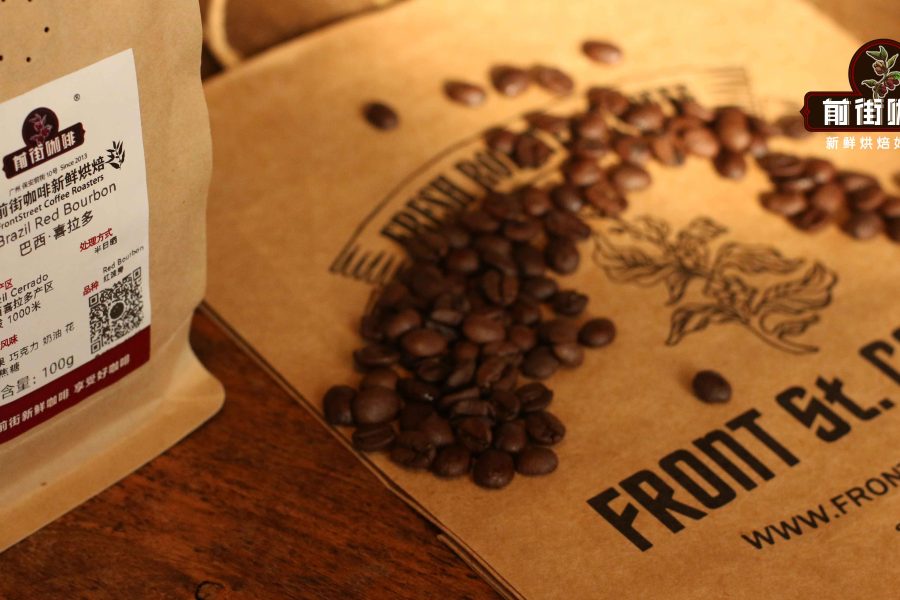
Introduction: Brazil is the world's largest coffee producer, and its beans are known for low acidity and balance, making them suitable for espresso and many other brewing methods. This article details the terroir characteristics of Brazil's main producing regions, the traits of classic coffee varieties, and extraction parameters and techniques for pour-over, espresso and other scenarios, helping you fully bring out the nutty, chocolate and caramel flavors of Brazilian beans.
People often assume that the higher the altitude, the richer the flavor of coffee beans, yet Brazil's producing regions are mainly low-altitude and flat, lacking significant microclimate differences—which is precisely why they are ideal for large-scale cultivation of mellow, balanced beans.
Low acidity and consistent body, together with affordable prices, make Brazilian coffee a core component of many espresso blends. Whether in a classic recipe emphasizing crema and richness, an everyday bean highlighting nutty notes, or a commercial blend designed for cafés, adding Brazilian beans brings a base of chocolate and creamy aromas while improving extraction stability.
To get a first taste of Brazil's distinctive flavors, try a single-origin Cerrado bean processed by pulped natural. This bean is usually medium-roasted; opening the bag releases clear aromas of cream, peanut, toast and caramel. On the palate it is round and soft, with almost no acidity and only a hint of gentle bitterness. It is extremely versatile—pour-over, moka pot, espresso SOE, siphon and even French press all handle it well, revealing varied layers of flavor.
Brazil's coffee-growing history dates back more than 300 years, and since the 1970s it has held the position of the world's largest coffee producer. Coffee is grown in 17 states nationwide, but the four major regions in the southeast account for 90% of national output, with Minas Gerais leading the way—this state alone has more than 1.22 million hectares planted, equivalent to Colombia's entire coffee-growing area.
Among the many regions, Cerrado and Sul de Minas in Minas Gerais, and Mogiana in São Paulo state, are widely recognized as representatives of specialty coffee. A saying circulates in the industry: "The quality of Brazil's coffee harvest depends on Minas Gerais; and Minas Gerais's performance is determined by Sul de Minas, Cerrado and Mogiana."
The Cerrado region is associated with the savanna of the same name, specifically the Cerrado area in western Minas Gerais. The terrain here is flat and the harvest season concentrated, facilitating large-scale harvesting and management. Altitudes generally exceed 1,000 meters, and combined with fertile soil, this has attracted many exporters to establish large farms here, with individual farms mostly over 10 hectares.
Sul de Minas has a higher altitude (above 1,100 meters), with terrain mainly consisting of gentle foothill slopes and rich landforms, distinct wet and dry seasons, and significant day-night temperature differences. This unique microclimate is especially suited to varieties such as Bourbon and Yellow Bourbon, making it an important specialty coffee region.
Mogiana, adjacent to Sul de Minas, has coffee trees growing among shrubs, grasses and mixed vegetation. The local red volcanic soil is rich in minerals, providing ample nutrients for the coffee fruit and producing full aromas. The region has both growers who maintain traditional farm operations and new farms that have introduced modern standardized management, and overall quality has improved markedly in recent years. Coffee here often carries a distinctive fresh sugarcane sweetness combined with fruity and chocolate flavors, setting it clearly apart from other regions.
Brazil has a wide variety of coffee varieties, with Bourbon, Mundo Novo and Catuai being the mainstream. Bourbon has the longest history, having arisen from a genetic mutation of Typica. The common Red Bourbon (with dark red skin when ripe) grows at high altitudes and has a balanced flavor, rich aroma and soft acidity, making it the first choice for many people's everyday beans.
Yellow Bourbon is named for its yellow rather than red fruit when ripe (arising from a hereditary color selection). Grown at high altitude, Yellow Bourbon is rich in fructose and often shows a sweet, juicy flavor; it even took the top three places two years running at Brazil's Cup of Excellence, becoming a star variety in the specialty coffee world. After roasting it often gives off creamy peanut aromas with a distinctive fresh sugarcane sweetness.
Brazil's coffee processing methods mainly include natural, pulped natural and washed, with the specific choice depending on local climatic conditions.
Before 1990, Brazil generally used the traditional natural method—spreading coffee fruit directly on concrete patios to dry in the sun, which easily led to earthy off-flavors and over-fermentation. In 1990, Brazilian coffee research institutions developed the pulped natural method for the local dry climate: first removing the pulp and skin, leaving only a thin layer of mucilage to dry in the sun for 1-3 days, then drying by machine to 12% moisture content, and finally storing for maturation. This method shortens the processing cycle and effectively reduces off-flavors, significantly improving the overall quality of Brazilian beans.
Of course, some regions still retain the traditional natural process. For example, certain estates float the cherries in water tanks before drying to remove unripe fruit, and use African raised beds for drying, with manual turning at regular intervals throughout to ensure even heat exposure, thereby preserving the coffee's cleanliness to the greatest extent.
How do you brew a delicious cup of Brazilian coffee? Because it naturally has nutty, peanut and other flavors along with chocolate-like sweetness and a solid, rich body, even simple brewing methods can restore its authentic character. Here, taking a medium-dark roasted Brazilian single-origin bean as an example, we share specific pour-over parameters and steps.
First, choose beans at their peak freshness—more than a month after roasting, some aromas may be lost and woody flavors may even develop. Freshly roasted beans (we recommend choosing products shipped within 5 days of roasting) will reach you at their most aromatic.
Different roast levels require matching brewing parameters. For medium-dark roasted Brazilian beans (which show more pronounced caramelization and readily release large-molecule bitter compounds), it is advisable to lower the water temperature appropriately: light roasts usually use 91-93°C, while medium-dark roasts are best at 87-88°C. In addition, the finer the grind, the more substances dissolve per unit time; to avoid over-extraction, it is advisable to coarsen the grind, for example a medium grind (75% passing through a Chinese standard No. 20 sieve).
Medium-dark roasted beans have a mainly rich, round body, so a dripper with a slower flow rate suits them. For example, the KONO dripper has a smooth curved upper half and only one-third of the way down are there guiding ribs, allowing the filter paper to fit tightly against the dripper, restricting airflow upward and forcing hot water to penetrate downward, creating a siphon-like extraction that more fully releases the aromatic compounds in the coffee grounds—especially suitable for medium-dark roasted beans.
Suggested specific parameters: KONO dripper; water temperature 87-88°C; 15 g of coffee; 1:15 coffee-to-water ratio; medium grind (75% passing a Chinese standard sieve).
Brewing steps: first bloom with twice the coffee's weight in water (about 30 g) for 30 seconds to wet the bed and release aromas; then pour in a small stream in circles from the center outward until 125 g, then pause (first stage); when the bed drops to half the height of the dripper, continue pouring in the same thin stream to 225 g (second stage), until all the coffee has dripped through, for a total time of about 2 minutes.
The resulting cup: noticeable sweetness on entry with a delicate lemon aroma, rich nutty and caramel flavors, and a full-bodied dark chocolate character emerging in the finish; the overall mouthfeel is round and balanced, fully expressing the typical traits of Brazilian coffee.
(Image placeholders in order:  ,
 ,
 ,
 ,
 ,
 ,
 ,
 ,
 ,
 ,
 ,
 ,
 )


