Brazilian Coffee Deep Dive: Flavor, Regions and Pour-Over Parameters
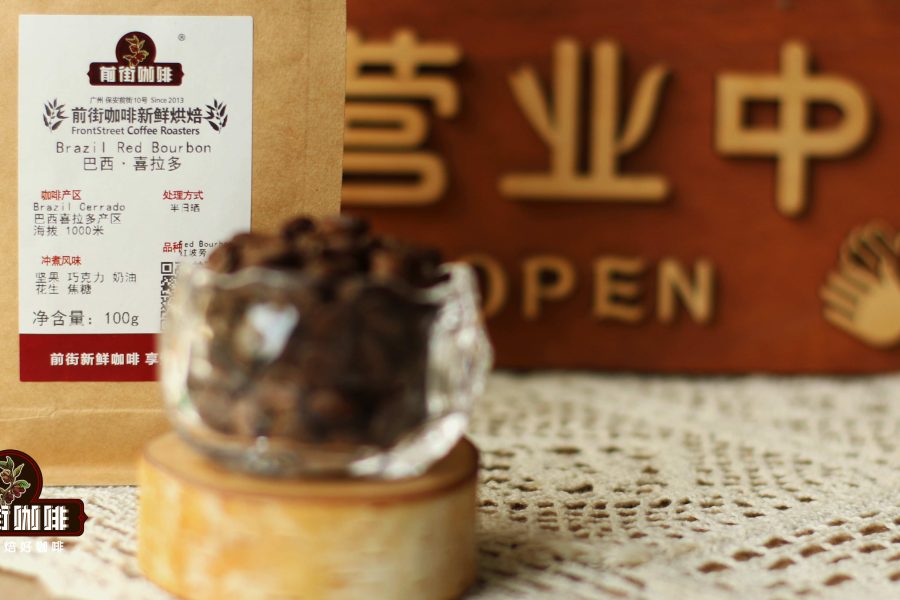
Introduction: As the world's largest coffee producer, Brazilian coffee is often misunderstood as one-dimensional. Through two representative regional cases—semi-washed Red Bourbon from Sul de Minas and high-altitude Yellow Bourbon from Mogiana—this article analyzes the true layered mouthfeel of Brazilian coffee and provides a professional-grade pour-over recipe. From processing innovations to the evolution of the grading system, let's rediscover the diverse charm of this 'coffee kingdom.'
When it comes to global coffee production, Brazil has always held the top spot. This South American country not only contributes more than one-third of the world's coffee beans, but also spans the full spectrum from commercial commodity beans to COE competition specialties. Yet many coffee lovers, upon first encountering Brazilian beans, are often struck by an impression of them as 'flat as water'—this is actually the biggest misunderstanding about Brazilian coffee.
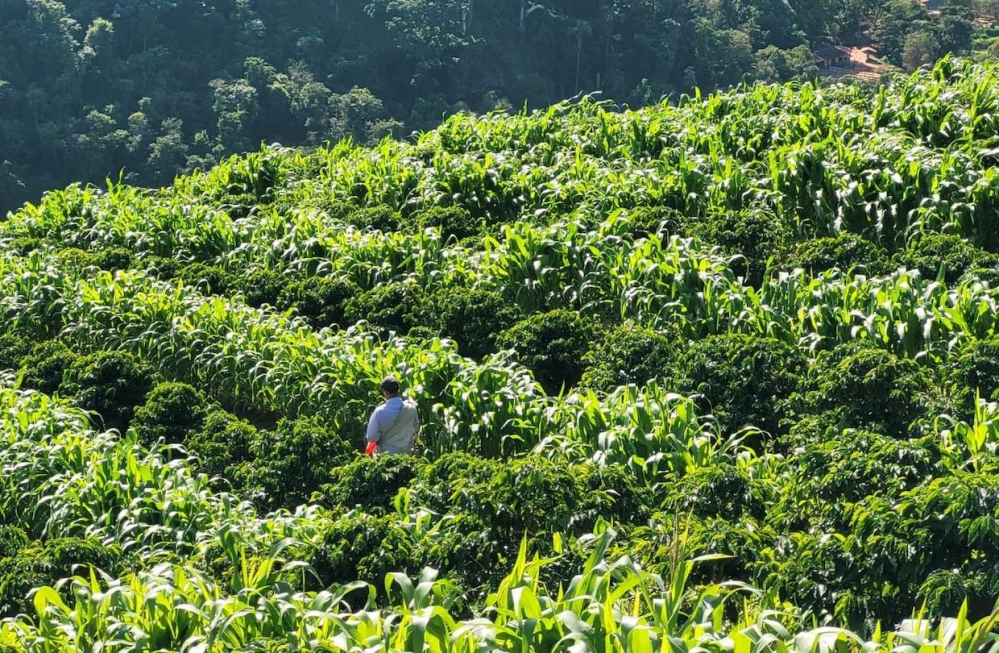
Brazilian coffee's diversity far exceeds imagination. In western Minas Gerais, the Cerrado Highlands ( ) at 750-1,200 meters, with its flat terrain, gives rise to unique semi-washed beans; while the adjacent southern Sul de Minas hill country (700-1,200 meters), with its high-altitude specialty-region characteristics, has become the mainstay of commodity beans. Notably, after 1999 most Cup of Excellence (COE) winning estates in Brazil have been concentrated here, confirming the region's production strength.
Take the common Red Bourbon variety as an example ( ); this variety, whose ripe fruit skin turns wine-red, typically develops brighter acidity and floral-fruity aromas at high altitudes. But Brazilian producers, through the innovative Pulped Natural process, have successfully shaped a more distinctive regional flavor—removing the skin and pulp while retaining the mucilage layer, then sun-drying, which both shortens the 2-3 week cycle required by traditional natural processing and reduces the risk of mold caused by humid conditions (compared with the musty/earthy off-flavors of the crude natural process before 1990).

On the operational level, the key to semi-washed processing lies in precisely controlling the degree of fermentation: after pulping, the mucilage-covered beans need to be evenly turned on drying beds so that the mucilage layer completes moderate fermentation within 12-24 hours. Compared with the clean-water soaking step of washed processing, this method both retains the sweet base brought by partial fermentation and reduces defect risk by eliminating the water-tank step. Note in particular that the Cerrado region, being drier in climate, mostly still uses traditional natural processing; the purpose of choosing semi-washed Red Bourbon beans is precisely to strengthen the expression of roasted aromas such as nuts and caramel ( ).
Another noteworthy case comes from the high-altitude Mogiana region ( ). The Queen's Estate plantation here reaches 1,400-1,950 meters; using the Yellow Bourbon variety (ripe fruit skin is yellow) combined with refined natural processing, it has successfully created a specialty bean with a clear sugarcane sweetness. The origin of Yellow Bourbon is quite historically interesting—in the 1930s Brazilian breeding experts obtained it through a cross-mutation between Bourbon and a yellow-skinned Typica variant; although it was not widely promoted due to low yield, it can display an excellent balance of sweetness and body at high altitudes.

Regarding Brazil's coffee quality grading system, its complexity is often overlooked by outsiders. Brazil's distinctive NY.2 SC-17/18 FC grading designation (commonly seen on burlap sack labels) ( ) contains three core dimensions: first, a defect-deduction system (no more than 4 defective beans in 300 grams of main beans qualifies as the highest No.2 grade); second, screening bean size through 17/18 mesh screens (mesh corresponds to the short-side width of the bean, with 17/18 mesh being the optimal grade); and finally, cup quality assessment (FC/GC and other ratings). This system effectively solves the quality fluctuation problem caused by large-scale blended exports, and consumers can predict the basic flavor tone of the coffee simply through the grading code.

For the actual brewing stage, a V60 dripper with a medium-fine grind (70% passing a No.20 sieve) is recommended. Taking 15 grams of grounds as an example, the specific parameters are: water temperature 90°C, water-to-coffee ratio 1:15; during staged extraction, first pour 30 grams of water and bloom for 30 seconds (to release aromas), then pour in a small stream in circles until 125 grams, and when the water level is about to expose the coffee bed, continue pouring to a total of 225 grams, with total extraction time controlled at about 2 minutes ( ). This recipe effectively highlights the signature nutty-chocolate base of Brazilian beans while avoiding bitterness from over-extraction.

In terms of final flavor presentation, semi-washed Red Bourbon from Sul de Minas typically shows a smooth character with high sweetness and low acidity, accompanied by the warm tones of peanut, almond and caramel; while the natural high-altitude Yellow Bourbon presents a full body dominated by sugarcane sweetness, with cocoa and nutty flavors running throughout. These empirical cases prove that—as long as the right region and processing method are chosen, Brazilian coffee can completely break through the 'flat' stereotype and display rich layers comparable to other regions.