Honduras Finca San Isidro Natural Coffee: Flavor and Farming Story

Introduction: This natural coffee from Honduras's Copán region, grown at 1,200 meters, presents the Lempira variety's distinctive cherry liqueur and pomegranate notes. We visit Finca San Isidro to learn how fourth-generation coffee farmer Katia Duke builds flavor complexity through innovative processing, and to uncover the sustainable practices and community education story behind this family farm.
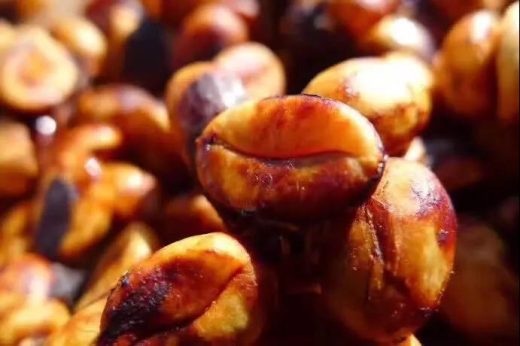
This Honduran specialty coffee is grown in the volcanic soil belt of Copán Department at 1,200 meters, where the Lempira variety accumulates rich flavor compounds amid significant day-night temperature swings. Using the traditional natural process, the coffee cherries undergo slow drying on raised beds over 21-28 days, during which the mucilage layer and green beans continue enzymatic reactions, ultimately forming the signature cherry liqueur aroma and pomegranate-like sweet-tartness, with a creamy, full-bodied finish.
The story of Finca San Isidro begins with four generations of coffee-growing tradition. The family of current manager Katia Duke cultivates more than 180,000 coffee trees across 68 hectares, providing 15-20 seasonal workers and 50 permanent positions to the local community during peak season. Notably, although the farm shares a dry mill with the family, Katia independently installed professional fermentation tanks and an African raised-bed drying system, achieving precise control over fermentation humidity and drying temperature—maintaining 45-50°C during daytime ventilation drying, and covering with dew-proof cloth at night to keep relative humidity around 60%.
This agricultural scientist's trajectory is instructive: while running Cafe Ixchel, she recognized the market potential for single-origin specialty beans and asked her family for an independent plot to conduct growing experiments. Her professional background comes from the Zamorano Pan-American Agricultural School, where she systematically studied field trial methodology and earned internationally certified qualifications as a coffee sommelier and roaster. "Certificates are more of a communication tool," she emphasizes. "What really matters is applying the fermentation control techniques researched at Zamorano to actual production."
Community building runs throughout the farm's operating philosophy. In 2014, after seeing a dilapidated schoolhouse, Katia persuaded her father to donate land and raised funds through the Morning Star Mission Foundation to build a new campus, growing enrollment from 20 to 40 students. The accompanying nutrition lunch program and after-school scholarship system reflect coffee farmers' social responsibility beyond cultivation. "Great coffee should give back to the community," she believes. "Training workers to understand fermentation curves and drying rhythms is more important than simply chasing cupping scores."
In terms of processing innovation, the farm added honey and washed options for the 2023 harvest: the former retains 20% of the mucilage layer for shaded slow drying, creating a wine-like body; the latter removes defective beans through flotation, then uses a 12-hour fermentation plus flowing-water wash process to highlight citrus notes. The natural lot continues the classic craft but upgraded its rain shelters to cope with sudden weather—when rainfall exceeds 5mm/day, an emergency drying procedure starts immediately, keeping bean temperature below 42°C to prevent mold.
For family-run small and medium farms, balancing quality and efficiency is an eternal challenge. Katia's grading and sorting system is a useful reference: after manually removing unripe beans, a density meter separates defective beans, and finally a color sorter ensures batch uniformity. She particularly reminds coffee lovers: when brewing these high-sweetness natural beans, use 92-94°C water with a medium-fine grind (75% passing a Chinese standard No. 20 sieve); a V60 dripper at a 1:15 coffee-to-water ratio better presents the layers.
From field to cup, every step reflects this female agronomist's pragmatic philosophy—using scientific methods to carry on family experience, and community investment to give back to the growing business. As she often tells her staff: "We're not growing coffee; we're cultivating stories worth being proud of." This natural bean carrying the breath of Copán's volcanoes is the best footnote to that idea.