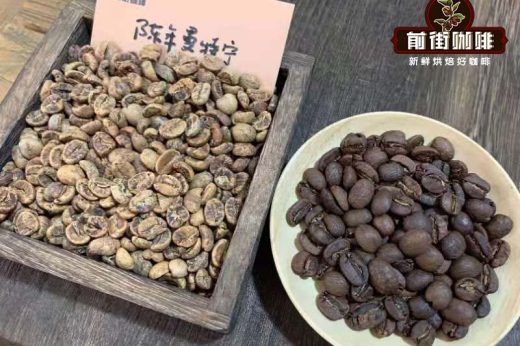
Sumatra Tiger Mandheling: Region, Flavor and Pour-Over Guide
Introduction: Explore the unique appeal of Indonesia's Sumatra tiger-striped coffee and uncover the growing region stories and flavor codes behind this Mandheling named after an endangered animal. This article details Tiger Mandheling's growing altitude, wet-hulling process, variety characteristics, and the principles behind its distinctive pine and agarwood notes, and provides a professional roast profile and pour-over recipe to help you precisely grasp the mellow balance of this classic Indonesian bean.

In Indonesia's coffee landscape, Sumatra Mandheling has always held an irreplaceable position. For coffee beginners, it is advisable to start with an entry-level Mandheling from the Lintong region to experience the typical Indonesian flavor base; if pursuing higher quality, the select-grade Mandheling that has undergone three rounds of hand sorting can present a purer, mellow mouthfeel, particularly suited to drinkers who prefer low acidity.

One coffee with a rather legendary character is named for its hidden connection to the Sumatran tiger—Tiger Mandheling. Grown in northern Sumatra, this coffee not only carries the island's distinctive terroir imprint but also, through its unique sorting standards and processing, has developed a clear personality distinct from ordinary Mandheling.

The core parameters of this coffee are as follows: growing altitude 1500 meters, processed using the local traditional wet-hulled method, with a variety combination of Typica and Caturra. Together these basic elements build its flavor skeleton—a high-viscosity, mellow mouthfeel and a pronounced agarwood base note.

North Sumatra's Aceh Special Region, as the core producing area, has a geographical environment with far-reaching influence on coffee quality. This northern tip of the island, which once experienced political turmoil, now nurtures high-quality coffee surpassing the traditional Lintong region in a peaceful environment. The local landmark Lake Tawar watershed and the well-known Lintong Lake Toba area are together called "Twin Lakes Mandheling," and in recent years have attracted key attention from international green bean buyers due to their outstanding quality.

As for the origin of the "Tiger" name, it stems both from the overlap of the producing area with Sumatran tiger habitat and as a metaphor for its stringent sorting standards: only uniform large beans that pass through a 19-mesh screen are selected, with three rounds of hand picking of ripe cherries. This tiger-like rare bean selection ultimately presents as a full-bodied thickness and lingering sweetness in the cup, whose finish is often likened by tasters to the steady sense of power in a tiger's prowl.

In terms of sensory characteristics, Tiger Mandheling's most prominent hallmark is its unique composite pine and agarwood aroma—a woody note rare in ordinary Mandheling, originating from the interaction of the special altitude climate and the wet-hulling process. The flavor matrix shows a clear herbal base accompanied by layers of dark berry sweetness.

The core technical step is the wet-hulling process: the skin and pulp are first removed for a short fermentation, then part of the mucilage layer is scraped off and drying is accelerated. This process creates the signature horseshoe-shaped crack and blue-green bean appearance, while by shortening the drying cycle to 2-4 days, it effectively suppresses acidity development and strengthens the mellow texture and special herbal aroma. It is worth noting that the irregular wrinkles formed during processing are a normal natural feature of quality.

In terms of variety composition, Typica provides an elegant, clean acidity balance, but its delicate nature requires careful tending; Caturra, as a Bourbon variant, contributes brighter fruit notes and excellent disease resistance. The combination forms a unique sweetness framework, in which Typica's bronze-tipped top leaves and Caturra's curved bean shape can serve as visual references for green bean sorting.

For professional roasting, a medium-dark roast level is recommended (charge temperature 200°C, 4 minutes of development after first crack), with key checkpoints including: at the 5-minute-18-second yellowing stage, maintain 140°C heat control to transform grassy flavors, and at the first crack starting temperature of 203°C, precisely adjust the damper to maximum. This roasting strategy aims to balance body and clarity, highlighting the main flavors of nuts and dark chocolate.

For the pour-over recipe, a Kono dripper is recommended (1:15 coffee-to-water ratio, 88°C water temperature); its low-vent design extends the contact time between water and coffee, making it especially suitable for extracting the mellow substances of this dark-roasted bean. During staged extraction, note 30 grams of water for a 30-second bloom to activate the flavors, control the flow rate in stages at the 125-gram water level, and a final extraction time of 2 minutes 05 seconds achieves the best balance.

Final cupping performance: the dry fragrance presents a mix of pine and herbs, while the wet aroma reveals caramel sweetness; the flavor layers move from an herbal-nut base on entry to creamy dark chocolate in the mid-palate, and the finish closes on a warm caramel-herbal note. The overall performance is mellow without losing clarity, making it a classic choice for experiencing the character of the Sumatra producing region.