Geisha Pour-Over Guide: Medium Roast Brewing and Iced Extraction
Introduction: This article details a medium-roast brewing plan for Geisha coffee, focusing on the parameter setup and practical procedure for the Emerald Red Label washed process. Covering both pour-over and iced extraction, it addresses core parameters such as coffee-to-water ratio, water temperature control and grind size selection for a 91+ scoring bean, and analyzes its layers of ginger flower, citrus and tea-like flavors to help you precisely present the distinctive character of this high-priced Geisha.
When it comes to the top Geisha of Panama's Emerald Estate, the Red Label washed process has always been the benchmark choice for coffee lovers. Beans of this kind must be obtained through international auction bidding, with global bidding every May; they are grown at altitudes above 1,700 meters and score consistently above 91 points in cupping. Their scarcity and flavor complexity make them a must-try bean for pour-over enthusiasts.

Although the Emerald Estate has limited output, it is known for high quality. Its four main series include Emerald Special Selection (Red Label) and Private Collection (Green Label), among others. The Red Label, with its red trademark and the highest quality, is regarded as an auction-grade bean; its washed process preserves Geisha's distinctive bright fruit acidity and caramel sweetness, combining the elegance of Ethiopia's Yirgacheffe with a unique sugarcane finish.
To brew Red Label Geisha, a Hario V60 dripper is recommended, using a multi-pour pour-over method. The key parameters are: water temperature 91-92°C, coffee-to-water ratio 1:16, and a medium-fine grind with 80% passing a Chinese standard No. 20 sieve. In practice, first wet the filter paper to seat it in the dripper and drain any water from the server, then add the coffee grounds and tap gently to level them. The first pour is 30 grams of water for a 30-second bloom to release the aromas; the second pour goes steadily to 125 grams, circling along the edge of the dripper; when the liquid level drops by half, the third pour adds the remaining 115 grams to a total of 240 grams, with a total extraction time of about 2 minutes.

In terms of flavor, with these parameters the Geisha shows the fresh fragrance of ginger flower and jasmine, with a lively acidity of lime and citrus on entry, a gentle bergamot fruitiness emerging mid-palate, and a finish of green tea and sugarcane sweetness, with a clean, lingering aftertaste. Note that the water stream during the bloom should not be too forceful, to avoid disturbing the coffee bed.
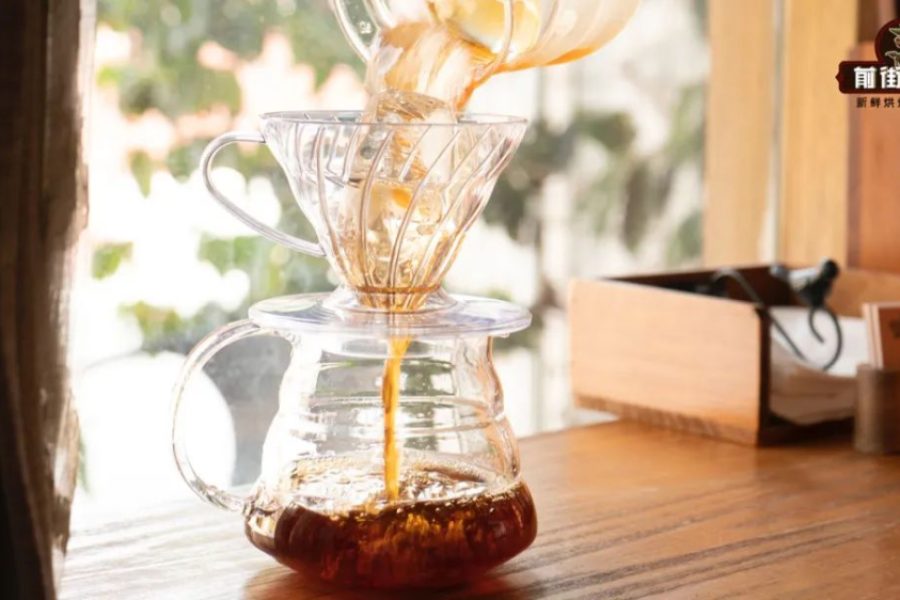
If you want to try iced pour-over, adjust the parameters as follows: 15 grams of coffee with 150 grams of 92°C hot water and 75 grams of ice, with the grind slightly adjusted to 83% passing a No. 20 sieve (for example, EK43s setting 9 or C40 setting 22). The procedure has three stages: the first pour uses a gentle 3-4 ml/s stream, circling in the center to add 30 grams of hot water for a 30-second bloom; the second pour uses the same technique to add 60 grams of water, controlling the liquid level to prevent under-extraction; the final stage adds the remaining 60 grams of hot water at 3 ml/s, with the total time kept between 1 minute 50 seconds and 2 minutes.

The iced pour-over version tastes fresher, with prominent jasmine and citrus acidity, accompanying tropical fruit notes, a smooth mouthfeel and a long tea-like finish. The ice should be frozen solid in advance to avoid diluting the brew and affecting its strength. Common mistakes include pouring too fast, which causes the temperature to drop sharply, or grinding too coarse, which leads to insufficient extraction; adjust slightly according to the actual flow rate.
Whether classic pour-over or iced extraction, mastering the core parameters and fine details is the key to presenting Geisha's multi-layered flavors. From water temperature to grind, from staged pouring to timing, every step directly affects the balance of floral and fruity aromas and sweetness in the final cup.