Panama Geisha Coffee: Price, Flavor, and Brewing Guide
Introduction: Why is Panama Geisha coffee hailed as the 'fairy of the coffee world'? This article provides a comprehensive analysis of the origins of Geisha coffee, its unique flavor, the reasons behind its high price, and the cultivation secrets of Panama's top-producing regions. It also offers professional pour-over parameter suggestions to help you fully experience Geisha's complex floral and fruity aromas and layers, making it a practical guide for coffee enthusiasts and beginners alike.
In the world of specialty coffee, the Geisha variety has long been a star attraction. Whether through its repeated victories in international coffee competitions or its intoxicating rich floral and fruity aroma, Geisha coffee, with its unique flavor and rarity, has consistently remained at the pinnacle of the high-end coffee market. Panama Geisha, in particular, often scores above 90 points in competitions, and tasting a truly high-quality Panama Geisha is no easy feat.

The Origin and Rise of Geisha Coffee
Geisha, pronounced similarly to the Japanese word for 'geisha,' is sometimes called 'geisha coffee.' Compared with common coffees such as Blue Mountain, Hawaiian Kona, or Mandheling, Geisha has a more exuberant and layered floral and fruity aroma, especially noted for the sweetness of tropical fruits and bright acidity. In the eyes of coffee lovers, it is a spirited 'coffee goddess.' Geisha was first discovered in 1931 in the Geisha forest of Ethiopia, then sent to a coffee research institute in Kenya, and subsequently introduced to Uganda, Tanzania, and Costa Rica, before finally being brought to Panama in 1970. However, in its early years of cultivation in Panama, Geisha did not receive much attention until 2003, when Hacienda La Esmeralda separated it from other varieties, and the following year, with its exceptional flavor, it won the Best of Panama (BOP) competition, truly stepping onto the world stage.
The Unique Environmental Requirements of Panama Geisha
The outstanding flavor of Geisha coffee is inseparable from its growing environment. This variety is extremely picky about altitude, soil, and microclimate, and is best grown at high altitudes (usually above 1700 meters), requiring cloud cover or tall tree shade for protection, while the soil must be rich and well-draining. The lower temperatures and larger day-night temperature differences at high altitudes help Geisha mature slowly and accumulate richer flavor compounds. Generally speaking, the higher the altitude, the more refined the Geisha's flavor, the brighter the acidity, and the more prominent the floral aroma.

In Panama, many quality estates plant Geisha in mountainous areas between 1700 and 1950 meters. For example, the renowned Hacienda La Esmeralda produces its Red Label and Green Label Geisha from plots above 1700 meters, while estates like Elida choose even higher-altitude growing areas in pursuit of more complex flavor expression.

Geisha's Flavor and Cultivation Challenges
Compared with other common Arabica varieties, Geisha not only has lower yields but also is more fragile and has extremely high requirements for growing conditions. Geisha coffee trees have thinner leaves, lower photosynthetic efficiency, and weaker root systems, resulting in weaker absorption of water and nutrients. Combined with the low temperatures and long growing cycles of high-altitude environments, this makes the yield per unit area only about half that of mainstream varieties like Caturra.
In addition, Geisha coffee cultivation requires a large number of shade trees to reduce damage to the delicate leaves from intense sunlight. In the early stages of planting, meticulous pruning management is also needed to improve plant survival rates. Geisha cherries have a long maturation period, requiring precise judgment of the optimal harvest time and rapid subsequent processing, which places extremely high demands on the grower's experience and estate management capabilities.

Why Is Geisha Coffee So Expensive?
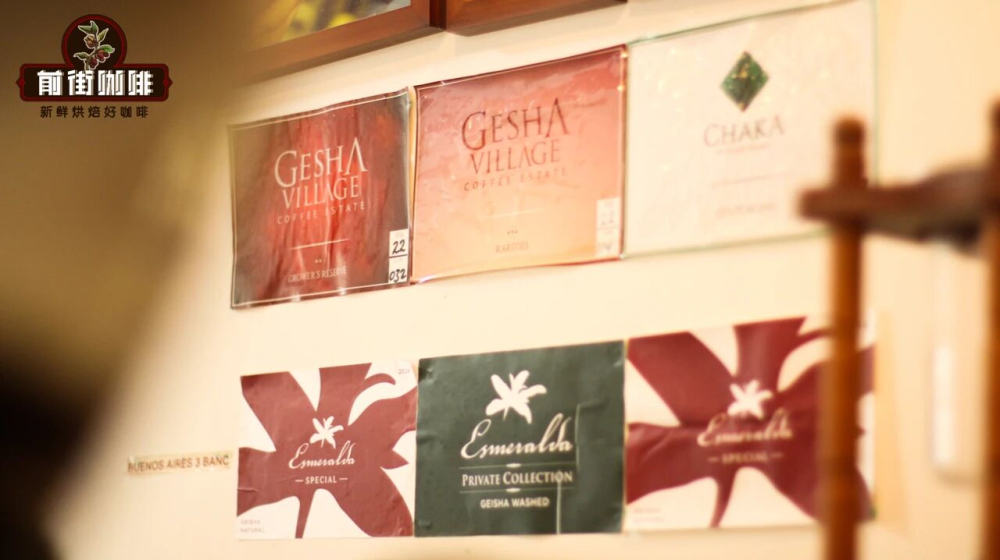
The high price of Geisha is not solely due to its scarcity; its true core value lies in that unforgettable unique flavor. Only Geisha that has been precisely judged, harvested at optimal ripeness, and quickly processed can display its ultimate floral aroma, citrus acidity, and tropical fruit sweetness. Hacienda La Esmeralda, as the estate that first discovered Geisha's potential, not only has won the BOP competition multiple times but also established a strict quality grading system, further driving up its market value.
This is especially true for auction-grade Geisha. For example, in 2017, a lot of Hacienda La Esmeralda's natural Geisha sold for a record price of $601 per pound (about 8,900 RMB per kilogram), setting a then-record for Panama specialty coffee auctions. Such top-tier Geisha is usually circulated only through auction channels, with high prices and extremely limited quantities.

However, consumers can still purchase high-quality Geisha such as Hacienda La Esmeralda's Red Label and Green Label through regular channels without participating in auctions. The prices are relatively more affordable but still several times higher than ordinary coffee. Geisha from different estates and with different processing methods will vary in flavor expression and market price.
Geisha Pour-Over Parameters and Flavor Experience
To fully experience the delicate flavor of Geisha coffee, the correct brewing method is particularly important. It is generally recommended to use a medium-fine grind (about 80% passing through a No. 20 sieve), paired with a water temperature of 90-91°C, to fully stimulate its floral and fruity aroma and sweet-tart balance. A V60 dripper is recommended, with a coffee-to-water ratio of about 1:15, which can reveal Geisha's distinctly layered flavor characteristics.
The specific brewing steps are as follows: first, perform a 30-second bloom with 30 grams of water, then pour in a slow circular motion up to 125 grams, and when the liquid level drops to two-thirds of the coffee bed, continue pouring up to 225 grams to complete the extraction. The entire process should be completed within 2 minutes 10 seconds to 2 minutes 20 seconds for the best taste.

The brewed Geisha coffee often carries fresh jasmine floral notes, citrus acidity, and tropical fruit sweetness. As the temperature changes, the flavor layers gradually unfold, and the aftertaste is often accompanied by a soft tea-like note, with an overall smooth and memorable mouthfeel.

Conclusion
With its unique growing background, stringent growing conditions, and complex, captivating flavor, Panama Geisha coffee has become a treasured gem in the hearts of specialty coffee lovers worldwide. Whether you are a first-time taster or a seasoned coffee enthusiast, understanding Geisha's origins and brewing techniques will help you better appreciate this 'work of art in coffee.'