Indonesian Lintong Mandheling Coffee: Flavor Profile and Pour-Over Guide
Introduction: Explore in depth the Mandheling coffee from the Lintong region of Sumatra, Indonesia—from its geographical environment to its flavor characteristics, and the unique qualities of Golden Mandheling. This article analyzes in detail the flavor differences between the Two Lakes, provides professional pour-over parameter recommendations, and reveals the origin of the name Mandheling. Whether you are a coffee novice or a seasoned enthusiast, you will gain practical guidance on bean selection and brewing.
Among the premium coffee-producing regions of Sumatra, Indonesia, Lintong Mandheling is highly regarded for its unique full-bodied flavor. This region, located in northern Sumatra, together with Lake Tawar in the Aceh region, is known as the "Two Lakes, Two Mandhelings," and together they have built the reputation of Indonesian Mandheling coffee. Although the coffees from both places share a heavy mouthfeel, their flavor expressions are distinct: Mandheling from the Lake Toba region typically shows a more subdued, muffled aroma, often with herbal notes such as grass jelly; while Mandheling from Lake Tawar is relatively brighter, with livelier fruit acidity, and one can often catch cedar or woody tones.
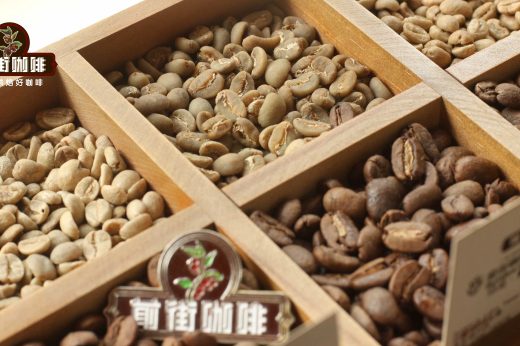
When it comes to high-end Mandheling, one cannot fail to mention Golden Mandheling. This name was originally registered by the local Indonesian Pwani Coffee Company, which purchased high-quality Mandheling and launched it on the market under the name "Golden Mandheling." Although many coffee farmers today, through improved cultivation techniques, can also produce beans close to Golden Mandheling quality, the original Golden Mandheling still maintains an advantage in being more full-bodied and pure. It is worth noting that the appearance of Mandheling green beans is often unremarkable, but after roasting, the roasted beans present a beautiful color and plump, full body—which proves the saying that one should not judge by appearance.
For coffee lovers who enjoy pour-over, here is a proven brewing recipe: use 15 grams of medium-fine ground (recommended setting 4 on a Fuji Royal ghost-tooth grinder) Lintong Mandheling, paired with a V60 dripper, with water temperature controlled at 88-89°C. First, bloom with 30 grams of water for 27 seconds, then pour until the water amount reaches 105 grams and stop; when the water in the coffee bed drops to half, continue pouring until the total water amount reaches 225 grams. It is recommended to omit the final pour to keep the flavor clean. Using a 1:15 water-to-coffee ratio, the entire extraction process takes about 2 minutes. This parameter combination can fully express the spice and nutty notes characteristic of Mandheling.
There is an interesting historical story behind the origin of the name Mandheling. During World War II, a Japanese soldier stationed in Indonesia tasted an unforgettable coffee in a café. When he asked the owner the name of the coffee, the owner mistakenly thought he was asking about his hometown and answered "Mandailing." After the war, the soldier introduced this coffee to Japan based on his memory—this is the origin of the name Mandheling. Today, the name has become synonymous with high-quality Indonesian coffee.
Mandheling coffee can be subdivided into several types according to origin, including Lintong Mandheling, Golden Mandheling, and others. Take Lintong Mandheling as an example: this coffee bean, produced in the Lintong region of Sumatra, is typically made from high-quality coffee cherries of G1 grade that have undergone three rounds of manual sorting. It is grown at an altitude of 1,100 to 1,600 meters and processed using the traditional wet-hulled method. This processing method gives the coffee its unique full-bodied mouthfeel, with flavor characteristics mainly expressed as a complex aroma of baked toast, nuts, pine, caramel, and herbs—rich in layers and with a long finish.
When selecting Mandheling coffee beans, it is recommended to pay attention to several key indicators: first, origin information—the microclimates of different areas on Sumatra significantly affect the final flavor; second, processing method—the wet-hulled method is the key craft that creates Mandheling's unique mouthfeel; finally, roast level—medium roast usually best balances Mandheling's body and flavor layers. For coffee lovers trying Mandheling for the first time, it is advisable to start with standard Lintong region beans and gradually explore the flavor changes brought by different processing methods and roast levels.