Hawaii Kona Coffee: Typica Flavor, Grades & Origin Guide
Introduction: As a globally renowned island-style specialty coffee, Hawaiian Kona coffee showcases delicate floral aromas and mild acidity thanks to its unique Typica variety and volcanic soil growing environment. This article will comprehensively analyze the charm of this precious bean, from Kona coffee's historical origins and geographical planting advantages to grading standards and brewing suggestions, helping coffee enthusiasts gain an in-depth understanding of its flavor characteristics and key purchasing points.
In the early years, the international coffee community once hailed top coffees as 'one king and one queen,' with the 'king' referring to Jamaican Blue Mountain coffee and the 'queen' to Hawaiian Kona coffee. Both are island-style coffees, yet their flavors are entirely different—Kona is known for its elegant floral notes, while Blue Mountain is famous for its fresh, sweet, subtle fragrance. It is worth noting that The Craft of Specialty Coffee defines specialty coffee as Arabica varieties grown at altitudes above 1,200 meters, whereas Kona coffee is mostly grown at 200-700 meters, yet it still ranks among specialty coffees through its unique terroir, and its market value is strong evidence of this.
Kona coffee takes its name directly from its place of origin—the Kona region of Hawaii's Big Island in the United States. Hawaii is not the native home of coffee; the earliest planting attempt began in 1817, when the Spanish-descended immigrant Don Francisco de Paula Marin introduced it, but it was unsuccessful. It was not until 1825 that the administrator of Oahu brought coffee plants back from Brazil, achieving the first stable cultivation in Manoa Valley. In 1828, the missionary Samuel Ruggles introduced the Bourbon variety from Brazil. However, around 1850, rampant coffee diseases forced many farmers to switch to growing sugarcane. The turning point came in 1892, when the German-descended judge and sugarcane plantation owner Hermann Widemann introduced the Typica variety from Guatemala; this variety gradually adapted to the Kona environment and eventually evolved into the distinctive 'Kona Typica.'
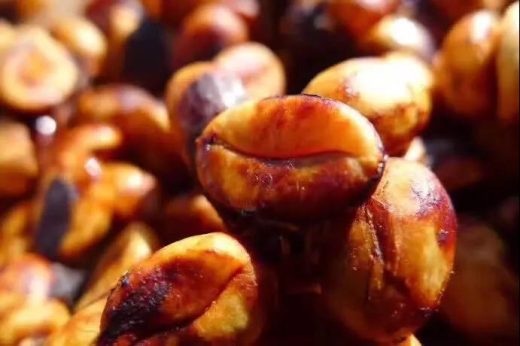
The appearance of Kona coffee beans is nearly perfect: the fruit is plump and round, the surface is bright and lustrous, and after roasting they show an even blue-green color. Its flavor is dominated by a rich aroma, accompanied by mild cinnamon-like spice notes, with balanced and not sharp acidity and a rich, layered mouthfeel. Hawaii's Big Island, where Kona is located, was once an independent kingdom; it fell in 1893 due to a coup, was annexed by the United States in 1898, and officially became the 50th state in 1959. Kona coffee thus became the only top-grade coffee variety produced in the continental United States, with a very high share of the domestic market.
The core production area of Kona coffee is located on the west coast of Hawaii's Big Island, the 'Kona Coffee Belt,' a narrow strip parallel to the coastline, extending about 30 miles north to south and only 2-3 miles wide. The actual growing altitude in this belt is only 200-700 meters; although lower than the 1,200-meter standard for traditional specialty coffee, it benefits from the volcanic ash soil of Mauna Loa—fertile and rich in organic matter—which provides ideal growing conditions for coffee trees. Coffee trees are mainly planted in the barren areas of the volcanic slopes; although initial cultivation requires a great deal of manpower, the natural advantages of the soil compensate for the altitude limitation.
Kona coffee is divided by bean shape into standard beans (Type 1) and small round beans (Type 2), with Type 1 further subdivided into five grades: Extra Fancy, Fancy, Number One, Select, and Prime. The top three high grades have uniformly sized beans and a premium blue-green color, with the Extra Fancy grade having the strictest requirements—the largest bean size and the lowest defect rate, requiring manual selection bean by bean, and its output is the scarcest. It should be noted that genuine Kona coffee comes only from the legally designated Kona production area; counterfeits from other regions are common, so buyers should look for the origin label when purchasing.
Brewing Kona Typica coffee requires balancing its mild characteristics. A V60 dripper with a medium grind (80% passing through a Chinese standard No. 20 sieve) is recommended, with the water temperature controlled at 90°C. The specific procedure: first pour 30 grams of hot water for a 30-second bloom, then pour slowly in circles from the center, pausing at 125 grams, continue pouring to 225 grams, and wait for the dripper to finish draining. With these parameters, the coffee's flavor shows a soft acidity of nuts and berries layered with caramel sweetness, a creamy-smooth mouthfeel, and distinct layers.