Salvadoran Coffee Beans: Flavor Profile and Regional Characteristics
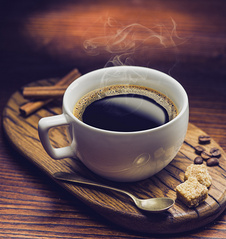
Introduction: Take a closer look at the unique flavors and regional stories of Salvadoran coffee beans, and explore high-quality coffee from high-altitude regions such as Cuscachapa. This article explains their flavor characteristics, growing background, and brewing suggestions to help you fully grasp the appeal of this Central American specialty coffee.
In El Salvador, coffee beans from the Cuscachapa region are considered top grade. These beans have a light body, a rich and pure aroma, and moderate acidity. Like Guatemala and Costa Rica, El Salvador also uses an elevation grading system—coffee quality improves as altitude rises. Among them, Pipil is the country's most representative specialty coffee brand and has received authoritative recognition from a U.S. organic certification body.
Another rare variety, Pacamara, is also worth noting. It is a cross between Pacas and Maragogype, and its main growing area is concentrated in western Santa Ana Department near the Guatemalan border. These beans are large and plump, though their aroma is relatively restrained.
The overall flavor profile of Salvadoran coffee can be summarized as: medium body with a clean, smooth mouthfeel, and natural sweetness revealing distinct fruity notes. This balance makes it suitable both for drinking black and for creative preparations that show more layers.
Recommended brewing method: add an appropriate amount of sugar cubes and ice, stir well, then add fresh milk or fresh cream to taste to create a cold brew drink that combines refreshment with rich aroma. This method highlights its bright acidity and creamy finish.
As a country in northwestern Central America, El Salvador borders the Pacific Ocean to the south. It is not only an important birthplace of Maya civilization but also known for its unique volcanic terrain and highland landscapes. The country's coffee production accounts for 40% of total national exports, with the best-quality Strictly Hard Bean (SHB) mainly harvested from January to March each year, and about 35% exported to the German market.
Affected by the civil war in the early 1990s, the local coffee industry suffered a severe blow—production dropped sharply from 3.5 million bags in the 1970s to 2.5 million bags in 1990–1991. But today, producing regions such as those around the Santa Ana volcano have recovered, and among them Finca El Guerreo—with its unique microclimate near the volcano summit, stable rainfall and sunlight conditions, and specialized cultivation management—produces specialty coffee with complex aromas such as dried pear and cream.
In terms of technical parameters, the region mainly uses the 100% Arabica Bourbon variety, processed by the washed sun-dried method. Green bean moisture content is controlled at 10.48±0.5% (five repeated measurements), and density is 1.15±0.15g/cm³. A professional judging panel evaluated the aroma dimension: sweet floral notes (jasmine, lavender, coffee flower, etc.) account for 4/6, citrus notes (lemon, orange, etc.) account for 1/6, and the rest are complex notes such as berries, nuts, and chocolate. In actual tasting, its mouthfeel shows a notably smooth character.