Kenya Coffee Brewing Guide: Pour-Over and SOE Flavor Analysis with Parameter Recommendations
Introduction: Kenya coffee is known for its bright berry acidity, and its unique K72 washed process creates layered flavor expression. This article explains the history, regional characteristics and grading system of Kenyan coffee, focusing on pour-over techniques and espresso extraction plans for AA-grade beans, providing precise coffee-to-water ratios, grind sizes and water temperature parameters, and revealing the key points for making SOE americano and latte at home.
 Kenya coffee occupies a unique position in the global specialty coffee market, and its iconic bright acidity and complex berry notes are highly praised by experienced coffee enthusiasts. As an important coffee-producing region in Africa, Kenya not only inherited Ethiopia's coffee genes but also formed a distinctive style through localized cultivation techniques and processing methods. Understanding how to brew Kenyan coffee not only allows you to experience its unique flavor layers but also helps you master professional-level coffee-making skills.
There are two mainstream accounts of the origin of Kenyan coffee: the widely held view is that in 1893 a French Holy Spirit mission priest introduced the Bourbon variety from Réunion, while other scholars point out that British colonists promoted coffee cultivation around 1900. It is worth noting that after Kenya became a British colony in 1895, the coffee industry was long controlled by the colonial government, and only after independence in 1963 did it gradually regain autonomy in cultivation. In the 1980s, Kenya's annual coffee production reached a peak of 130,000 tons. Although in recent years it has fallen back to around 40,000 tons, quality continues to improve through coffee revitalization programs.
 Central Kenya contains the country's highest-quality coffee-growing areas. Among them, the Kiambu and Murang'a regions are known for their full body and bright acidity, while the Nyeri region's blackberry flavor paired with citrus notes is highly recognizable. The Kirinyaga region's balance of fruit acidity and sweetness can be called exemplary, while the Embu region shows coordinated flavor layers. Different microclimates create the unique personality of each region. A growing environment at an altitude of 1,500-2,100 meters, combined with day-night temperature differences, allows the beans to accumulate rich flavor compounds.
Kenya coffee follows a strict eight-grade classification system. AA grade (17/18 screen), as the high-end grade commonly found on the market, is second only to Elephant beans (E grade) in bean size. It is particularly worth noting that Peaberry (PB grade), because it contains only a single seed, often has a more concentrated flavor expression. When purchasing, consumers should look for AA or PB grade; beans of these grades usually have richer flavor layers and better extraction performance.
 Kenya coffee's signature acidity comes from the combined action of multiple factors: the phosphates abundant in volcanic red soil promote nutrient absorption by the coffee trees, and SL28 and SL34, two Bourbon variant cultivars, naturally possess prominent berry acidity and aroma. More critical is the unique K72 washed process—after the coffee cherries are pulped, they undergo a stepped fermentation lasting up to 72 hours. Through meticulous alternating dry and wet handling, the purity of fruit acidity is preserved while impurities and off-flavors are effectively removed. This process creates the characteristic balance of bright acidity and full body in Kenyan coffee.
For professional-level pour-over, the following parameters are recommended: a V60 dripper with 15 grams of coffee, a 1:15 coffee-to-water ratio, and a grind size controlled at 80% passing through the Chinese standard No. 20 sieve (roughly equivalent to EK43s #10). The three-stage pouring plan is: first stage, 30 grams of water for a 30-second bloom; second stage, pour in circles to 125 grams; after the water level drops, continue pouring to 225 grams to complete extraction. A water temperature of 90-93°C can effectively bring out the berry flavors without producing excessive bitterness, and the total extraction time should be controlled at about 2 minutes. Pay special attention to the importance of fresh grinding; beans within 5 days after roasting show their best flavor window.
 For espresso lovers, Kenyan AA-grade beans are equally suitable for SOE (single origin espresso) preparation. When using a double basket (about 18-20 grams of coffee), a 1:2 coffee-to-liquid ratio is recommended (20 grams of coffee extracting 40 grams of liquid) with a 20-30 second extraction time. Commercial machines can be adjusted to 11 bar pressure, while home machines only need to maintain the standard 9 bar pressure. Special note: freshly roasted beans (ideally 7-21 days after roasting) show richer nutty and caramel finish; avoid using beans that are more than a month old.
When making SOE drinks at home, the espresso can be drunk directly to experience its bright berry acidity and distinctive tomato notes, but pairing it with water to balance the palate is recommended. For americano, a 1:4 ratio is recommended (40 grams of espresso + 160 ml of iced water); for latte, use a 1:6 ratio (40 grams of espresso + 240 ml of milk). Note that the milk temperature should be controlled at 60-65°C to avoid damaging the coffee's flavor; keeping the microfoam fine and silky when steaming improves the overall smoothness of the drink.
 Storage directly affects how well coffee quality is preserved: it is recommended to place whole beans in a sealed canister with a one-way exhaust valve and store it in a cool, dark place (ideal temperature 10-20°C). Ground coffee should be used within 30 minutes; prolonged exposure causes aromas to fade quickly. Professional baristas recommend buying no more than 2 weeks' worth of beans at a time to ensure you always enjoy the flavor of freshly roasted coffee.
FAQ: Regarding the question "Is Kenyan coffee better the more acidic it is?", it is necessary to understand that acidity is a flavor dimension, not a quality indicator. The acidity of high-quality Kenyan coffee should present bright, clean berry notes, not a sharp, pungent sourness. If the brew turns out overly sour and astringent, try raising the water temperature to 93°C or extending the extraction time by 5-10 seconds. Conversely, if the flavor is flat, check whether the grind is too coarse or the water temperature is too low.
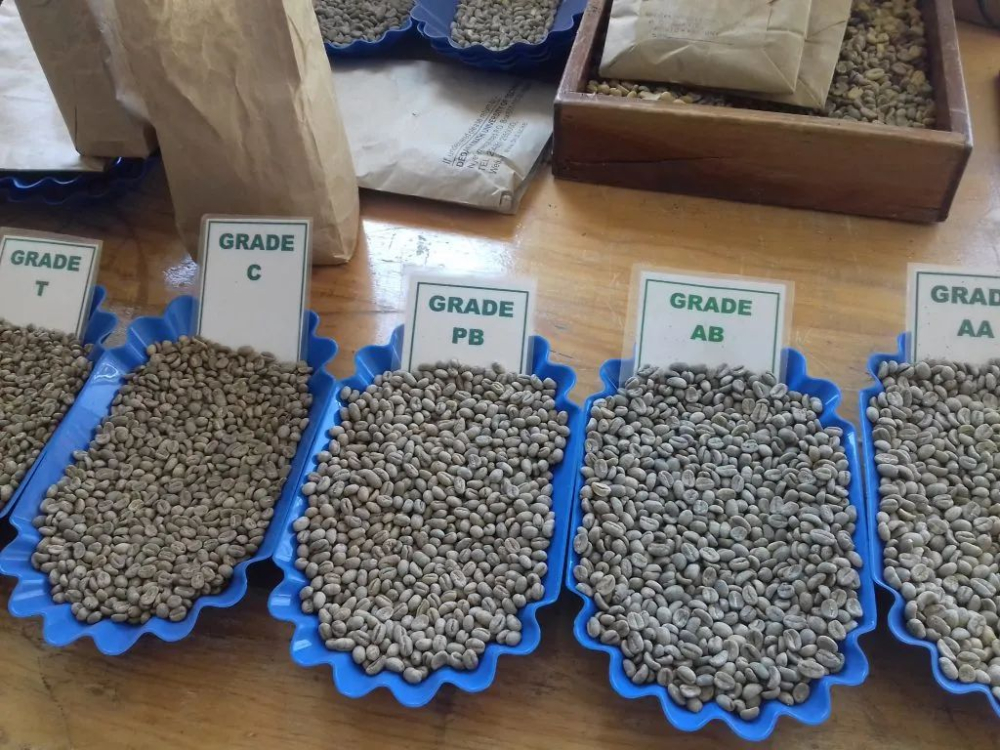 In-depth look at the grading system: besides the common AA grade, PB peaberry (about 5% of total production), because of its higher density, often has a more concentrated flavor expression and suits coffee lovers pursuing the ultimate flavor. Although E-grade Elephant beans (larger than 20 screen) are visually striking, their actual flavor performance is not stable. Consumers are specifically reminded that there is no need to sieve roasted beans themselves to determine grade; density differences after roasting make screening ineffective. When purchasing, choose green or roasted products whose grade is already specified.
Processing innovation trends: some modern Kenyan estates have begun trying new processes such as anaerobic fermentation washing, developing more complex aroma layers while maintaining the traditional acidity. However, the classic K72 washed process remains the processing method that best represents Kenya's terroir; through precisely controlled fermentation time and repeated washing, it achieves a perfect balance of acidity purity and full body. This process, inherited from technical improvements made during the colonial period, remains a benchmark case among specialty coffee processing methods worldwide.