Brazil Fazenda Brilhante Caturra Natural: Origin, Flavor and Social Responsibility

Introduction: Explore the specialty coffee story of Brazil's Minas Gerais Cerrado region—and how Fazenda Brilhante builds its distinct flavor through the Caturra natural process. This article details the growing environment at 1,052 meters, 30 years of meticulous farming, the secrets of the Cerrado Mineiro golden region that accounts for 12.5% of the country's total production, and the community education projects and ecological conservation plans championed by farm owner Inacio.
On the Cerrado highlands of Minas Gerais, Brazil, the Rio Brilhante farm at 1,052 meters above sea level cultivates a distinctive Caturra coffee. When farm owner Inacio Carlos Urban bought this land in 1984, he could not have imagined that 30 years later it would become a coffee powerhouse spanning more than 2,000 hectares—its natural-process Caturra beans known worldwide for their full-bodied sweetness and citrus notes.
The Cerrado region comprises 55 municipalities, with its eastern part located in Minas Gerais, Brazil's largest coffee-producing state. An elevation range of 1,000–1,250 meters, together with a pronounced alternation of dry and wet seasons, creates an ideal environment for coffee growing. The region contributes 12.5% of Brazil's total coffee production and, like the Champagne region, enjoys protected designation of origin, ensuring that coffee bearing the "Cerrado" label must come from this area.
The farm takes its name from the Guarani Aquifer—the world's second-largest underground reservoir, which sustains the farm's water lifeline. Inacio has kept 1,600 hectares as the core coffee-growing area and set aside another 700 hectares for rotational fields of cash crops. With his son succeeding him in the business, a sense of family responsibility is poured into the meticulous management of every coffee tree: soil and leaf nutrients are tested quarterly, and fertilizer ratios are precisely adjusted based on the results; coffee trees are scientifically pruned every two years, with professionals applying differentiated pruning to side branches, tops, or entire trees.
Variety selection reflects innovative thinking: in addition to traditional varieties such as Bourbon, Yellow Bourbon (Topázio), and Catuaí, the farm was among the first to plant the leaf-rust-resistant Arara and Paraíso varieties. These varieties not only improve cup performance but also reduce fungicide use by 30%–40%, balancing yield and ecology.
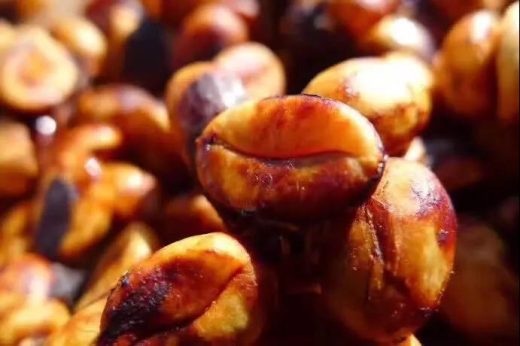
The natural process is key to flavor formation—ripe fresh cherries are dried on African raised beds for 20–25 days, turned 3–4 times daily to ensure even drying. This process gives the coffee pronounced caramel sweetness and tropical fruit aromas, with acidity as soft as a ripe apricot and a dark chocolate finish. It is especially suited to pour-over enthusiasts trying a medium-fine grind (80–100 microns) with 92–94°C water.
The farm's social contribution is equally notable: the "Seeds of Change" program helps more than 200 employees master basic reading, writing, and arithmetic, with accompanying vocational qualification training to support their career development; the affiliated Aunt Edna mini-school provides early education for 85 children with disabilities aged 2–6. These projects embody a corporate philosophy of "family values," and even employees' relatives can take part in skills training courses.
Looking ahead, Inacio plans to work with the community to restore the surrounding water system and carry on the ecological mission of the Guarani Aquifer. Every coffee bean from this land embodies comprehensive innovation, from growing techniques to social responsibility.