VELLOSO Estate Family History: How Fazenda Soares Grows Top Natural Coffee

Introduction: An in-depth visit to a core farm in Brazil's Cerrado Mineiro region reveals how the VELLOSO family moved from bean trading in the 1970s to becoming coffee-growing giants. This article details how Fazenda Soares at 1,112 meters produces the RedCatuaí variety with honey and milk cocoa flavors through natural processing, and shares key technical details such as its fight against nematodes and soil improvement.
In Cerrado Mineiro, Minas Gerais, Brazil, Fazenda Soares at 1,112 meters is producing coffee of the RedCatuaí variety with a distinctive flavor. This small farm, run by the PEDRO HUMBERTO VELOSO family, uses **natural processing** to create a complex flavor of honey sweetness, syrupy body and milk cocoa powder, making it a distinctive choice in the specialty coffee market.
Cerrado Mineiro, one of Brazil's five major coffee regions, consists of 55 municipalities. Its **altitude range of 1,000-1,250 meters** and distinct alternation of dry and wet seasons provide an ideal environment for coffee growing. The region contributes about 12.5% of the country's coffee production and enjoys geographical indication protection similar to French Champagne—only coffee produced here may bear the name "Cerrado."
The VELLOSO family's coffee business began in the 1970s. Founder PEDRO initially ran a bean trading business in São Paulo, completing the entire process from cleaning and packaging to sales in warehouses. In 1975, a severe frost in Paraná cut coffee production by nearly half, prompting many Japanese-descended immigrants to turn to coffee growing in Minas Gerais. PEDRO sensed an opportunity during trade negotiations at the Port of Santos, and in 1986 he bought his first farm, Fazenda Soares—a small estate that then accounted for only 3.5% of his total planted area and is now the family's core production area thanks to its unique microclimate.
Faced with the threat of root-knot nematodes in coffee trees, the estate team adopted a dual strategy: introducing resistant varieties on the one hand and implementing precise soil management on the other. Through **plot-level soil testing**, it calculates nitrogen, phosphorus, potassium and micronutrient needs, and uses mechanized fertilization to ensure each coffee tree receives a customized nutrition plan. Fertilizer concentration is especially controlled for newly planted young trees, strengthening stress resistance through gradual nutrient supply.
For canopy management, the farm uses a "topping and branch-splitting method" to maintain productivity: every 8 harvest cycles, slanted and upright branches are pruned, with a **12-year rotation cycle** (planned to be shortened to 9 years after 2023) to renew old trees. Variety trial plots continuously test disease-resistant new lines such as IPR100 and Catucaí, with each plot matched to a dedicated cultivation plan based on microclimate differences.
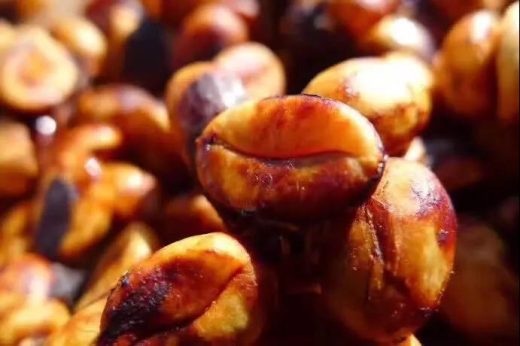
The highly praised 2019 RedCatuaí lot used an innovative process close to Costa Rica's "barrel fermentation": after harvest, ripe and unripe cherries are immediately sorted; ripe cherries go into a wet pulper, while unripe cherries are spread in a 20 cm thin layer and fermented at a **constant 42°C for 48 hours**, then turned 12 times a day and dried for 16 days until the moisture content reaches the target. This staged processing method preserves fruity aromas while enhancing sweetness layers.
Environmental philosophy runs throughout the estate's operations: PEDRO has set aside 15% of the land as Cerrado protected forest, and his "Semear" project has planted more than 124,000 saplings since 2012, bringing the farm's protected-area coverage to 20% above Brazil's legal standard. To address labor shortages, in addition to union-standard wages, outstanding employees can receive education subsidies, along with supporting facilities such as vegetable gardens to improve workplace well-being.
From trader to growing expert, the VELLOSO family has spent forty years writing a coffee legend in Cerrado Mineiro. This family story not only shows the evolution of Brazil's coffee industry but also provides practitioners worldwide with a practical example of tackling pests and diseases, climate change and talent challenges.