Brazilian Coffee Beans: From History and Regions to Flavor and Roasting
Introduction: Brazil is the world's largest coffee producer, and its coffee beans are known for consistent quality and distinctive flavor. This article takes an in-depth look at the development of Brazilian coffee from its introduction in the 18th century to the present, explains the geography and climate of the main producing regions, analyzes the differences among Arabica varieties and their flavor profiles, and explores how processing methods such as natural and pulped natural affect flavor, helping coffee lovers gain a more complete understanding of the essence of Brazilian coffee.
Brazil is not only the world's largest coffee producer but also an important driver of coffee culture. Despite its staggering output, Brazilian coffee tends toward a balanced, full-bodied style overall and is often used in blends to add sweetness and a stable base. Its flavor is dominated by chocolate and nutty notes, with prominent sweetness and good body, suiting a wide range of palates. These characteristics make it a first choice for many coffee beginners.

The history of Brazilian coffee dates back to 1720, when coffee beans were brought into Brazil from French Guiana. Interestingly, because most South American countries at the time were Spanish colonies where Spanish was spoken, while Brazil was a Portuguese colony with Portuguese as its official language, this also shaped the cultural differences between Brazil and other Latin American countries today. According to legend, a Portuguese military officer stationed in Brazil, seeking to obtain coffee seeds, successfully won the favor of the wife of the governor of French Guiana and thus secretly brought coffee seeds into Brazil. Coffee adapted quickly in Brazil, spreading from the north all the way to the southeast, especially the area around São Paulo. By 1845, Brazilian coffee accounted for 45% of total global coffee production, and it has maintained its leading position in exports ever since.

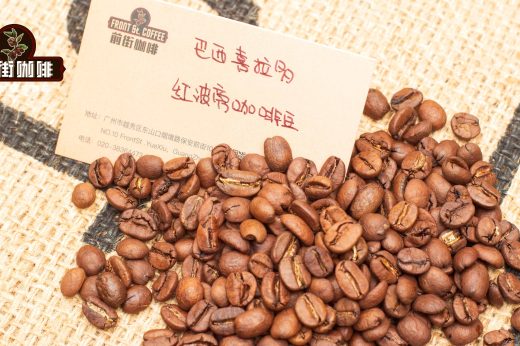
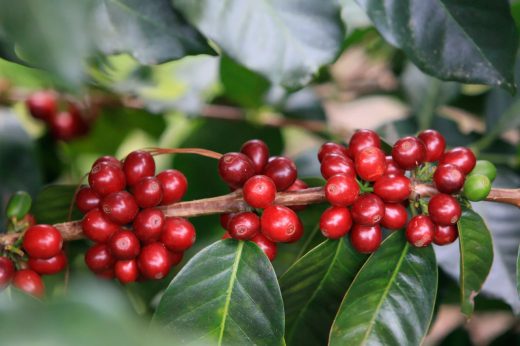
The coffee variety planted in Brazil in the early days was mainly Typica, but its yields were low and its economic returns limited. In the 1860s, Brazil introduced the higher-yielding Bourbon variety from Réunion, driving further development of the coffee industry. Today, the main varieties grown in Brazil include Red Bourbon, Yellow Bourbon, Mundo Novo and Catuai. Among them, Red Bourbon, with its compact tree shape, is suitable for dense planting and yields about 30% more than Typica; its beans are somewhat round and short, and its flavor features distinct berry acidity, a creamy texture and full sweetness, with clean acidity, making it one of the representative varieties of high-quality Brazilian coffee.

Unlike other coffee-producing countries in Central and South America, Brazil's coffee cultivation is distinguished by scale and efficiency. Because the terrain is relatively flat, most coffee is grown at elevations below 1,000 meters, and large areas of flat land facilitate mechanized operations. During the harvest season, ripe cherries are usually picked uniformly by machine, saving a great deal of labor cost. After harvesting, the coffee cherries go to large processing plants, where they undergo standardized procedures to ensure efficiency and quality control. In addition, Brazil has bred coffee varieties able to adapt to intense sunlight, reducing dependence on shade trees and further lowering cultivation costs.

As many as 17 states in Brazil produce coffee, with Minas Gerais and São Paulo in the southeast being the most famous. The Cerrado region in Minas Gerais is Brazil's first coffee region to receive origin certification and is known for producing high-quality Arabica. The area has a mild climate with a concentrated rainy season, providing an ideal environment for coffee growth. Cerrado is not only an important starting point for the commercialization of Brazilian coffee but also home to many large plantations; its coffee is known for being balanced, mild and easy to drink, making it a classic choice for understanding Brazilian coffee flavor.

In terms of processing methods, Brazil has adapted to local conditions and developed a variety of efficient, flavor-stable techniques. Traditionally, Brazil mostly used the natural method, benefiting from its climate with a concentrated dry season, which allows coffee beans to dry evenly in the sun. But traditional natural processing often caused off-flavors because the beans were spread directly on the ground, letting notes of fruit pulp, earth or wood mix in and affect overall quality. To improve this, since the 1990s Brazil has widely promoted the pulped natural method (also called semi-washed). This method first removes defective beans through flotation, then uses machines to remove the skin, pulp and some of the mucilage, followed by washing, and finally dries the beans in the sun or in drying houses. This method not only saves water but also improves the coffee's cleanliness and flavor consistency. Estates pursuing higher quality also use the traditional natural method, giving the coffee richer sweetness and complexity.

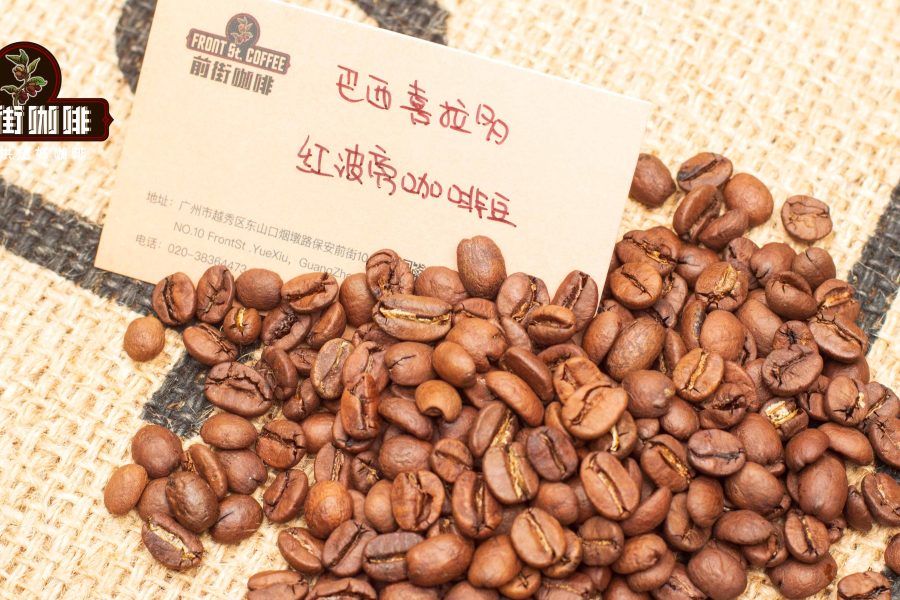
The flavor of Brazilian coffee is significantly affected by roast level and freshness. Generally, medium-dark roasts bring out the nutty, caramel and chocolate flavors of Brazilian coffee while enhancing sweetness and body. For the best flavor experience, choose fresh beans within 4 to 7 days of roasting, when the coffee's aroma and flavor are at their peak. If stored too long, especially beyond a month and a half, the coffee easily loses its vitality and takes on a woody or flat, tasteless quality. Therefore, when buying, pay attention to the roast date and prioritize recently roasted products.

In summary, Brazilian coffee holds an important place in the global coffee market for its stable output, distinctive processing techniques and approachable flavor. From the classic Arabica of the Cerrado region to the diverse range of varieties and processing methods, Brazilian coffee is not only suitable for everyday drinking but also offers enthusiasts exploring the coffee world a wealth of choices. Whether you seek a balance of sweetness and body or want to understand the technology and history behind large-scale coffee production, Brazilian coffee is not to be missed.