Espresso Grind Size Explained: Adjusting from Freshness to Humidity
Introduction: When making a balanced espresso, grind size is one of the key variables. This article takes a deep look at the core factors that affect grind adjustment, including coffee bean freshness, ambient humidity and differences in roast level, and offers practical tips on adjusting tamping pressure to match. Mastering these parameters can help coffee lovers consistently extract a rich, layered espresso at home.
In making espresso, fine-tuning the grind directly affects extraction efficiency and flavor expression. Although the adjustable range of grind size is relatively limited, many external factors can significantly change its optimal setting. Understanding these influences helps you control the quality of every espresso more precisely.
First, it must be clear that tamping pressure is not a tool for adjusting grind size. Ideal tamping pressure should stay consistent, generally recommended at around 30 pounds of force (about 13-15 kg). After adjusting the grind, you can fine-tune tamping pressure as needed: if the grind is on the coarse side, increasing tamping pressure slightly helps even extraction; if the grind is too fine, reduce pressure slightly to avoid the bitterness of over-extraction. Note the logic: tamping pressure is matched to the grind after adjustment, not the other way around.
Coffee bean freshness is one of the important factors affecting grind size. Freshly roasted beans have active flavor compounds inside, and their cell walls have not fully closed. At this point, using too fine a grind can release more aroma, but it also easily extracts excessive impurities and astringency. So for fresh beans, it is advisable to make the grind slightly coarser, usually half a step to one step coarser than a standard espresso grind; this ensures flavor release while avoiding off-flavors. Conversely, after beans have been stored for a while, flavor compounds gradually settle, and a finer grind is needed to fully extract the remaining essence.
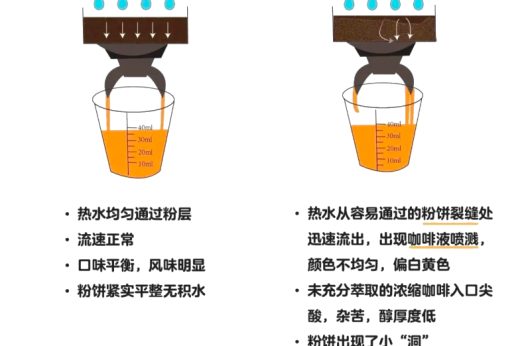
Ambient humidity also cannot be ignored. In high humidity, coffee grounds absorb moisture faster. Especially during tamping and distribution, if the grind is too fine, the puck can easily clump from dampness, which not only affects flow rate but also causes uneven extraction and produces a muddy, dull taste. In humid weather or seasons, it is advisable to make the grind appropriately coarser, usually by half a step, to ensure puck permeability and extraction stability. In a dry environment, a coarse grind causes the surface of the coffee grounds to oxidize quickly and flavor compounds to volatilize, leading to under-extraction and a thin body. At this time, the grind should be adjusted finer to enhance extraction power and give the flavor more fullness and a higher body.
Note that humidity changes over the course of a day should also be taken into account. Generally, air humidity is higher in the early morning and at night, so a slightly coarser grind is suitable; around midday, humidity is relatively lower, so you can adjust finer to optimize extraction. This kind of time-based fine-tuning helps you achieve stable flavor output at different times.
Besides the common factors above, the roast level of the coffee beans also places different demands on grind setting. Although espresso usually uses medium-dark to dark roasted beans to highlight body and caramel notes, some baristas may also use medium-roasted beans in a blend to pursue more complex flavor layers. Beans of different roast levels vary in density and structure, and the most suitable grind must be found through actual testing. For example, dark-roasted beans, being porous in structure, may extract fully without too fine a grind, while medium-roasted beans may need finer grinding to bring out acidity and sweetness.
The blend recipe is also a variable that cannot be overlooked. After coffee beans from different origins and processing methods are combined, the overall flavor characteristics and physical structure change, which in turn affects the choice of optimal grind. It is advisable, after changing bean types or blend proportions, to run a new small-batch test and gradually adjust grind and tamping parameters until the ideal extraction state is reached.
In summary, precisely controlling espresso grind size requires comprehensively considering multiple factors such as coffee bean freshness, ambient humidity, roast depth and blend composition. Every fine adjustment should aim at stable flavor output, continuously optimizing parameter settings by observing flow rate, crema state and taste feedback. Mastering these techniques can not only improve the performance of home or commercial espresso machines, but also give you a deeper understanding of the science and art behind espresso.