Espresso Spraying From a Bottomless Portafilter: Causes and Fixes
Introduction: A bottomless portafilter lets you watch the espresso extraction and spot problems more directly, but it also makes spraying coffee liquid a common frustration. This article explains how a bottomless portafilter works, the usual causes of spraying—including channeling in the puck, an improper dose, and bean freshness—and offers practical adjustments to help you stabilize extraction and improve coffee quality.
In recent years, bottomless portafilters have become increasingly popular among coffee enthusiasts, because they let users clearly observe the espresso extraction process and promptly spot issues such as puck condition and changes in flow rate. But many users report that with a bottomless portafilter, coffee liquid often sprays out from the bottom, which affects the visual experience and may also signal uneven extraction. This article analyzes the structure and principles of the bottomless portafilter and the problems encountered in actual use, to help you identify the causes of spraying and improve them.

A bottomless portafilter is a traditional espresso portafilter with the spouts and base removed, so the coffee liquid flows directly from the bottom of the filter basket, making it easier to observe the extraction state of the puck. This design first became popular in the early days of the third-wave specialty coffee movement, with the aim of letting baristas judge more directly whether espresso extraction is even. Traditional portafilters with a base ensure the coffee liquid flows into the cup in a concentrated stream and can evenly split one shot into two cups, but they do not let you see the actual extraction of the puck.

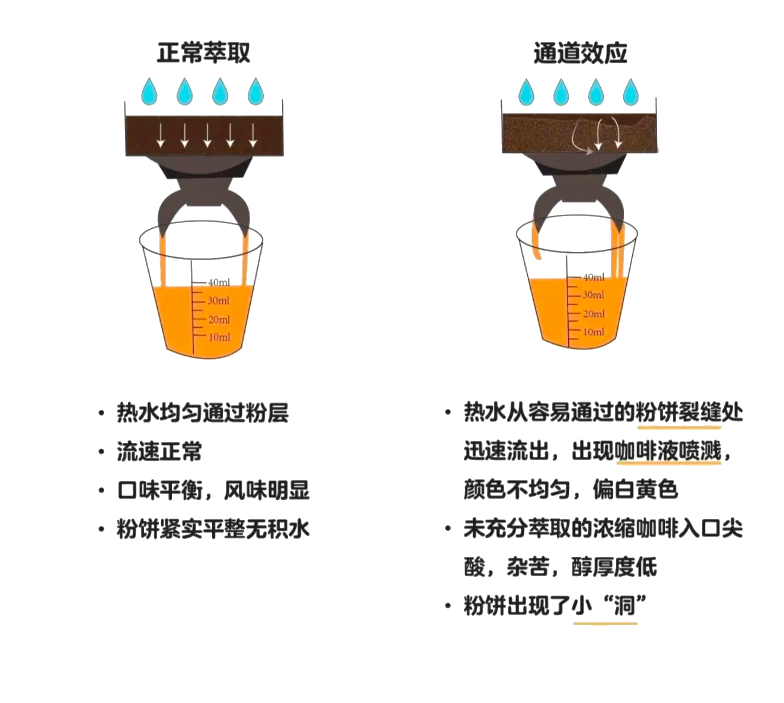
With a bottomless portafilter, we can clearly see whether the coffee liquid is an even honey color, glossy, and showing a gradient from dark to light, and whether it falls in a steady, thin stream—all signs of even extraction. Once spraying, angled jets, or an erratic liquid column appear, it often means channeling exists within the puck: the water does not pass evenly through the coffee bed as expected but finds paths of lower resistance and flows through quickly, causing some areas to be over-extracted and others under-extracted. A bottomless portafilter is like a magnifying glass, exposing these problems.

So why is spraying more common with a bottomless portafilter? The main cause is usually an unstable puck structure, especially channeling. When the coffee grounds are distributed unevenly during tamping—some areas compacted, others looser—as extraction pressure rises, the loose parts of the bed tend to collapse, creating shortcuts for the water. The high-pressure water then no longer penetrates the whole puck evenly but concentrates through these loose areas, making the liquid column unstable and even spraying in all directions.
By contrast, with a traditional portafilter with a base, even if similar problems exist, the liquid must flow out along the path set by the spouts, so the spraying is hidden by the physical structure and is not easily noticed from the front. But the problem still exists, and ultimately it affects the overall flavor and mouthfeel of the coffee.
To solve espresso spraying, start with the condition of the puck and check the following common causes:
1. Clumping in the coffee grounds
If during extraction the coffee liquid splatters severely or flows at an angle, and after extraction obvious small holes are visible in the spent grounds, the coffee grounds likely clumped before tamping. Espresso usually requires a fairly fine grind, and fine particles easily generate static electricity through friction; especially in humid weather, tiny coffee particles more readily stick together into clumps. These clumps cause localized channeling, making water preferentially pass through loose or clumped areas and causing spraying.
Solution: Before tamping, gently break up the coffee bed with your finger, a bamboo stirring stick, or a professional needle distribution tool to ensure the grounds are evenly distributed. If you don't have special tools, you can also gently separate clumps with a clean toothpick, but do so gently to avoid damaging the overall structure of the puck.

2. Using light-roasted coffee beans
Because of the short roasting time, light-roasted beans contain less internal gas and have a relatively dense structure; when ground too fine, water can pass through too quickly and a stable extraction pressure is hard to build. In this case, the liquid column tends to twist and splatter and may not maintain an even fall. For users just starting with a bottomless portafilter, it is best to choose medium-dark roasted coffee beans first; these beans release gas at a moderate rate and the coffee bed is more stable.
Tip: If you prefer light-roast flavors, adjust the grind slightly coarser and make sure tamping is even to reduce the risk of channeling.

3. Improper coffee bean freshness
The freshness of coffee beans greatly affects espresso extraction. Beans stored too long have lost much of their internal gas and cannot form enough support in the puck during extraction, so water easily breaks through weak areas and forms channels. Conversely, beans roasted very recently have gas that is too active; during extraction the internal pressure is released violently, which easily causes the liquid column to jump and splatter, or even turn blond midway.
It is recommended to use coffee beans 7 to 50 days after roasting; in this range flavor is usually stable and gas release moderate, making it more suitable for stable espresso extraction.

4. Unreasonable dose setting
Each filter basket has a manufacturer-recommended dose range, and deviating from it may make the puck too thin or too thick. If the dose is too small, the gap between the puck and the group head increases after tamping, and the high-pressure water easily churns over the surface of the coffee bed and finds the area of least resistance to break through, making the liquid column unstable. If the spent grounds look muddy or have obvious holes after extraction, it is usually a sign of an insufficient dose or uneven tamping.
Note: Most original filter baskets have a minimum-dose warning line marked on the outside; after tamping, the surface of the puck should preferably not exceed this line, and it should not be too low either, to ensure extraction stability.

In summary, spraying with a bottomless portafilter is usually caused by an uneven puck structure, possibly involving clumping coffee grounds, bean selection, freshness, and dose setting. By observing flow rate, liquid column shape, and the condition of the spent grounds, and applying the adjustments above, you can effectively improve extraction so your espresso not only looks good but tastes more balanced and excellent.