Tanzania Kilimanjaro coffee: flavor profile and growing explained
Introduction: Tanzania coffee is famed for its Kilimanjaro region, where beans offer distinctive flavors that combine fruitiness with wine-like notes, prized by coffee lovers worldwide. This article explores Kilimanjaro coffee beans' flavor characteristics, growing environment, processing methods, and their place in the global coffee landscape, giving you a full picture of this specialty coffee often called the most African in character.
The area around Mount Kilimanjaro in Tanzania is one of the world's renowned specialty coffee regions. Here, at elevations between 900 and 1,800 meters (about 3,000 to 6,000 feet), with fertile volcanic soil and marked day-night temperature swings, conditions are ideal for high-quality coffee. Under these distinctive geographic conditions, Kilimanjaro coffee beans develop a layered flavor profile: a soft acidity on entry, accompanied by notable fruit and wine notes, and a clean finish with subtle earthy and nutty tones, leading many tasters to call it a taste of Africa with a wild charm.
The AA-grade beans among Kilimanjaro coffees are the region's top representative. These beans are larger, uniform and plump, with more concentrated flavor. After medium to dark roasting, they release full aroma and a rich mouthfeel, making them well suited to pour-over or French press brewing. Compared with Kenyan coffee, Kilimanjaro's acidity is gentler and more evenly distributed, often felt in the mid-to-back of the tongue, resembling the fresh acidity of ripe tomato or a slight effervescence, adding liveliness and layers to the overall flavor.
Kilimanjaro coffee not only stands out for flavor but also carries deep cultural meaning. In European markets it has been given the title of the coffee gentleman, praising both its elegant, balanced flavor and the rigorous growing and processing traditions behind it. Among Chinese coffee enthusiasts, it is often grouped with Jamaica Blue Mountain and Yemen Mocha as the three musketeers of coffee, symbolizing respectively the king, the gentleman and the noblewoman of the coffee world. These titles highlight not only their scarcity and high quality but also the high regard global consumers hold for their flavors.
Tanzania's coffee industry is one of the country's important economic pillars, ranking fourth among export agricultural products after cotton, tobacco and cashews. Its main markets include Italy, Japan and the United States, where demand for specialty coffee is steady and has driven Tanzania to keep raising growing and processing standards. The growing areas at the foot of Mount Kilimanjaro form the country's most famous coffee belt, and many estates have more than a century of growing history, with some coffee trees even over a hundred years old.
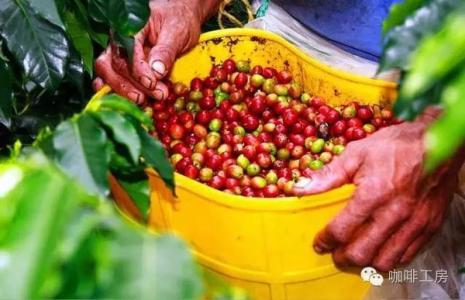
Coffee growing here is not mechanized but relies heavily on manual management. From weeding and pruning to harvesting, everything is done by local farmers by hand; cherry picking in particular is entirely hand-selected, with only ripe red cherries picked to ensure pure flavor. Many farms are run by families of immigrants across generations, including people of Indian descent, Nordic settlers and local residents. Although much land belongs to smallholders, large processing stations are mostly managed by local communities, ensuring consistency and quality control from harvest to processing.
After picking, the coffee fruit is sent to nearby processing stations for pulping, fermentation, washing and drying. This series of steps requires strict control of temperature, humidity and timing to ensure green bean quality. Notably, local processing still relies heavily on manual labor, such as removing defective beans and sorting by size, which not only preserves traditional craft but also provides steady employment for nearby residents. During harvest season, local women often gather coffee fruit in homemade sacks and are paid by weight, an important source of household income.
Besides the famous Kilimanjaro region, Tanzania has several other coffee-growing belts, including highland areas in the south and northwest. Though smaller in scale, these regions also have good growing conditions and are dominated by small and medium farms. Most smallholders have a few hundred mu of coffee fields, and some farms have basic washing and drying facilities, but final grading and refining are still handled by professional processing stations. Despite limited resources, Tanzania's smallholders still grow consistently high-quality beans through years of experience, fully demonstrating their deep growing heritage.
Among the many coffee types, Tanzania's Peaberry is particularly special. Due to abnormal fruit development, a single cherry contains only one round, plump bean rather than the usual two flat halves. Because peaberries are denser and heat more evenly, they often show brighter acidity, more concentrated flavor, and more prominent citrus, floral and sweet notes. Whether brewed hot or made into iced coffee, they display a distinct character, and pairing with berry or orange drinks brings out their fresh qualities even more.
Tasting Tanzanian coffee is like feeling the warmth and purity of this country. Its flavor shows both the natural gift of the African land and the care and persistence of generations of coffee farmers. For coffee lovers, learning about Kilimanjaro coffee in depth is not only a process of savoring a good cup but also a journey exploring the human and natural stories behind coffee.