Panama San Sebastian Estate Washed Coffee: Flavor Analysis and Pour-Over Tips

Introduction: San Sebastian Estate, located in Panama's Boquete production region, sits on the slopes of Volcán Barú at an elevation of 1,400-1,500 meters, using traditional washed processing to create a specialty coffee that combines floral aromatics with sweetness. This article examines in depth the cultivation and management details of this three-generation family farm, reveals why its Typica-dominant blended coffee can present distinctive hibiscus and caramel flavors, and provides pour-over parameters recommended by professional cuppers to help you fully experience the layered charm of this high-altitude washed coffee.
Panama's Boquete region is globally renowned for specialty coffee nurtured by volcanic soil, and San Sebastian Estate is one of the area's representative family farms. This 19-hectare plantation is managed by third-generation coffee farmer Domingo Suárez and, together with the neighboring Hortigal and La Gloria estates, forms a contiguous premium production area, with elevation consistently maintained between 1,400 and 1,500 meters, nourished year-round by fertile volcanic ash from the active geological activity of Volcán Barú.
The estate's most notable feature is its scientific ecological management system—in addition to regularly applying organic compound fertilizer to maintain soil vitality, the planting area retains a large number of native shade trees, which both create a suitable diffused-light environment for the coffee trees and provide habitat for avian predators, thereby naturally controlling pests. Harvesting relies entirely on manual selection, picking only fully red ripe cherries to ensure uniform ripeness.
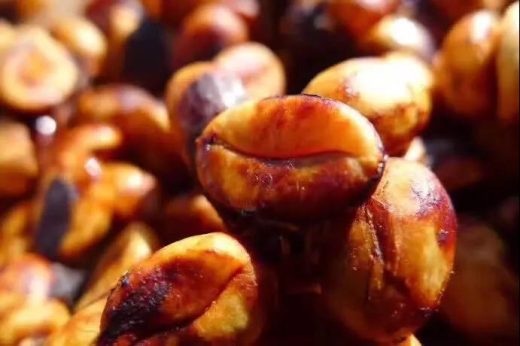
In processing, the estate strictly uses the traditional washed method: parchment coffee undergoes 24-36 hours of fermentation to remove mucilage, then is dried in staged sun exposure on terraces at 1,600 meters facing the morning sun (daily average temperature kept below 28°C), and moved into mechanical dryers at night to balance moisture; the entire process lasts about 12-15 days until moisture content stabilizes at around 11%. This hybrid drying method preserves the clean acidity of washed coffee while developing more complex sugars through slow dehydration.
The variety mix is dominated by Typica at 80%, complemented by small amounts of Caturra and Catuaí to enhance fruit concentration. The cup profile stands out with three major characteristics: the opening blooms with the elegant aroma of hibiscus-family flowers, the middle shifts to bright citrus-orange-blossom notes, and the finish carries the toffee sweetness produced by caramelization reactions. Professional judges often describe its mouthfeel as silky-smooth, with a sweet-acid balance reaching the baseline of excellent specialty coffee (SCA scores consistently in the 86-88 range).
For home brewing enthusiasts, the following parameters are recommended to fully release the flavors: use 90-92°C water, a coffee-to-water ratio of 1:15-1:16, and a medium grind (about 70% passing a Chinese standard No. 20 sieve). The best brewing method for a V60 dripper is the three-pour technique—first pour 50 ml and let it bloom for 30 seconds, then pour in circles until the water level reaches 125 ml and pause, and when the liquid level drops to the halfway point, continue pouring to 225 ml to complete extraction. Be careful to avoid excessively prolonging the brew time, which can extract tannins and affect sweetness.
This washed coffee from the northern slope of Volcán Barú—whether paired with a rich cheese such as blue cheese or enjoyed on its own for its pure citrus notes—showcases the unique terroir charm of high-altitude cultivation in the Boquete region. For storage, use an aluminum foil bag with a one-way degassing valve; in a light-protected environment at 10-20°C, it can maintain optimal flavor for up to 12 months.