Costa Rica Salaca Estate Red Honey Villalobos Coffee Flavor Profile
Introduction: This article provides an in-depth analysis of the red honey processed coffee from Costa Rica's Salaca Estate, introducing the Villalobos variety grown in the high-altitude Llano Bonito region and processed using the distinctive red honey method. The article explains in detail the characteristics of this processing method and the complex flavors it ultimately delivers, including dark fruit jam, plum and brown sugar, offering coffee lovers a reference for bean selection and tasting.
This specialty coffee from Costa Rica comes from Llano Bonito on the western side of the Central Valley, specifically in the Naranjo area. The coffee is carefully grown by the Salaca family farm; although the farm has a long history, its dedicated micro-processing facility, Beneficio Monte Brisas, was only built and put into operation in the past three years.
The grower selected the rare Villalobos*-Naranja variety, a natural mutation of Typica that occurred locally in Costa Rica. Notably, these coffee trees produce orange cherries when ripe, a trait discovered and processed separately by farm owner Dona Maria Elena, ensuring the uniqueness of the coffee's quality.
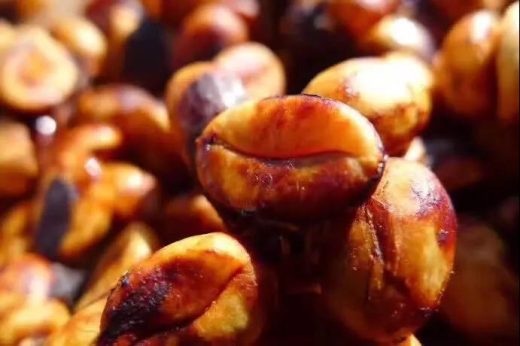
The coffee is processed using the red honey method (Red Honey), an innovative technique developed by Costa Rican coffee farmers in response to water restrictions. Compared with traditional washed processing, honey processing retains part or all of the coffee's mucilage layer; red honey processing retains about 50%-75% of the mucilage, giving the coffee richer sweetness and body during drying.
The specific processing steps include: carefully picking ripe coffee cherries, removing floaters, then depulping while deliberately retaining a large amount of mucilage. The mucilage-covered parchment coffee beans are then placed on drying beds or patios for slow, precise drying. This process requires close monitoring of temperature and humidity and usually lasts 15-25 days to ensure full sugar conversion without excessive fermentation.
The difficulty of the red honey method lies in balance: retaining an appropriate amount of mucilage enhances sweetness and body, but too much increases the risk of fermentation. Salaca Estate successfully achieves a balance between flavor and quality through precise control of drying conditions. This processing method is more labor- and time-intensive than ordinary washed processing, but it ultimately brings greater flavor complexity.
The coffee's flavor profile is outstanding, with pronounced dark fruit jam and ripe plum notes, accompanied by a warm brown sugar sweetness. These flavor characteristics are closely related to the rich mucilage layer retained by the red honey process, and are also the result of high-altitude growing (about 1,700 meters) combined with the special variety.
For coffee lovers, this coffee is particularly suited to those who enjoy rich fruit flavors with sweetness. For pour-over, a medium-fine grind is recommended, with water temperature controlled at 90-93°C and a coffee-to-water ratio of 2:15 to 1:15 to better showcase its multi-layered flavor characteristics.
Overall, this red honey coffee from Salaca Estate represents the achievements of Costa Rican coffee farmers in processing innovation and variety cultivation. From the selection of the unique orange cherry variety to the refined red honey processing and the complex flavors it ultimately presents, every step reflects the producers' pursuit of craftsmanship.