Single-Origin Coffee Explained: Varieties, Origins and Pour-Over Parameters
Introduction: From Typica to Geisha, learn the varietal traits, core origins and flavor profiles of the world's main single-origin coffees. This article details the distinctive aromas and mouthfeel differences of beans from different origins, and offers professional pour-over water-to-coffee ratio and extraction parameter suggestions to help you precisely capture each bean's flavor layers—a practical guide for coffee lovers and beginners alike.
The coffee market mainly trades two categories of commercial beans: single-origin coffee beans and blended coffee beans. Blends typically mix Arabica from different origins with a small amount of Robusta, using proportional blending to enhance crema and body, and are mostly used for espresso or milk-based coffee bases. Because these contain Robusta, they have higher caffeine content and lower cost. In contrast, single-origin coffee beans specifically refer to Arabica beans from a single origin and a single variety, whose greatest feature is the ability to clearly present the terroir of the place of origin—for example, the floral and fruity character of Ethiopian beans, the herbal notes of Sumatra—with a distinct regional identity much like wine.
True single-origin coffee has a complete traceability system, and packaging usually indicates key information such as the name of the growing estate, altitude, harvest year and processing method. Consumers can use this data to understand the bean's growing environment—for example, for every 100 meters of increased altitude, coffee acidity strengthens accordingly but sweetness may weaken. Note that even among specialty-grade single-origin beans, quality differences remain, mainly influenced by each country's grading standards: some countries grade by defect ratio (e.g., no more than 5 defects allowed per 300 grams of green beans), altitude range (e.g., high-grown beans above 1500 meters), or bean size (e.g., screen size 18 and above), while specialty coffee places more emphasis on removing defective beans through repeated manual sorting to ensure the final flavor purity.
The world's main single-origin coffee varieties can be divided into two categories: traditional heirloom varieties and modern improved varieties. Typica, the oldest cultivated variety, originated in southern Sudan and spread through Yemen to Southeast Asia; its copper-red leaves and red fruit give it signature floral and fruity aromas with mild acidity, but it has weak disease resistance and low yield. Representative sub-varieties include Blue Mountain (Jamaica), Kona (Hawaii) and Sumatra Mandheling. Bourbon is a natural mutation of Typica on the island of Réunion (formerly Bourbon Island); its fruit is mostly red when ripe (there are also Yellow Bourbon, Pink Bourbon and other mutations), its yield is 20%–30% higher than Typica, its sweetness is prominent and its acidity and bitterness are well balanced. Derived varieties include Caturra, Catuai and Africa's SL28/SL34 series.
Among the specialty-shape varieties, Maragogipe (commonly known as elephant bean) is named for its bean size being nearly twice that of ordinary coffee beans; native to northeastern Brazil, it tastes flat when grown at low altitude but can show bright citrus notes and delicate floral aromas in regions above 1000 meters. Kenya's SL28 and SL34 were successfully selected by government laboratories; the former is known for its intense blackcurrant-like fruit acidity and tea-like quality, while the latter has slightly weaker acidity but adapts to lower altitudes. Both are susceptible to leaf rust yet remain benchmark specialty varieties. Pacas, a natural Bourbon mutation, originated from the Pacas family estate in El Salvador and is known for its balanced sweet-to-acid ratio and low-altitude adaptability; it often serves as the paternal parent of the high-altitude variety Pacamara (Pacas × Maragogipe).
Among hybrids bred for disease resistance, Catimor combines Caturra (a dwarf Bourbon mutation) with Timor (a natural Typica × Robusta hybrid); inheriting Robusta genes significantly improves disease resistance but sacrifices some of the delicate aromas unique to Arabica. It is currently the main variety planted in China's Yunnan region. Villa Sarchi is a Bourbon mutation discovered in Costa Rica, recognizable by its bronze-colored leaves and steep branch angles; its acidity resembles a blend of lemon and dried fruit, its yield is stable and its disease resistance is superior to traditional Bourbon. Caturra, a dwarf Bourbon mutation discovered in Brazil in the 20th century, grows only 2–3 meters tall for easy mechanical harvesting and can show complex caramel and nutty flavors when grown at high altitude, while Mundo Novo (a Bourbon × Typica hybrid), though more disease-resistant, has slightly less flavor complexity than its parents.
The contemporary star variety Geisha originates from the Geisha forest in Ethiopia, with its slender leaves and fruit shape unique in appearance; it rose to prominence after being introduced by Panama's Hacienda La Esmeralda—in regions above 1500 meters, this variety can show layers of jasmine, citrus and green tea, and after winning the BOP competition in 2004 with its outstanding flavor, its price multiplied. Pacamara, a high-altitude variety developed in El Salvador (Pacas × Maragogipe), inherits the large-bean trait of its mother plant (a single bean weighing twice that of ordinary beans), and its clean, impurity-free mouthfeel paired with fresh fruit acidity and floral aromas has made it a popular competition-grade choice. Catuai is a Caturra × Mundo Novo hybrid developed in Brazil, combining disease resistance with two-colored fruit (red fruit usually has better flavor), full acidity and tropical-fruit sweetness.

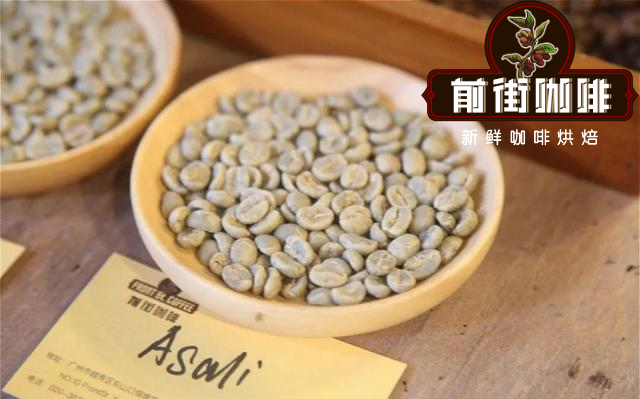
In actual brewing, different varieties need to match differentiated parameters to bring out their best flavor. Take Kenya Asalia AA TOP (an SL28/SL34 mix, Thika region, altitude 1550–1750 meters, double washed process) as an example: a V60 dripper is recommended, water temperature controlled at 91°C, a coffee-to-water ratio of 1:15, medium-fine grind (similar to granulated sugar), using a staged extraction method—first pour 30 ml of hot water and bloom for 30 seconds, then pour in two stages to a total water volume of 225 ml (e.g., first to 125 ml, pause, then continue to the target), with a total extraction time of about 2 minutes. With these parameters, its signature smoked plum and berry acidity and honey-like sweetness are highlighted, with a particularly prominent fresh flavor reminiscent of cherry tomatoes.
Brazil's Fazenda Rainha natural Yellow Bourbon (Mogiana region, altitude 1300 meters) is suited to a Kono dripper, with water temperature lowered to 88°C, the same 1:15 coffee-to-water ratio but switched to a medium-coarse grind (close to sea salt granules). The specific procedure is: first pour 30 ml of hot water and bloom for 30 seconds, second pour to 125 ml and pause, finally pour to 225 ml to complete the total water volume, with the whole extraction finished in about 2 minutes. The low water temperature and medium-coarse grind suppress over-extraction, highlighting the nutty and creamy peanut notes brought by the natural process, with soft acidity and a long sweet aftertaste. Note that beans from high-altitude regions (e.g., above 1800 meters) usually require raising the water temperature by 1–2°C to compensate for the lower boiling point, while naturally processed beans can have the bloom time appropriately extended to 45 seconds to fully release sweetness.