Coffee Bean Blending Guide: From Ratios to Flavor for Pour-Over Beginners
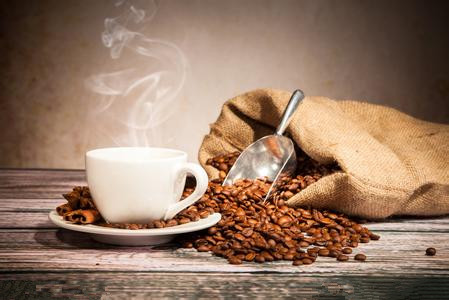
Introduction: Blending coffee is a key skill for balancing flavors and meeting individual preferences. This article explains the core logic of coffee bean blending, covering roast-level pairing, classic single-origin combinations, and practical ratio parameters to help you master blending techniques for a balanced acidity and bitterness with rich layers—whether for pour-over or espresso extraction, you'll find a flavor direction.
Coffee's flavor expression is closely related to roast level. Light-roasted beans usually retain more fruit acidity and floral notes, with a bright and refreshing mouthfeel; as roasting time lengthens, acidity gradually decreases and bitterness and caramelized aromas become more prominent. Understanding this basic characteristic is the first step in designing a blending plan.
There are two common blending approaches: one is to achieve flavor balance by adjusting the proportion of beans at different roast depths, for example combining a light-medium roast with pronounced acidity and a dark roast with mellow, bitter aromas; the other is to select single-origin beans from different regions with unique flavors and mix them to enrich the overall texture and layers. Whichever method is used, note that the roast level of the blended beans must be kept consistent, and when screening, ensure uniform particle size to avoid excessive fine powder or large particles affecting extraction uniformity.
For coffee lovers who prefer mild acidity, the following classic blending ratio is recommended: Brazil medium-roast beans (50%) provide a solid nutty base, Colombia medium-roast beans (30%) add a fresh citrus note, and Mandheling medium-roast beans (20%) bring a subtle herbal finish. Combined, the acidity is soft and the aftertaste is clean.
For a recipe seeking a round and full mouthfeel, try: Colombia medium-roast beans (40%) as the main note, paired with Brazil medium-roast beans (30%) to strengthen sweetness, and Guatemala medium-roast beans (30%) to supplement chocolate and blackberry flavors. This combination is smooth on entry, with a natural transition between acidity and bitterness, suitable for making milk coffee or black coffee.
If you favor a rich and intense flavor, dark-roasted beans are a better choice. Colombia dark-roast beans (40%) and Brazil dark-roast beans (20%) form a mellow framework, while Mandheling dark-roast beans (20%) and Guatemala dark-roast beans (20%) layer on smoky and spicy notes, presenting an overall caramel-like balance of sweetness and bitterness, especially suitable for espresso.
For a slightly bitter with a sweet aftertaste blending plan, it is suggested: Brazil slightly dark-roast beans (40%) lay a solid foundation, Colombia slightly dark-roast beans (30%) add bright acidity for balance, Mocha slightly dark-roast beans (20%) introduce wine-like complexity, and Guatemala slightly dark-roast beans (10%) accent with citrus tones. At this ratio, the bitterness is soft, and the finish has a honey-like sweetness.
It is worth noting that **"there is no fixed answer for the best roast level or blending plan**"; the final effect depends on the characteristics of the coffee bean variety, the brewing method (such as pour-over water temperature and coffee-to-water ratio), the usage scenario (daily drinking or specialty display), and personal taste preferences. Beginners are advised to start with beans from a fixed region and similar roast levels, gradually become familiar with the flavor characteristics of each single origin, and then explore more complex creative combinations.