Kopi Luwak Explained: Price and Flavor Guide
Introduction: Kopi Luwak, also known as cat poop coffee, is one of the world's most famous specialty coffees. This article will provide a comprehensive analysis of the value and controversy surrounding this special coffee, from its origins and production process to market prices and flavor characteristics, helping coffee enthusiasts understand the story and truth behind it, and offering purchasing advice.
Kopi Luwak originates from Indonesia, first appearing in Sumatra and Java in the early 18th century. At that time, Dutch colonists established coffee plantations locally but did not allow the local residents to pick or drink the coffee cherries. The locals accidentally discovered that a wild animal called the civet preferred to eat ripe coffee cherries and excreted the coffee beans intact in its droppings. This discovery began the legendary history of Kopi Luwak.
Civets naturally have a strong ability to select coffee cherries, usually eating only highly ripe, sweet coffee cherries. During their digestion, the coffee beans undergo the action of stomach acid and enzymes, causing changes in protein structure that reduce the bitterness of the coffee and enhance sweetness and body. This natural fermentation process gives Kopi Luwak its unique and intense flavor, gradually attracting the attention and pursuit of coffee enthusiasts worldwide.
Market Prices and Scarcity
Genuine Kopi Luwak has extremely limited production due to its special collection and processing methods. Wild civets are active only in specific areas such as Sumatra, Indonesia, and they select only the finest coffee cherries to eat, making the number of coffee beans that can ultimately be collected very small. Therefore, the price of authentic Kopi Luwak on the international market has remained high, **with prices reaching hundreds to thousands of US dollars per kilogram**, which translates to **typically ten thousand to tens of thousands of RMB per jin**, making it a luxury among coffees.
Captive Farming and Ethical Controversy
Because Kopi Luwak produced by wild civets is extremely rare, some merchants have turned to captive farming. However, many farming environments are poor, with civets confined in small, unhygienic spaces and forced to overeat coffee cherries, leading to health problems and even death. This practice not only violates animal welfare but also greatly damages the overall reputation of Kopi Luwak. In addition, up to 85% of so-called "Kopi Luwak" on the market is counterfeit, often ordinary coffee passed off as the real thing with labels used to inflate prices, so consumers need to be especially cautious.
Flavor Characteristics and Tasting Evaluation
High-quality Kopi Luwak is often described as full-bodied and sweet, with complex aromas of caramel, chocolate, and nuts, a silky mouthfeel, and a long finish. Coffee critic Chris Rubin once described it as "having a rich winey aroma, a syrupy thick body, a chocolatey texture, and a pure, lingering aftertaste." However, many professional organizations have reservations about its flavor; for example, the Specialty Coffee Association of America (SCAA) considers its flavor generally inferior to other specialty coffees, and some media figures have even described it as "like petrified dinosaur dung soaked in bathwater," showing that opinions on its flavor are quite divided.
Production Process and Processing Flow
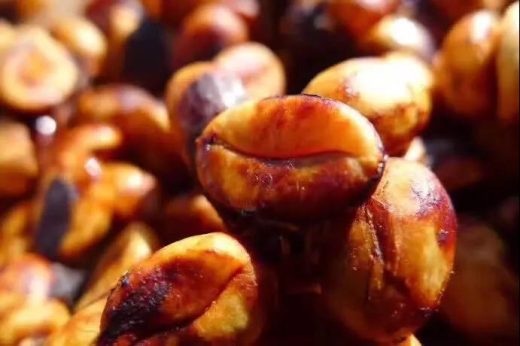
The production of Kopi Luwak relies on the civet's digestive system. After the civet eats coffee cherries, the pulp is digested, while the hard coffee beans are not broken down and are excreted with the droppings. These droppings are manually collected, washed, and sorted to remove impurities, yielding green coffee beans. The green beans then need professional roasting before they become roasted coffee beans ready for brewing. The entire process emphasizes natural fermentation, in stark contrast to conventional washed or sun-dried processing methods, creating its distinctive flavor characteristics.
Origin of the Name and Producing Region Background
In the local Indonesian language, "Kopi" means coffee, and "Luwak" refers to an arboreal wild animal commonly known as the civet. Residents of the Sumatra region of Indonesia more commonly call it "Kopi Musang." Although civets are widely distributed across Indochina, India, Bangladesh, and elsewhere, only coffee beans produced by civets in Sumatra, Indonesia, are considered authentic Kopi Luwak. This also explains why this type of coffee is called "Indonesian civet coffee" or "Musang coffee."
Purchasing Advice and Market Traps
For consumers who wish to try Kopi Luwak, it is recommended to purchase through trusted channels and prioritize products with traceability information. At the same time, they should take a rational view of its high price and promotional hype, avoiding being misled by exaggerated marketing language. It is worth noting that the market is currently flooded with counterfeit Kopi Luwak, and some merchants have even introduced variants such as "elephant poop coffee" and "squirrel poop coffee," whose production processes also involve ethical controversies. Consumers should be vigilant and focus on the quality and flavor of the coffee itself rather than novelty marketing.