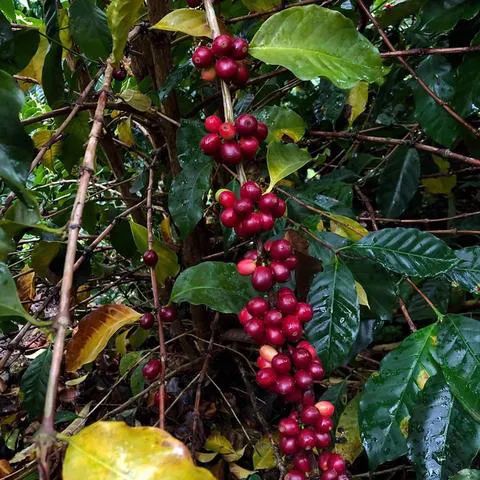
Java Coffee Beans: Indonesian Origin and Flavor Guide

Introduction: Java coffee is often mistaken to refer only to coffee from the Indonesian island of Java, but it is also the name of a distinct coffee variety. This article comprehensively analyzes the dual meanings of Java coffee—introducing the characteristics, main planted varieties, and processing methods of Indonesia's Java Island, as well as exploring the origin, genetic background, and flavor performance of the Java coffee variety. It also expands to introduce other coffee varieties named after their origins, such as the Colombia variety, helping you build a more systematic coffee knowledge system.
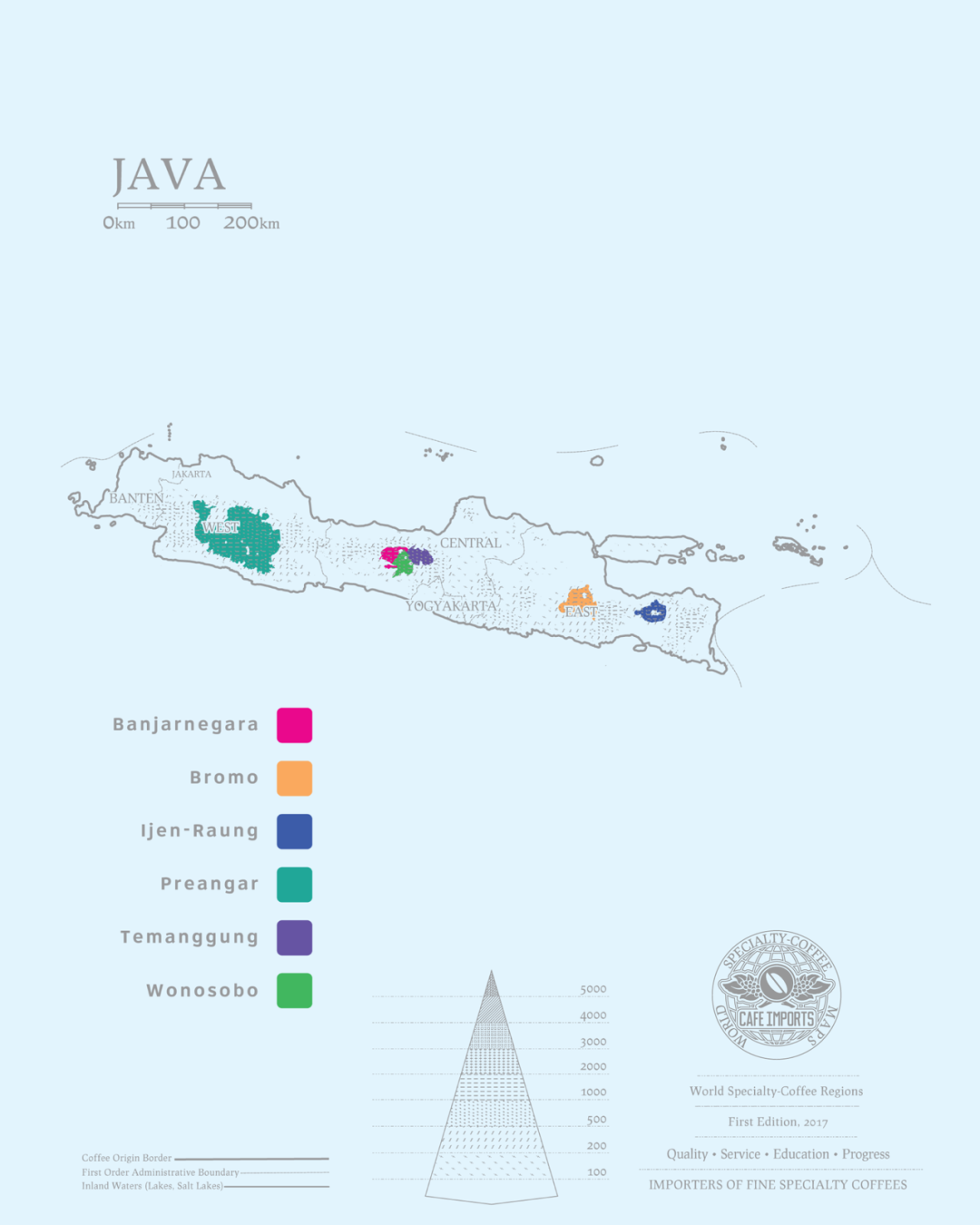
When it comes to Java coffee, many people first think of the Indonesian island of Java. As an important island in Indonesia, Java is located in the center of the country, bordered by the Indian Ocean to the south and the Java Sea to the north. It is not only the economic and cultural center of Indonesia but also one of the important coffee-producing regions. The climate here is hot, humid, and rainy, which is very suitable for developing the unique wet-hulling process. The planted varieties are mainly disease-resistant and high-yielding varieties such as Catimor and Ateng.
Take the Tigula Mountain region in western Java as an example. The planting altitude here is between 1,400 and 1,600 meters, and it relatively rarely adopts the honey processing method. This region once planted the S795 variety, which was introduced from India and improved by the Jember Coffee Research Center in East Java; local coffee farmers directly call it Jember. The S795 variety has Liberica ancestry, inheriting strong disease resistance and high yield, and its flavor is more elegant. It is a representative planting choice in the Java region.
This coffee from West Java presents medium acidity, with tropical fruit flavors such as mango, a slight red wine acidity that adds complexity, and a finish that reveals the herbal and spicy notes characteristic of Indonesian coffee. The overall performance is balanced and smooth. This also demonstrates the diversity and uniqueness of the Java region in terms of processing methods and variety selection.
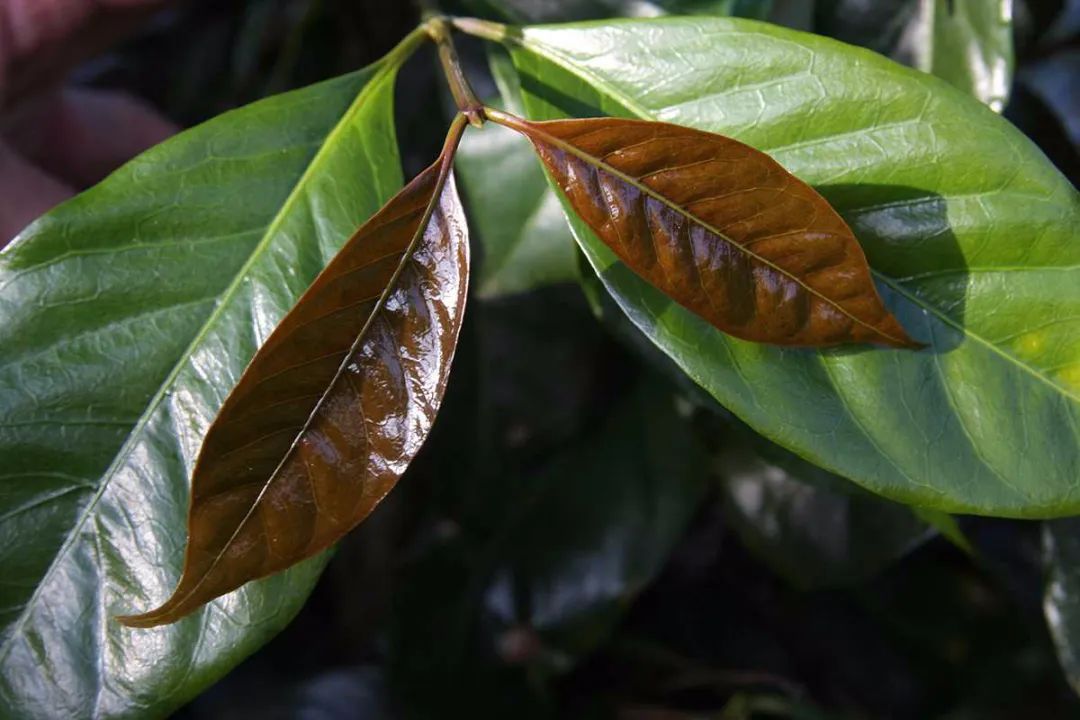
But "Java coffee" is not just a regional concept; it is also the name of a coffee variety. The most distinctive appearance features of the Java variety are its elongated fruit and beans, bronze-colored young leaves at the top, and tall plants, but with low yield. However, its flavor performance is outstanding and can even be compared to Geisha. It also has strong resistance to leaf rust and coffee berry disease, making it very suitable for small-scale farmers to grow.
Interestingly, the Java variety does not originate from Indonesia but originally grew in the primitive forests of Ethiopia. It was collected by local residents, then passed through Yemen to Indonesia, and was officially named "Java" on the island of Java. Subsequently, it spread to the neighboring Timor Islands, then to Cameroon in East Africa, and was first promoted to farmers in Cameroon in 1980.

In 1991, promoted by breeding expert Benoit Bertrand, the Java variety was introduced to Costa Rica through the international agricultural research cooperation organization CIRAD. By 2016, Panama became the first country in Central and South America to officially recognize the variety. Genetic research shows that Java is not a mutation of Typica but originates from the Abysinia variety in Ethiopia. This discovery also explains why its flavor is rich and layered and is even considered comparable to Geisha.
A cupping case once showed that a Java variety from Bolivia processed with the cocoa natural method exhibited tropical fruit, nuts, and a dark cocoa finish when sipped, with a unique and impressive flavor. This also proves that the Java variety can maintain its unique character under different producing regions and processing methods.
In addition to Java, some coffee varieties are also named after their origins and can easily cause confusion, such as the "Colombia variety." Initially, Colombia widely planted the Typica variety. Later, due to Typica's low yield, it switched to Bourbon, but Bourbon beans were smaller and less attractive, so it switched back to Typica. To solve the yield problem, Caturra was introduced from Brazil in the 19th century and became one of the main varieties.
However, although Caturra increased yield, its disease resistance was weak. To address this, the Colombian National Coffee Research Center Cenicafé developed a multi-generation backcrossed improved Catimor variety in the 1980s, gradually diluting the Robusta genes, and officially named it the "Colombia variety" to promote nationwide planting and enhance international competitiveness. This variety performs excellently in disease resistance and yield, but its flavor is slightly inferior to Caturra, and it is usually used for bulk commercial bean exports.
In 2008, the research center further launched the Castillo variety. Through backcrossing Caturra with the Colombia variety, it successfully retained disease resistance while improving flavor performance, becoming one of the key quality varieties developed in Colombia in recent years.
In summary, Java coffee is both a regional term full of Indonesian characteristics and the name of a coffee variety with unique genetics and flavor performance. Understanding this background not only helps us more accurately understand the meanings behind coffee names but also provides more direction when selecting and tasting. At the same time, other varieties named after origins, such as the Colombia variety, also remind us to distinguish the multiple influences of origin, variety, and processing method when exploring the coffee world.