Pour-over coffee guide: the science of resting and awakening beans

Introduction: How do freshly roasted coffee beans release their best flavor? Resting and awakening the beans are key steps. This article explains the principles of coffee bean degassing, the peak flavor window, recommended resting times for different roast levels and brewing methods, and the practical methods and common misconceptions of awakening beans, helping you precisely control coffee flavor and avoid taste defects caused by over-resting or brewing too early.
When choosing coffee beans, many coffee lovers often ask: "When were these coffee beans roasted?" "Do I need to let them sit for a few days before drinking?" "Should I awaken the beans before brewing, and for how long?" Behind these questions lies everyone's attention to coffee freshness and flavor performance. However, when it comes to resting and awakening beans, there are all kinds of claims online, including some "empirical wisdom" without scientific basis that can easily lead people astray. Today, we'll explore from a scientific perspective how to properly rest and awaken beans, helping you precisely grasp coffee's peak flavor period.

Coffee beans undergo complex chemical changes during roasting, one of the most visible phenomena being volume expansion and the massive generation of carbon dioxide. These gases accumulate inside the bean and can provide some short-term preservation, preventing aromas from dissipating too quickly. But during actual brewing, excessive carbon dioxide hinders the exchange of substances between water and coffee grounds, leading to insufficient extraction—flavor becomes flat and tasteless, floral and fruity coffees lack bright acidity and aroma, and medium-dark roasted beans may develop restless, smoky, or even bitter finish notes, affecting the overall drinking experience.

Therefore, for freshly roasted coffee beans, it is recommended to first "rest" them for a period—placing unopened coffee beans in a cool, dry environment to let the carbon dioxide accumulated inside gradually release naturally. After a reasonable degassing period, the coffee's flavor compounds can dissolve into water more smoothly, reaching the peak of flavor expression, which many coffee lovers call the "peak flavor period."

As for how many days coffee beans need to rest, there is actually no one-size-fits-all standard. Coffee flavor is basically set at the green bean stage; roasting is the key step that transforms and fixes these flavor compounds, and during brewing, water extraction finally releases them. The essence of resting beans is to allow the carbon dioxide accumulated inside the bean to fully discharge, creating favorable conditions for subsequent brewing. Generally, in the first three days after roasting, carbon dioxide release is most intense, and during this period coffee beans of any roast level are not recommended for immediate brewing.

Typically, after 3 to 5 days of natural degassing, the gas activity inside the coffee beans gradually stabilizes. Around days 7 to 15 after roasting, most coffee beans reach a relatively ideal peak state—rich aroma, distinct layers, and good sweet-acid balance. After 20 days, coffee beans gradually enter the oxidation stage, and flavor intensity declines. By day 50, the flavor of many coffee beans is almost exhausted. For this reason, when someone asks "how many days should coffee beans rest," the most direct answer is actually: first try drinking fresh beans and compare the flavor changes at different stages to truly understand the meaning of resting beans.

Scientific bean resting requires not only reference to time but also consideration of the coffee's roast level and brewing method. Generally, the darker the roast, the more obvious the bean's expansion during roasting and the more carbon dioxide produced, so resting time should be extended accordingly. For example, light to medium roasted floral and fruity coffee beans can be tried starting around day 4 after roasting, while medium-dark roasted coffee beans are recommended to rest at least until day 6 before brewing.

In addition, different brewing methods have different tolerances for carbon dioxide. Gentler extraction methods such as pour-over and filter brewing allow gas more time to release naturally, so resting time can be slightly shorter. Espresso, however, because extraction time is extremely short (only 20-30 seconds), demands extremely high extraction stability, and any subtle change directly affects crema formation and taste performance. If coffee beans have not fully degassed, espresso often struggles to extract uniform, dense crema, instead producing rough, quickly dissipating, or even clumpy foam, seriously affecting milk-coffee integration and overall flavor.

In practice, coffee beans within 5 days of roasting, after going through the shipping process, have usually already undergone about 3 to 6 days of natural resting. For light to medium roasted coffee brewed with atmospheric pressure extraction (such as pour-over, French press, or Clever Cup), it can already be enjoyed at this point; if medium-dark roasted, it is recommended to wait another 2 to 3 days; and for medium-dark and darker roasted espresso beans, it is best to rest a full 7 days before opening the bag, to ensure extraction stability and full flavor.

It should be noted that the market often claims "the longer coffee beans rest, the better" or even "some coffee beans need to rest for two months." In reality, for the vast majority of coffee beans, by 60 days after roasting, the internal carbon dioxide has long been exhausted and the aroma greatly diminished, with flavor far from its fresh period. Unless you clearly understand the characteristics of a specific bean, blindly attempting extremely long resting periods is not recommended.

Besides resting beans, another important step is "awakening beans." This concept is often compared to "decanting" red wine—by letting coffee beans contact air, carbon dioxide release is accelerated while flavor compounds are displayed more stably. Awakening beans is mostly used at the coffee's "extremely fresh" stage, that is, within 1 to 3 days after roasting. If you want to taste it early, you can open the whole bag of coffee beans or loosen the seal to increase the contact area with air, thereby speeding up degassing.
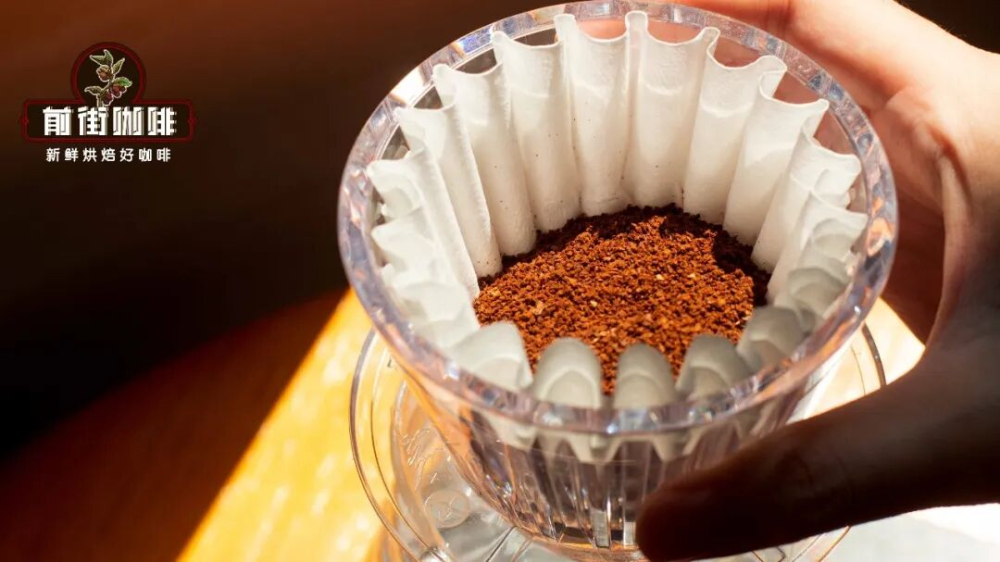
Because coffee beans are tightly structured, degassing by simply leaving the bag open is slow, so many people choose to grind the coffee beans to accelerate the process, known as "awakening the grounds." Although efficient, this method carries the risk of accelerated aroma volatilization, so it should be used with caution. For medium-dark roasted espresso beans that have not yet reached ideal flavor, you can first open the bag and let it sit for 30 to 50 minutes, allowing some gas to release naturally before brewing. For particularly fresh pour-over beans, it is recommended to spread the ground coffee in a room-temperature environment, cover it to prevent dust but not seal it, and let it sit for 15 to 20 minutes, smelling it every 5 to 10 minutes; once the aroma becomes soft and clear, start brewing. This effectively reduces the overly stimulating "newcomer" impression and improves overall flavor harmony.