Panama Geisha Coffee Grades: Red vs Green Label Explained

Introduction: From obscurity to the 'ceiling' of the coffee world, Panama Geisha has conquered the globe with its distinctive floral and fruity aromas. But why does its price remain so high? What exactly is the difference between Red Label and Green Label? This article takes a deep dive into Geisha's origins, variety characteristics, and the three-tier grading standards of Hacienda La Esmeralda, guiding you through the flavor codes and brewing suggestions of this 'coffee aristocrat.'

When it comes to high-priced coffee, besides Jamaican Blue Mountain, Panama Geisha is undoubtedly another shining star. But its expensiveness is no accident—from a trial variety on the brink of being phased out to an international competition champion, Geisha's comeback story is full of legend.
Geisha's rise began in 2004. Before that, this tall, slender, disease-susceptible coffee had long been ignored by growers due to low yields and mediocre flavor at low altitudes. Then, at the Best of Panama (BOP) green bean competition, it stunned the judges with astonishing jasmine aromatics and multi-layered fruit flavors, taking that year's championship and setting the highest score record in history. From then on, Geisha's price soared, making it the benchmark of the specialty coffee world.
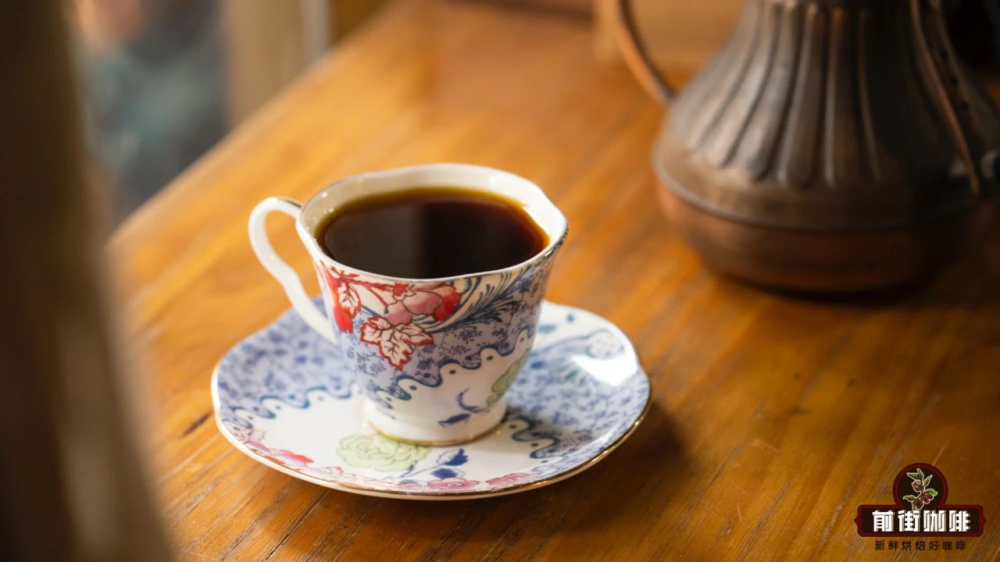
Unlike the intense bitterness of ordinary coffee, Geisha is more like a fresh floral-fruity tea. Its flavors unfold in distinct layers as temperature changes: bright citrus notes at high heat, gradually releasing berry sweetness and a tea-like finish as it cools. This unique experience has led many coffee lovers to call it the 'flavor ceiling.' Behind this achievement lies the meticulous cultivation of Hacienda La Esmeralda.

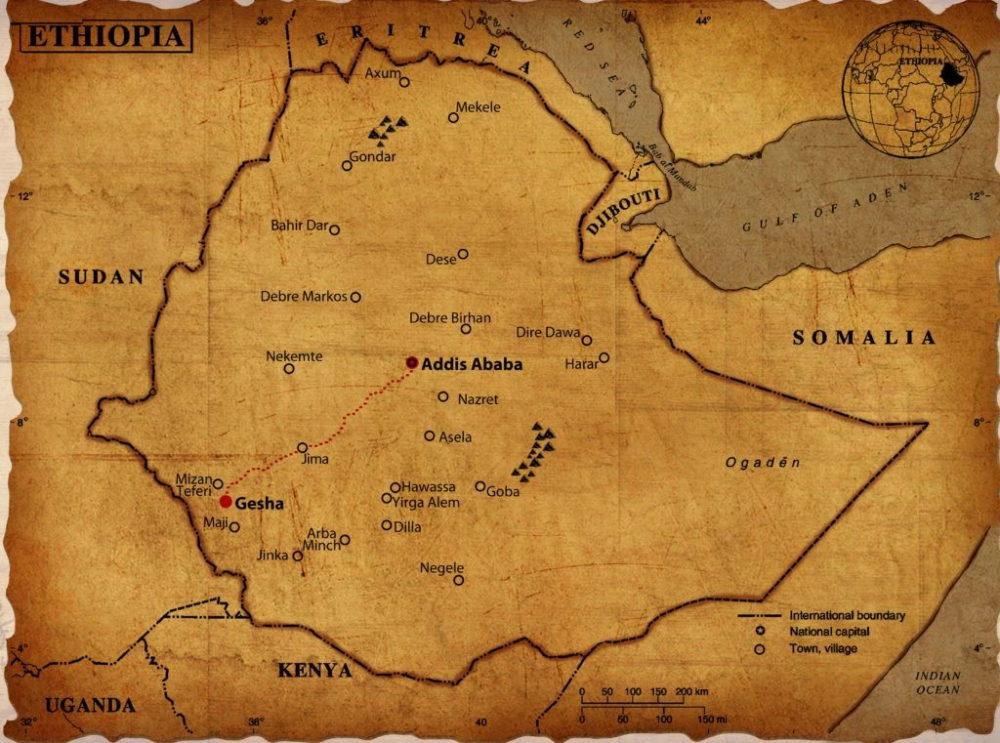
Geisha's homeland is actually Ethiopia. In 1931, researchers discovered it while collecting wild varieties in the southern Kaffa forests (near Geisha Mountain), initially naming it after the mountain. Over the following decades, it was passed around for trial planting in Kenya, Uganda, and elsewhere, landing at Costa Rica's CATIE research center in 1953 under the designation T2722. But because of its fragile branches and limited yield, it never gained popularity.

The turning point came in the 1960s. After CATIE introduced T2722 to Panama, it found ideal growing conditions on the high-altitude farms of Hacienda La Esmeralda. Farm owner Daniel Peterson noticed that Geisha showed remarkable resistance when faced with leaf rust. During a cupping session in 2003, this coffee released pure white floral aromatics and a berry finish, and the team immediately decided to enter it in competition under its original name 'Geisha' (homophonous with the Japanese word for geisha), winning the BOP championship the following year. Since then, the Chinese-speaking world has translated it as Guixia, a more aesthetically pleasing name.

Why is Geisha difficult to cultivate? Its thin leaves result in low photosynthetic efficiency, and its fragile root system slows nutrient absorption, so yields are naturally scarce. More demanding still, it requires high altitudes (above 1,600 meters), fertile soil, and moderate shade—direct sun exposure will scorch its leaves. Hacienda La Esmeralda plants large numbers of shade trees and adheres to traditional pruning techniques to ensure seedling survival. The higher the altitude, the slower the fruit ripens, and the more pronounced the flavor complexity.

Today Geisha is grown in many parts of the world, but terroir gives it different flavors. The Ethiopian and Panamanian versions are the most representative. The Hacienda La Esmeralda Geisha commonly found on the market is divided into Red Label, Green Label, and Blue Label (now called Volcán Azul Geisha)—three major grades the estate classifies by provenance and cupping score.

Top-tier Red Label Geisha comes exclusively from the Jaramillo and Cañas Verdes farms, at altitudes of 1,600–1,800 meters, with cupping scores above 90. These plots produce the most intense floral and fruity notes, sold each year through separate auctions, with lot numbers corresponding to entire batches from specific plots. The well-known Mario plot at Jaramillo farm, for example, is naturally processed and presents a complex aroma of honey, citrus, rose, and black tea. For pour-over, a V60 dripper is recommended, with water at 91–92°C, a 1:15 coffee-to-water ratio, and a fine-caster-sugar grind (80% passing a No. 20 sieve); a three-stage pour highlights the layering.

Green Label Geisha (formerly private collection lots) also comes from the above high-altitude farms but does not specify individual plots and does not participate in auctions. Though slightly lower in grade, it retains Geisha's classic high-mountain freshness. The common washed version carries lemon, berry, and Tieguanyin tea aromatics. For pour-over, a lower temperature range (such as 88–90°C) strengthens the citrus acidity, with a delicate green tea finish, suiting those who prefer a lighter mouthfeel.
Brewing Geisha requires balancing the preservation of floral aromatics and acidity. A medium-light roast is the mainstream choice—it avoids over-extraction that would damage the delicate flavors while drawing out the floral and fruity character. Different processing methods require slight parameter adjustments: for natural beans, extend the bloom slightly (e.g., 30 seconds); for washed beans, speed up the second pour to prevent bitterness from over-steeping.
In summary, Geisha's high price stems from its scarcity (low yield plus high-altitude constraints), its exceptional flavor (complex floral-fruity notes plus high consistency), and its strict grading and selection system. Whether it is the auction-grade quality of Red Label or the classic flavor heritage of Green Label, this coffee is well worth exploring in depth.


