Costa Rica Honey Process Coffee: Flavor Analysis and Pour-Over Guide
Introduction: Explore in depth the unique appeal of Costa Rican honey processed coffee beans, from the high-quality growing regions nurtured by volcanic soil to the meticulous raisin honey process, and uncover how its bright fruit acidity and sweet, creamy mouthfeel are formed. This article provides professional-level roasting curves and pour-over parameters to help you precisely present layered flavors of berries, honey and nuts.
The Terroir Code of Costa Rican Coffee
As the first country in Central America to introduce coffee cultivation, Costa Rica is renowned for the volcanic fertile soil of the Central Plateau's 1,200–1,600 m elevation band. The three active volcanoes Irazu, Barva and Poas continuously supply minerals, and together with a stable climate with an average annual temperature of 20°C, they create the classic combination of a chocolate base and lively citrus acidity. Among the country's eight major regions, the Tarrazu region has become a specialty coffee benchmark with its full, plump beans and prominent body, and its micro-lot planting model ensures every cherry is hand-sorted.

The Science and Art of Honey Processing
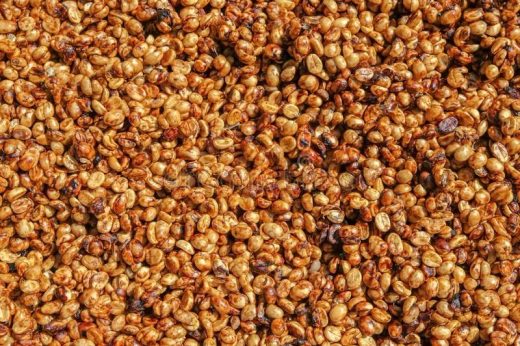
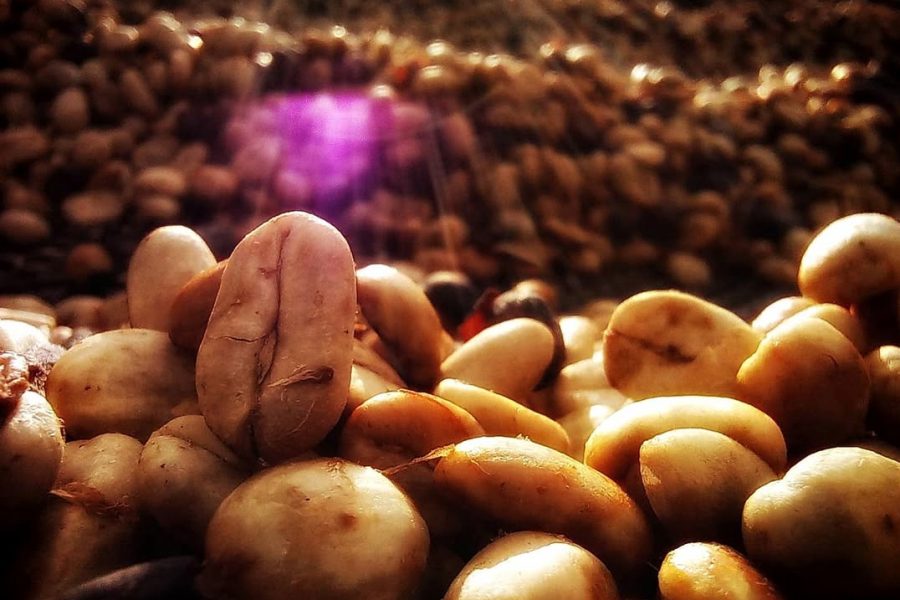
The raisin honey process can be regarded as an advanced version of honey processing—after picking, the entire mucilage layer is retained with zero washing, which places strict demands on the drying stage. On the harvest day, floating selection must be carried out immediately to remove defective beans; the cherries are then placed on raised beds to dry for more than 72 hours, and once the skin loosens, it is peeled off by hand. Throughout drying, the beans must be turned once every 2 hours, with moisture content precisely controlled within the 11%–12% range. This process both concentrates the tropical fruit aromas produced by fermentation and, through the slow breakdown of mucilage, gives a honey-like sweet finish. The photo shows a honey process drying yard
Taste Layers of Estate-Level Blending
Take the Mirasu Estate at 1,700 m elevation as an example; its composite formula of 50% Geisha + 50% ET47/SL28/MAICO is quite ingenious: Geisha contributes an ethereal jasmine aroma, while the Ethiopian native variety ET47 and the disease-resistant variety SL28 (a Bourbon descendant) jointly strengthen the berry acidity; the MAICO variety brings a nutty base. Estate owner Esteban Sanches insists on self-made wet processing equipment and, through precise regulation of sun-drying duration and turning frequency, allows the flavor characteristics of different varieties to coexist harmoniously. Showing the estate's small processing workshop
Key Parameters for Roasting and Extraction
A medium-light roast (Agtron value #65–#70) best presents the sweetness spectrum of honey processed coffee. It is recommended to use a Yangjia 800N roaster with the following curve: preheat to 200°C, then lower to 175°C for charging; at the 114°C yellowing stage, maintain airflow at 4 to promote the Maillard reaction; first crack begins at 10'25", when airflow is increased to 5, and finally drop at 193.5°C to lock in the sweet aroma. For pour-over, we recommend a V60 dripper with a 1:15 coffee-to-water ratio, EK43s grinder setting 10 (fine sugar particle size), and 90–91°C water with staged pouring: first pour 30 g for a 30-second bloom, then add 95 g to reach 125 g, and finally pour 100 g to reach a total of 225 g.

Sensory Map on the Flavor Wheel
Professional cupping shows (SCAA standard 1:18.18 coffee-to-water ratio, 94°C water, 200 ml ceramic bowl) that this coffee presents a three-stage flavor evolution: the dry aroma stage gives off the sweet fragrance of raisins and red raspberries; the wet aroma reveals white floral and honey notes; on the palate, a creamy texture wraps berry jam, roasted nuts and a caramel finish. Common brewing pitfalls include water that is too hot causing sharp acidity (above 93°C tends to extract tannins) and grinding that is too fine causing channeling (it is recommended to verify grind size with a 70% pass rate through a No. 20 sieve). Reference image of cupping equipment setup
From volcanic soil to the flavor in the cup, every stage of Costa Rican honey processed coffee embodies the combination of precision agriculture and craftsmanship. Master the parameter system above, and you too can reproduce the classic Central American flavor with bright acidity, silky texture and lasting sweetness.